[Asia Economy Reporter Kwon Jae-hee] VoiceEye is attracting attention as the only voice barcode company registered with the Public Procurement Service with its 'voice conversion barcode.'
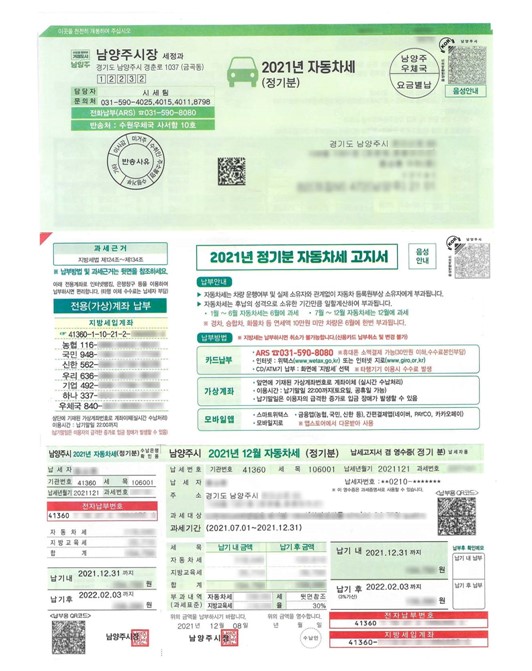
VoiceEye's voice conversion barcode solution for the visually impaired, 'VoiceEyeCode,' allows users to scan a 1.8㎠ barcode embedded in a bill using a dedicated smartphone app to audibly confirm information related to local tax payments such as tax items, payment amounts, and payment deadlines. Notably, VoiceEyeCode incorporates technologies to prevent personal information leakage and supports foreign language translation including English, Chinese, Vietnamese, Filipino, and Thai.
Following the amendment of the Disability Discrimination Act last year, which mandated the insertion of voice conversion barcodes in bills issued by national and local governments, Gyeonggi Province inserted 'VoiceEyeCode' in automobile tax bills issued by all 31 cities and counties within the province.
As a result, visually impaired or low-vision individuals, as well as members of multicultural families, have reduced concerns about information leakage of property details caused by relying on others and the risk of delinquency due to unconfirmed tax payment information.
Since then, the application of voice conversion barcodes has expanded, with VoiceEye's barcodes being inserted in local tax bills of eight local governments including Hongcheon County, Chuncheon City, and Wonju City in Gangwon Province; Gyeongsan City in Gyeongsangbuk Province; Asan City and Cheonan City in Chungcheongnam Province; and Jeju City and Seogwipo City in Jeju Province.
VoiceEyeCode can store information equivalent to three A4 pages (868 Byte/㎠), which is eight times the capacity of a QR code. Unlike other barcodes, it can store various types of information such as text, audio, and images, and VoiceEye holds the core technology.
VoiceEyeCode is already being utilized in government services such as resident registration certificates, issuance of various certificates by financial institutions, prescriptions and medical certificates from medical institutions, and academic transcripts and degree certificates from educational institutions. As VoiceEye is the only company with related technology registered with the Public Procurement Service, continuous orders are expected.
Additionally, the Pharmaceutical Affairs Act, which mandates voice conversion codes on packaging documents of pharmaceuticals and quasi-drugs, is scheduled to be enforced in 2024. The amendment to the Cosmetics Act, which mandates voice conversion codes on cosmetic packaging containers, is awaiting passage in the National Assembly, indicating further market expansion.
VoiceEye anticipates that if the mandatory use by public institutions expands and voice conversion barcodes are applied to educational institutions requiring access to printed materials, as well as the pharmaceutical and cosmetics industries, the market size could grow to approximately 310 billion KRW.
Jung Kwon-sung, Vice President and Head of Business, stated, "As local governments have shown increased interest in improving information accessibility for the visually impaired, we secured additional orders from eight local governments including Gangwon Province, Gyeongsangbuk Province, and Jeju Province following Gyeonggi Province last year. In response to local governments' requests to maximize the transmitted information, we will finalize the notification items for the visually impaired within this year and reflect them, striving to enhance our technology."
© The Asia Business Daily(www.asiae.co.kr). All rights reserved.
![Clutching a Stolen Dior Bag, Saying "I Hate Being Poor but Real"... The Grotesque Con of a "Human Knockoff" [Slate]](https://cwcontent.asiae.co.kr/asiaresize/183/2026021902243444107_1771435474.jpg)
















