Negative Views on the Permanent Deployment of Strategic Assets
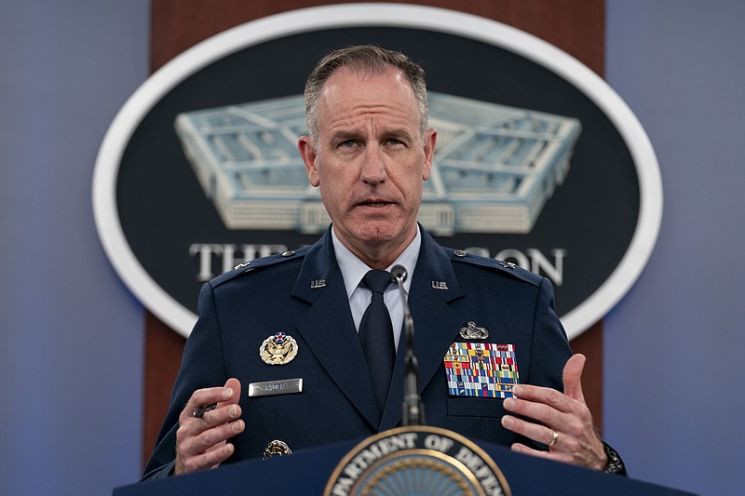
[Asia Economy Reporter Jang Hee-jun] The United States mentioned the continuous stationing of U.S. forces in South Korea when discussing the permanent deployment of U.S. strategic assets on the Korean Peninsula in response to North Korea's escalating provocations, stating that this represents America's commitment to South Korea's defense. This is interpreted as a de facto negative stance on the permanent deployment of U.S. strategic assets.
Patrick Ryder, spokesperson for the U.S. Department of Defense, said during a briefing on the 18th (local time) in response to a question about whether U.S. strategic assets should be permanently deployed to defend South Korea, "There are already more than 28,000 U.S. troops stationed on the Korean Peninsula," adding, "I think that is a signal of our defense relationship and a promise to the people of South Korea regarding security cooperation."
Spokesperson Ryder explained, "The presence (of U.S. forces in South Korea) has lasted for a very long time and will continue to do so," and "We will continue to work closely with regional allies, including South Korea and Japan, to maintain peace and stability throughout the Indo-Pacific region."
Although he did not directly mention the permanent deployment of strategic assets, by emphasizing that the stationing of U.S. forces in South Korea itself sufficiently demonstrates America's defense commitment to South Korea, it is interpreted as revealing a negative view toward the permanent deployment of strategic assets.
Earlier, the U.S. State Department also indicated on the 13th, when asked about nuclear sharing with South Korea, that it would provide extended deterrence using all U.S. defense capabilities, including nuclear weapons, suggesting no change in its existing stance.
Additionally, Spokesperson Ryder responded to a question about "why the U.S. does not intercept North Korean missiles" by stating that maintaining surveillance and detection posture with regional allies is a strong signal to North Korea and possesses warning capabilities.
© The Asia Business Daily(www.asiae.co.kr). All rights reserved.

















