Yen Value Hits Lowest in 32 Years
Japanese Government Seen Intervening with 1 Trillion Yen
Market Intervention Criticized for Insufficient Exchange Rate Defense Effect
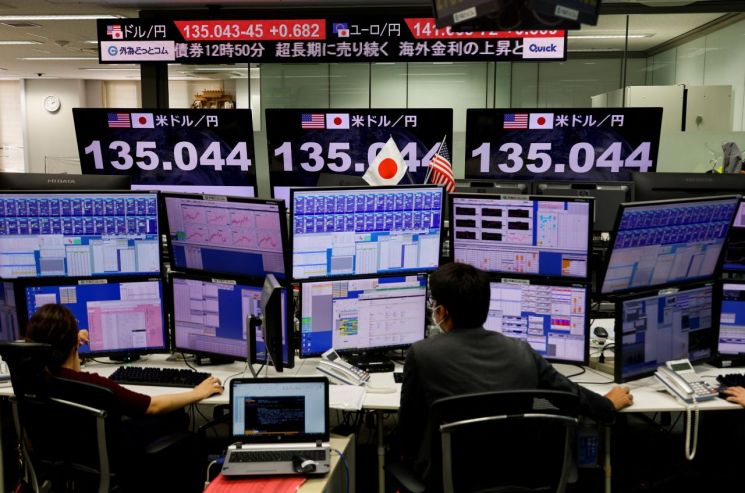
[Asia Economy Reporter Lee Ji-eun] The yen-dollar exchange rate surpassed the 149 yen level on the 18th, marking the lowest value of the yen in 32 years. As the yen's value approached the psychological barrier of 150 yen, the Japanese government stated it would respond appropriately to the foreign exchange market, leaving open the possibility of intervention once again. However, since Japan has decided to maintain its accommodative monetary policy even if it intervenes, the yen's weakness is expected to continue for the time being, raising concerns in the market.
◆ Yen Value Continues to Decline Amid Strong Dollar... Market Watches Timing of Intervention
According to Nihon Keizai Shimbun and Bloomberg News, Japanese Finance Minister Suzuki Shunichi held a press conference after the cabinet meeting and said regarding the yen's value falling to the 149 yen level per dollar, "Excessive fluctuations caused by speculation cannot be tolerated," and "We will take firm and appropriate measures."
On the same day, the yen-dollar exchange rate fell to 149.08 yen per dollar at one point during trading in the Tokyo foreign exchange market, marking the lowest level in 32 years since August 1990. This was the first time the yen's value dropped to the 149 yen level since August 1990. The additional decline in the yen's value on this day is analyzed to be influenced by dollar buying movements due to the interest rate differential between the two countries, amid expectations that the U.S. will further raise its benchmark interest rate.
Nihon Keizai explained, "U.S. President Joe Biden recently stated that the U.S. economy is very robust and that he is not concerned about the strong dollar phenomenon, which strengthened investors' dollar buying movements."
When asked by reporters what appropriate and firm measures would be, Finance Minister Suzuki replied, "We have previously intervened in the exchange rate to take firm measures." This is interpreted as referring to the market intervention on the 22nd of last month, when the Ministry of Finance and the Bank of Japan (BOJ) sold dollars and bought yen for the first time in 24 years.
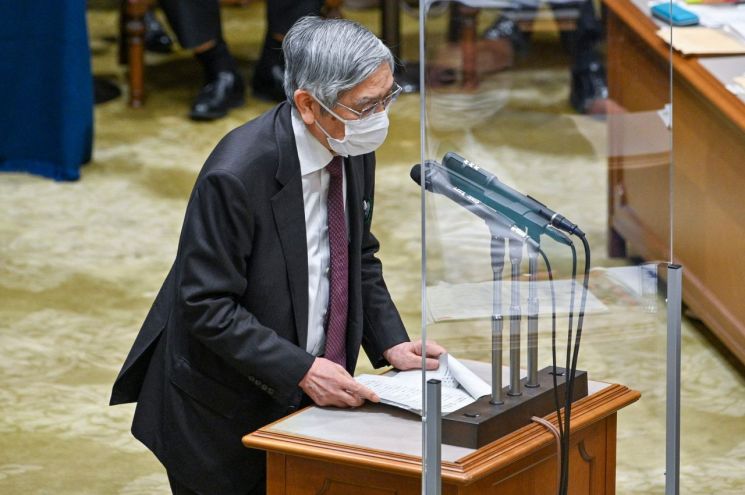 Haruhiko Kuroda, Governor of the Bank of Japan, attended the House of Councillors plenary session in Tokyo last June and responded to questions from lawmakers regarding the exchange rate. [Image source=Yonhap News]
After the Japanese foreign exchange authorities intervened, the exchange rate, which had fallen to the 140 yen level on the same day, rose to the high 148 yen level last week. Market experts view 150 yen per dollar as an important milestone.
Earlier, Shinsuke Kajita, an investment strategist at Resona Holdings, a Japanese commercial bank, told Bloomberg, "Japan is currently facing important exchange rate milestones every 5 yen," adding, "Investors want to see how the Japanese government will respond when the rate approaches the 150 yen level, so there is a possibility of additional intervention by the foreign exchange authorities at any time."
◆ Secret Market Intervention by Japan? ... Yen Weakness Inevitable Due to Accommodative Monetary Policy
Some have speculated that the Japanese foreign exchange authorities have already secretly intervened in the market. Jiji Press reported on the 13th that there is a view that the authorities may have conducted market intervention by purchasing yen worth 1 trillion yen. This speculation arose from the temporary drop in the yen-dollar exchange rate, which had been soaring upward at the time.
When asked about the truth of this matter, Finance Minister Suzuki refrained from commenting, saying, "I will not say anything unnecessarily."
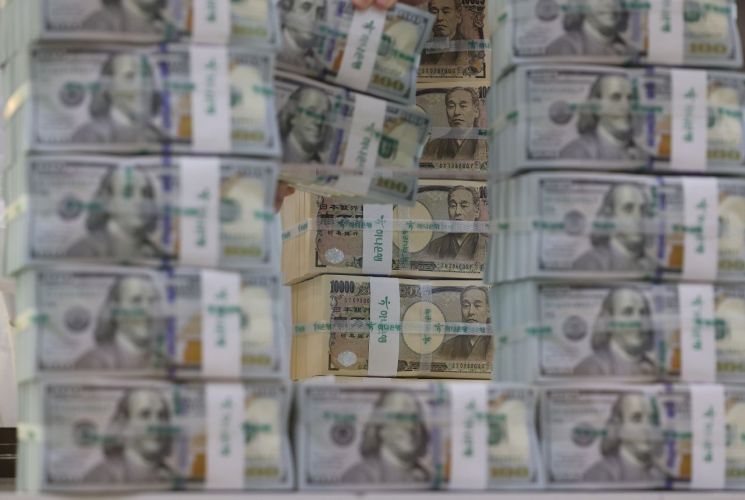
The market pointed out that if the Japanese government has indeed intervened additionally in the foreign exchange market, it means that further market intervention is not effectively defending the exchange rate.
A market insider told Jiji Press, "If the Japanese government injected 1 trillion yen into the market, it is clearly less effective than the previous market intervention, which raised the yen's value by about 5 yen with an amount less than 3 trillion yen."
Experts believe that the fundamental cause of the yen's weakness currently observed in the market is the BOJ's accommodative monetary policy, which creates an interest rate gap between the U.S. and Japan, making it difficult for the Japanese foreign exchange authorities to effectively defend the exchange rate rise.
Bloomberg stated, "While the U.S. and major countries raise interest rates, Japan continues its accommodative monetary policy, so the effect of market intervention has almost disappeared," adding, "If the yen's weakness prolongs beyond 145 yen, foreign exchange reserves will decrease, and the Japanese government will eventually have to accept a gradual decline in the yen's value."
Daizaku Ueno, chief currency strategist at Mitsubishi UFJ Morgan Stanley, also pointed out, "No matter how much money the Japanese government spends, central bank intervention cannot completely stop the yen's weakness and will only have a temporary effect."
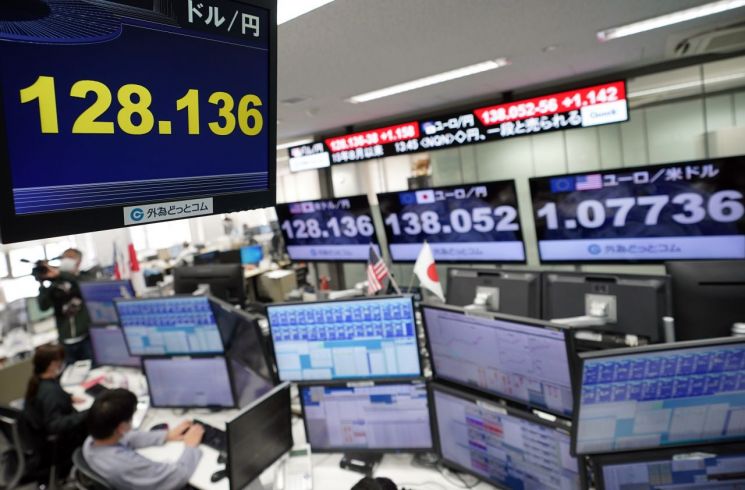
Meanwhile, despite a single intervention by the Japanese foreign exchange authorities, the yen's value fell to the psychological barrier of the 150 yen level, raising concerns in the market that a major crisis could be triggered in the financial market.
Jim O'Neill, former chairman of Goldman Sachs Asset Management, warned in an interview with Bloomberg last month, "If the dollar-yen exchange rate breaks through a certain level such as 150 yen, chaos on the scale of the 1997 Asian financial crisis will occur."
Bloomberg also analyzed that if the value of the yen, a quasi-reserve currency, collapses, overseas funds are likely to withdraw capital from the entire Asian region, leading to large-scale capital outflows. The yen is the third most traded currency in the world and significantly influences other Asian currencies.
© The Asia Business Daily(www.asiae.co.kr). All rights reserved.














