Regular Folk Orchestra Performance at National Gugak Center Yeaakdang on 20th and 21st
Recreation of Early National Gugak Center Folk Orchestra Samulnori by Master Kim Yongbae and Others
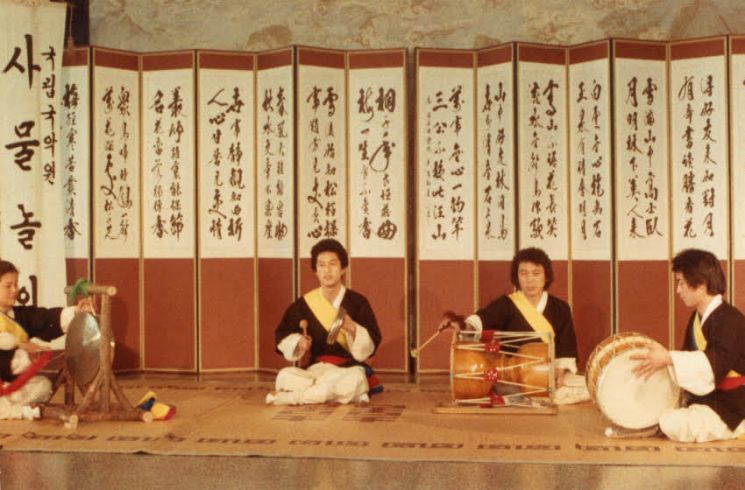 Performance of Samulnori by the National Gugak Center Folk Orchestra in 1984. From the left: Park Eun-ha (Jing), Kim Yong-bae (Kkwaenggwari), Jeon Su-deok (Janggu), Bang Seung-hwan (Buk). Photo by National Gugak Center
[Asia Economy Reporter Kim Heeyoon] The samulnori performance from 40 years ago, where the possessed sangsoe and the clean jangdan harmonized, is being revived for audiences once again.
The National Gugak Center announced on the 18th that it will present the folk orchestra's regular performance "Revisiting the Original Work" at the National Gugak Center's Yeaakdang on the 20th and 21st. This performance will be conducted solely by the folk orchestra's yeonhwi division.
The National Gugak Center first introduced the samulnori performance in 1984, composed of four performers including Jeon Sudeok, Bang Seunghwan, and Park Eunha, starting with the recruitment of Kim Yongbae (1952?1986), known as the "possessed sangsoe," in 1983. This performance laid the foundation for samulnori to establish itself as a new form of performance.
This performance is structured by reviving pieces such as "Seoljanggu," "Honam Udo Gut," "Utdari Pungmul," and "Pangut," focusing on the melodies and performance styles originally performed by the early samulnori members of the National Gugak Center. Professor Nam Gi-moon of Sehan University’s Department of Yeonhwi, who worked closely with the elders for a long time, took charge of the musical arrangement and guidance. Professor Nam plans to overlay the musical color of that time, characterized by gentle yet clean jangdan and melodies rather than flamboyance.
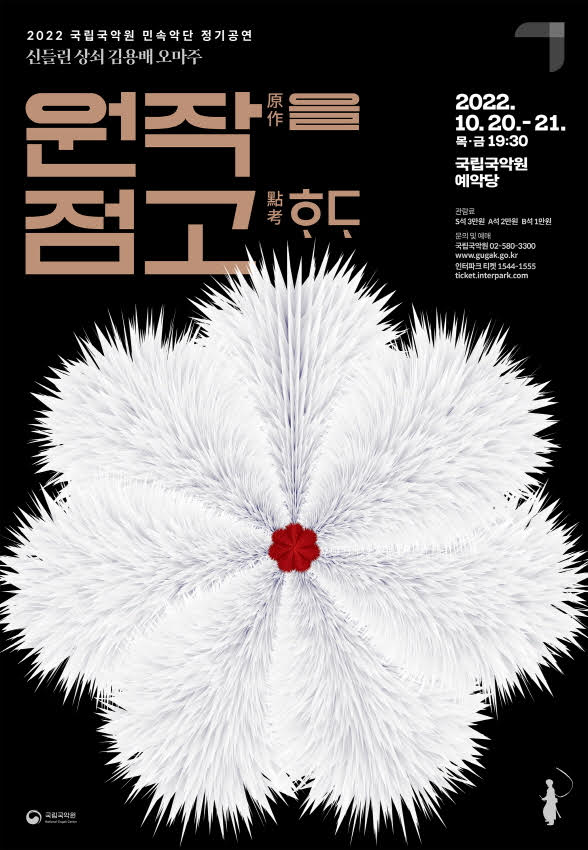 The National Gugak Center announced on the 18th that the folk orchestra's regular performance, "Interpreting the Original Work," will be presented at the National Gugak Center's Yeaakdang on the 20th and 21st. Photo by National Gugak Center
The first piece of the performance, "Seoljanggu," expands Kim Yongbae’s original work for four janggu players to eight, allowing the audience to feel the vivid and rich dynamism of janggu melodies. In "Honam Udo Garak," the Jeongeup Nongak melody is combined with the Honam Udo melody to realize the splendor of jangdan that can be played on the janggu.
"Utdari·Yeongnam Garak" is a reconstructed piece combining the Utdari Nongak melody and the "Byeoldalgeori" from Yeongnam Nongak melody. By complementing the flamboyant Utdari melody Kim Yongbae played at Namsadang with the stable Yeongnam melody, it newly presents the variety of janggu rhythms that leap over the buk rhythm.
"Paying Tribute," prepared as a video and sound performance, offers a three-dimensional view of Kim Yongbae’s artistic spirit, who lived a short life as the possessed sangsoe. The content of Kim Yunbae’s poetry collection "Me, Madly, Bright Man" was restructured by Ji Gihak, artistic director of the National Gugak Center’s folk orchestra, and composed by folk orchestra member Chae Suhyun. This piece was created to preserve the meaning and inherit the artistic world and spirit of the master.
The final "Seonban·Dwi-puri Pangut" recreates the pangut performed by the four original members of the folk orchestra, showing restrained beauty. In this performance, 12 members will showcase their individual skills together with 18 guest performers in an exciting pangut. It will conclude the performance with a stage that remembers the process of overcoming harsh conditions at the founding and passing down pangut with passion and dedication to art, wishing for a bright future.
A National Gugak Center official stated, "This performance was planned to recall and revive the early forms and melodies of samulnori from 1984, to reflect on the musical heritage and spirit left by our predecessors, and to continue the identity of the folk orchestra as a future tradition."
© The Asia Business Daily(www.asiae.co.kr). All rights reserved.
![Clutching a Stolen Dior Bag, Saying "I Hate Being Poor but Real"... The Grotesque Con of a "Human Knockoff" [Slate]](https://cwcontent.asiae.co.kr/asiaresize/183/2026021902243444107_1771435474.jpg)

















