Short Selling Ratio Surpasses 10% of KOSPI 200 Trading Volume
KOSPI Rebounds Since Short Selling Surge in 2019
Rebound Possible Only After Confirming This Year's Interest Rate Decline
[Asia Economy Reporter Junho Hwang] Short selling on the KOSPI surged significantly following the stock price decline. While there may be some optimism given that the market has rebounded after previous sharp increases in short selling, there are forecasts suggesting that a reversal is unlikely. It is expected that buying opportunities will only arise around the year-end when bond yields decline.
KOSPI200 Short Selling 'Surge'
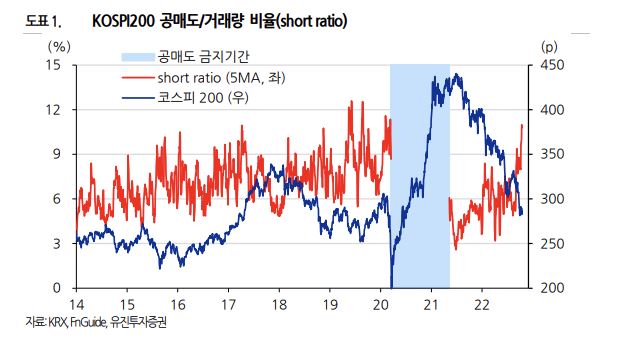
According to Eugene Investment & Securities on the 18th, the short selling ratio relative to trading volume for KOSPI200 stocks exceeded 10% during the past week (11th?14th). This is the highest level since before the short selling ban in May and August 2019, and February 2020 during the COVID-19 shock.
Comparing the short selling/trading volume ratio to the one-year average, last week’s figure exceeded +3 standard deviations and approached +4 standard deviations. This indicates a significant increase in short selling compared to the recent one-year average. Except for May 2019, this is the highest level recorded since 2014.
Rebound After Short Selling Surge
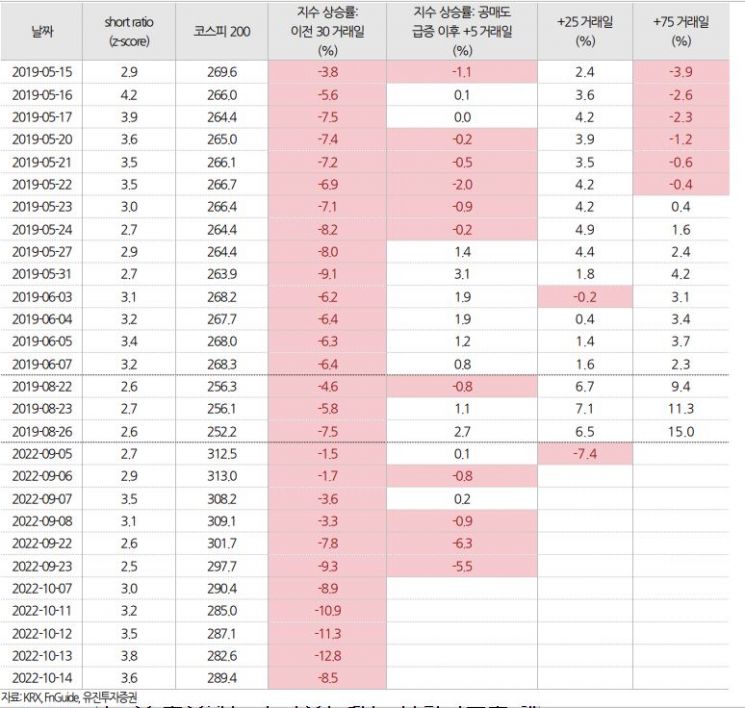
Investors are focused on whether the stock market will rebound after the surge in short selling. In May 2019, the KOSPI rebounded for about a month after the sharp increase in short selling, then declined before continuing an upward trend after August, suggesting a possible rebound following a short selling surge.
However, this was analyzed as an upward trend driven more by changes in the financial market environment than by the short selling surge itself. In August of the same year, the Federal Reserve (Fed), which sets U.S. monetary policy, shifted direction to cut interest rates, followed by three rate cuts.
The current situation is different. Last week, the U.S. September Consumer Price Index (CPI) again exceeded expectations, leading to an upward revision in U.S. interest rate hike forecasts. Before the CPI announcement, it was expected that rates would increase by 75 basis points in November, 50 basis points in December, and 25 basis points in February next year, reaching 4.5%?4.75%. However, after the CPI release, forecasts changed to a 75 basis point hike in December and rates rising to 4.75%?5% by February next year.
A Time for Patience
Sangcheol Kang, a researcher at Eugene Investment & Securities, stated, "Considering that the KOSPI rebound at that time coincided with the Fed’s shift to rate cuts, it is difficult to expect a similar change immediately."
Researcher Kang added, "Although a rebound may not occur soon, the market is expected to experience reduced declines compared to before. With the easing of rate hikes, there should be opportunities to buy stocks around the year-end and early next year."
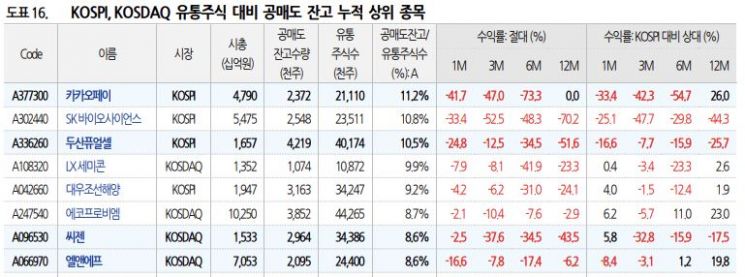
Looking at individual stocks, there may be cases where stocks with accumulated short selling suddenly jump during rebounds, as seen on the 14th. However, he is skeptical about the possibility of a trend reversal in stocks with accumulated short selling. This opinion also excludes the possibility of a temporary short selling ban being re-implemented as during the COVID-19 period.
© The Asia Business Daily(www.asiae.co.kr). All rights reserved.



















