Ruling and Opposition Parties Adopt Kim Beom-su, Lee Hae-jin, and Others as National Assembly Audit Witnesses
Shift from Self-Regulation to Monopoly Regulation Atmosphere
Industry Concerns Over Regulatory Arbitrage in Global Big Tech Regulation
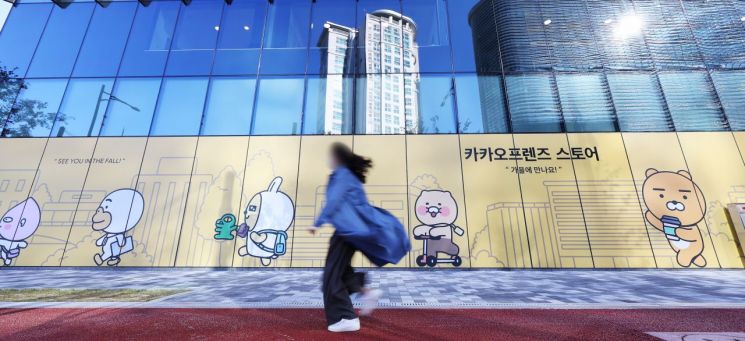
[Asia Economy Reporter Yuri Choi] The Kakao outage caused by the SK Inc. C&C data center fire has led to a platform-related parliamentary audit. With key executives from SK C&C, Kakao, and Naver all summoned as witnesses for the audit, issues of accountability and platform monopolization are expected to be addressed. In particular, President Yoon Suk-yeol’s statement that "the state must take necessary measures" has drawn attention to whether regulations on platform companies will be strengthened through this audit.
According to the National Assembly on the 18th, the Science, Technology, Information and Communications Committee (STICC) has abruptly summoned SK Chairman Chey Tae-won, Kakao Future Initiative Center Head Kim Beom-su, and Naver Global Investment Officer (GIO) Lee Hae-jin as witnesses for the parliamentary audit. In addition to these three owners, CEOs including Park Seong-ha of SK C&C, Hong Eun-taek of Kakao, and Choi Soo-yeon of Naver have also been named as witnesses. These six executives will appear at the comprehensive audit of the Ministry of Science and ICT on the 24th.
Accordingly, a platform-focused parliamentary audit is expected to be repeated this year. The scope will likely cover not only the service disruption caused by the data center fire but also the broader issue of platform monopolization. The political sphere is gearing up, arguing that this incident should serve as a wake-up call to apply brakes on the platform economy.
There is also interest in whether the audit will shift the atmosphere toward strengthening national-level management and supervision of platform companies with large user bases. Especially since President Yoon expressed concern over the platform monopolization issue highlighted by the Kakao outage, analysts see signs of a change in the platform self-regulation approach.
President Yoon stated during his commute the previous day, "If the market is distorted due to monopoly or severe oligopoly, and this reaches the level of national infrastructure, I believe the state must institutionally take necessary measures for the benefit of the people." He added, "(KakaoTalk) is a network operated by a private company, but from the public’s perspective, it is no different from a national backbone communication network," and said, "Since the National Assembly is also paying close attention, necessary systems should be well organized to prevent such accidents in advance."
Legislative efforts to check monopolies have already begun. Jo Seung-rae, a member of the STICC from the Democratic Party of Korea, has introduced a bill to amend the ‘Framework Act on Broadcasting and Communications Development’ to include major online services and data centers such as Kakao, Naver, and SK C&C in the national disaster management system. The bill requires the Ministry of Science and ICT to include broadcasting and communication services of data center operators and value-added communication service providers when establishing and implementing the basic broadcasting and communication disaster management plan.
Beyond measures to prevent recurrence, legislative moves to curb the ‘octopus-like’ expansion of platform businesses are also expected to resume. The Democratic Party plans to revisit the Online Platform Fairness Act (On-Platform Act). This act primarily regulates platform operators’ forced purchases and management interference with tenant businesses. Discussions had waned after the Yoon administration shifted policy toward platform self-regulation but are now being revived.
Platform companies are feeling tense. Unlike last year, this year’s audit was expected to pass quietly, but the unexpected data center fire has become a stumbling block. With political pressure mounting and public criticism growing that "platform companies have neglected user protection," they are closely monitoring the situation.
Above all, there are concerns that strengthening regulations on domestic platforms could benefit only foreign operators who remain in blind spots. Initially, issues such as in-app payments and network usage fees involving global big tech companies like Google, Apple, and Netflix were to be discussed in the audit, but related discussions fizzled out, and the focus shifted to domestic platform companies. The key issue in this debate is how to handle the side effects of regulation that might allow global big tech companies to reap profits while only domestic platforms are restricted. An industry insider said, "With platform stock prices falling and widespread user harm, public sentiment is generally unfavorable," adding, "There is concern that domestic platforms will be squeezed without addressing unfair competition from global operators."
© The Asia Business Daily(www.asiae.co.kr). All rights reserved.
![Clutching a Stolen Dior Bag, Saying "I Hate Being Poor but Real"... The Grotesque Con of a "Human Knockoff" [Slate]](https://cwcontent.asiae.co.kr/asiaresize/183/2026021902243444107_1771435474.jpg)
















