Political Sphere Moves to Strengthen Regulations on Value-Added Telecom Operators like Kakao
Calls for Legislation on Customer Compensation Measures
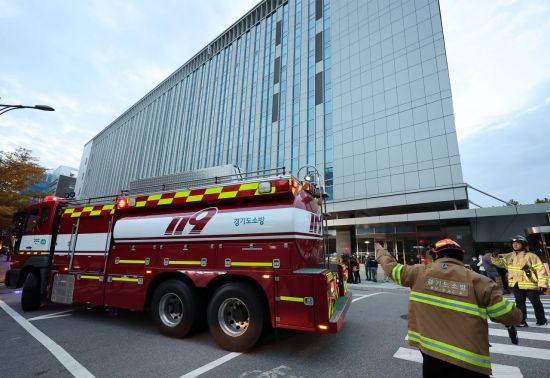
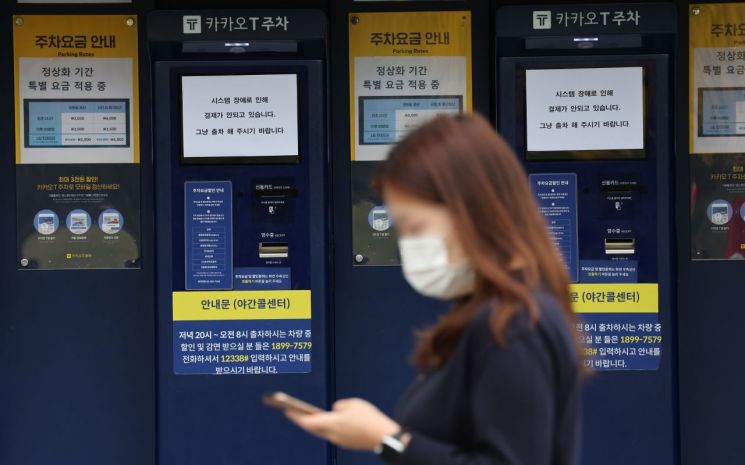
[Asia Economy Reporter Naju-seok] Due to a fire accident at the SK C&C data center, numerous Kakao-related services, including KakaoTalk, were interrupted, causing errors. This incident revealed the fragile foundation beneath the so-called "hyperconnected society" we had proudly touted, showing how easily such a society can collapse, which is deeply shocking. Behind this incident lies criticism not only of companies that neglected investments in related facilities such as system redundancy but also of the government and political circles for whether they have responded with relevant regulations and measures. For now, the political sphere is belatedly pushing for follow-up actions.
On the 17th, various proposals for institutional improvements related to this incident began to be discussed in political circles. Some of these proposals had already been debated for several years, drawing criticism as a case of "too little, too late." Despite the inconvenience caused by the KT Ahyeon-dong fire incident and the review of necessary responses, it became clear that institutional improvements remained insufficient.
Discussions on amending related laws have started from three directions concerning this incident.
First, there is a proposal to revise the Basic Act on Broadcasting and Communications Development, which was discussed in the 20th National Assembly’s Science, Technology, Broadcasting and Communications Committee but failed to pass the Legislation and Judiciary Committee before the term expired and was discarded. The proposed amendment included provisions to classify value-added telecommunications service providers such as Kakao and Naver as part of the public telecommunications network, thereby subjecting them to regulation. Although the Science and Technology Committee agreed on the bill, it failed to pass the Legislation and Judiciary Committee and was discarded due to the expiration of the 20th National Assembly’s term. Officials explain that the opposition was due to concerns about excessive regulation on private companies. Regarding this, Assemblyman Jo Seung-rae, the Democratic Party’s secretary of the Science and Technology Committee, said, "The related bill has been drafted," adding, "It will be submitted to the National Assembly soon." If the amendment passes, value-added telecommunications service providers will be subject to the Basic Plan for Broadcasting and Communications Disaster Management like public telecommunications network operators, thus complying with national disaster management regulations.
There is also a growing possibility of requiring value-added telecommunications service providers to mandatorily report their service stabilization status to the government. The amendment to the Telecommunications Business Act proposed by Democratic Party Assemblyman Byun Jae-il in April last year includes provisions requiring value-added telecommunications service providers like Kakao to report matters related to securing service stability to the Minister of Science and ICT every January. Previously, when the Telecommunications Business Act was amended in June 2020, obligations related to service stability were imposed on value-added telecommunications service providers, and this amendment established means to manage and supervise them. The relevant standing committees and the government also recognize the institutional necessity of this measure, stating, "It is a necessary means to check whether value-added telecommunications service providers fulfill their obligations to secure service stability." However, since Assemblyman Byun proposed the bill, there has been no follow-up discussion. This incident is expected to accelerate related discussions.
There is also growing support for strengthening compensation regulations related to Kakao and others in connection with this incident. Democratic Party Assemblyman Park Chan-dae appeared on MBC Radio and said, "In the case of value-added telecommunications service providers like Kakao, when incidents such as temporary service suspension or temporary transmission speed reduction occur, only obligations such as cause response, status reporting, consultation reception, and contact information provision are mandated, but there are no compensation regulations," adding, "Having experienced this incident, I think we need to proceed more broadly with consumer protection, including compensation for damages."
© The Asia Business Daily(www.asiae.co.kr). All rights reserved.
![User Who Sold Erroneously Deposited Bitcoins to Repay Debt and Fund Entertainment... What Did the Supreme Court Decide in 2021? [Legal Issue Check]](https://cwcontent.asiae.co.kr/asiaresize/183/2026020910431234020_1770601391.png)

















