'Sin Saenghwalbok' and 'Forced Conscription Safe Return Wish Vest' Also Designated as Cultural Heritage
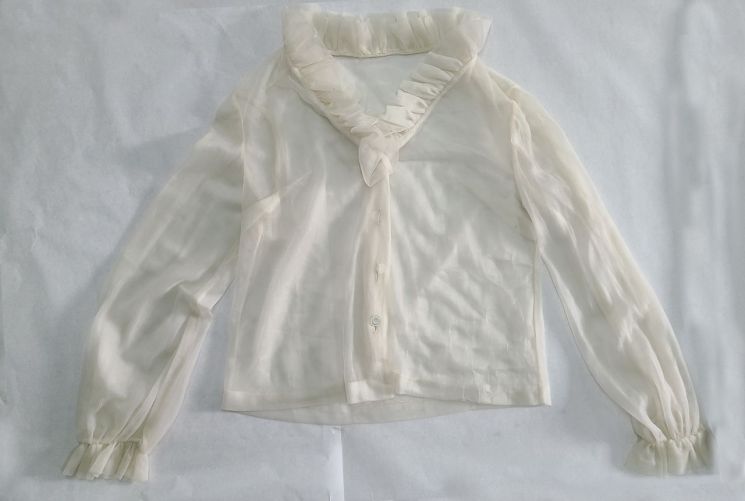
During the Korean War, U.S. soldiers used parachutes only once and then discarded them. The nylon fabric was both soft and durable. Refugees recycled these parachutes to make clothing, known as 'parachute blouses.'
On the 17th, the Cultural Heritage Administration announced the designation of the '1950s parachute blouse,' '1960s new lifestyle clothing,' and 'vests and sashes praying for the safe return of forcibly conscripted soldiers during the Japanese colonial period' as Registered Cultural Heritage. The parachute blouse, which will be systematically preserved and managed, was produced by designer Choi Kyung-ja. As clothing made from recycled parachutes gained popularity, nylon yarn was separately imported and woven into knit fabric. At that time, nylon fiber was classified as a luxury item and its import was prohibited. A Cultural Heritage Administration official stated, "This allows us to confirm the era's situation where it gained tremendous popularity among women, as well as the knitting and sewing techniques."
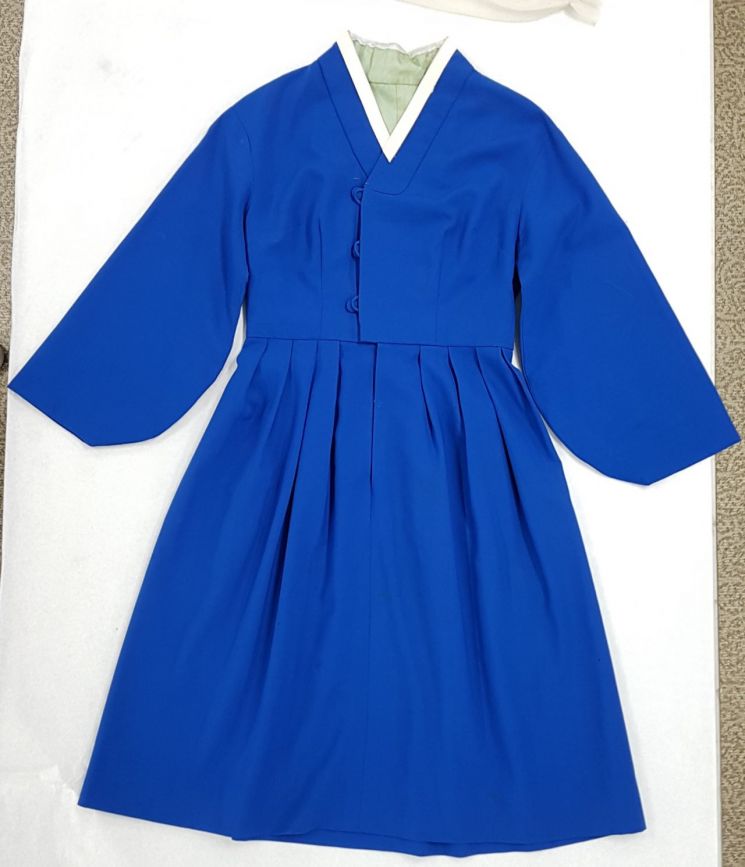
The '1960s new lifestyle clothing' was also created by Choi Kyung-ja. New lifestyle clothing was a standard outfit established by the government to improve the public's clothing habits and eliminate extravagant dress. It was made from fabric consisting of 70% wool and no more than 30% cotton, designed to be modest rather than flashy. The garment in question is a one-piece dress. It reinterprets the standard of new lifestyle clothing by not separating the jeogori (jacket) and skirt. The jeogori is fastened with buttons and features detachable goreum (ribbons) for decorative purposes. A Cultural Heritage Administration official explained, "It is an artifact that shows a facet of the national reconstruction movement and offers insight into the history of everyday clothing as well as the modernization process of hanbok."
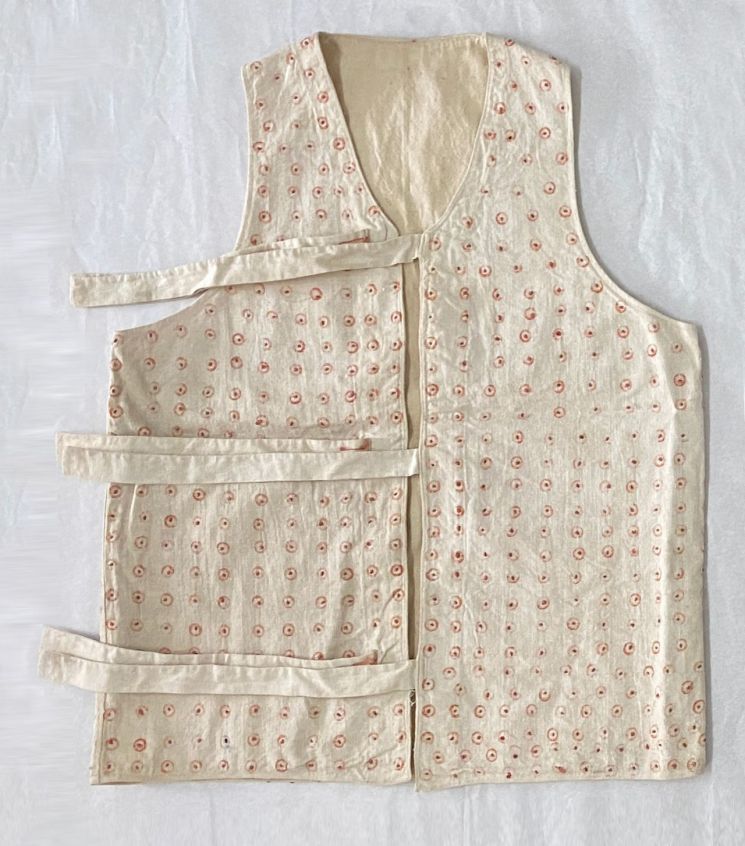
The 'vests and sashes praying for the safe return of forcibly conscripted soldiers during the Japanese colonial period' are artifacts made by mothers who hoped for the safe return of their sons forcibly conscripted during the Japanese occupation. Their creation was influenced by the Senninbari, a custom that emerged around the Russo-Japanese War, where 1,000 women would tie knots with red thread on a piece of cloth to pray for luck and safety. This shows how the loss of national sovereignty deeply affected Korean culture. Records of the wearer’s conscription period, unit assignment, discharge date, and the wife’s Japanese-style name can be confirmed in the 'Forced Mobilization Victims Register' held by the National Archives of Korea.
Meanwhile, the Cultural Heritage Administration also announced the designation of 'Yi Yuk-sa’s handwritten letters and postcards' and the 'Old Headquarters Building of the Seoul Cheondogyo Central Church' as Registered Cultural Heritage on the same day. The former consists of handwritten letters and postcards sent by Yi Yuk-sa in the 1930s to relatives and friends, sharing his current situation at the time. The latter was built in 1920 alongside the Cheondogyo Central Cathedral and served as a site for independence movements and social enlightenment activities.
© The Asia Business Daily(www.asiae.co.kr). All rights reserved.



















