January 20, 2020: First Domestic COVID-19 Case Confirmed
Strengthening Prevention Measures from Social Distancing to Vaccine Pass and Outdoor Mask Mandates
Cumulative Cases Exceed 25 Million but Public Interest and Sense of Crisis Decline
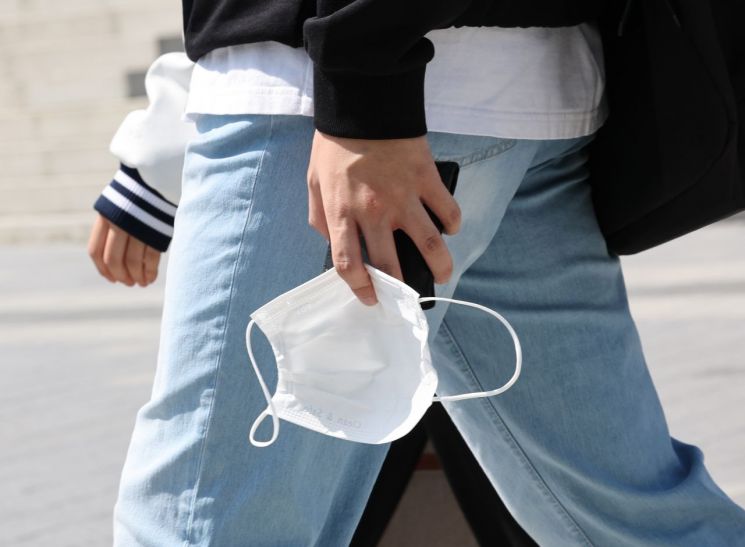
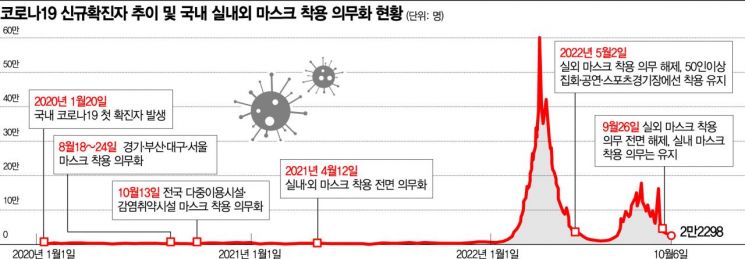
On the 15th, it marks the 1000th day since the first confirmed case of COVID-19 was identified in South Korea on January 20, 2020. Over approximately 2 years and 9 months, COVID-19 has repeated as many as six major waves, infecting nearly half (48.5%) of the Korean population. Currently, the '6th wave' that began in July this year is nearly over, and most of the quarantine measures that had constrained daily life?such as the vaccine pass, social distancing, and outdoor mask mandates?have been lifted.
The Dawn of the 1st Wave
The first confirmed COVID-19 case in South Korea was a Chinese woman in her 30s who entered through Incheon International Airport on January 19, 2020. She showed suspicious symptoms such as fever during quarantine and was urgently tested, receiving a positive result the next day. At that time, COVID-19 did not have an official name and was called 'Wuhan pneumonia,' and fear of this new virus, which had never been experienced domestically before, grew.
The situation rapidly changed after February 18, when the 'Patient 31' from the Shincheonji Daegu Church was confirmed, leading to dozens to hundreds of new cases daily. On February 29, the number of confirmed cases reached 909 in a single day, the highest at that time, marking the start of the '1st wave.' The term 'Daegu lockdown' topped real-time search rankings on portal sites, and incidents occurred where confirmed patients died due to lack of isolation beds or emergency patients died due to medical gaps.
To curb the spread of COVID-19, people began wearing masks, but due to supply shortages, a so-called 'mask crisis' occurred where masks were distributed in limited quantities at pharmacies or community centers. On March 22, an unprecedented measure called 'social distancing,' urging people to refrain from meeting family and acquaintances, was implemented. Afterward, COVID-19 entered a localized outbreak pattern with clusters in places like Itaewon clubs and call centers, repeatedly surging and subsiding.
Business Restrictions Amid the 2nd and 3rd Waves
COVID-19 resurged starting from the August 15 Liberation Day rallies that year. Tens of thousands of protesters gathered in places like Gwanghwamun in Seoul, and on the 15th, confirmed cases surged to 279. This was nearly ten times the 28 cases reported a week earlier (August 9). Among these, over 90% were in the Seoul metropolitan area, where the number of severe COVID-19 patients increased by 100 to 200 daily, eventually causing a shortage of hospital beds. Deaths also began to occur daily from late August. As the spread intensified, the government introduced quarantine measures restricting the operation of multi-use facilities such as restaurants and cafes for the first time. After October, daily confirmed cases dropped below 100, and authorities downgraded social distancing to a 'living quarantine' level.
However, from mid-November, as winter approached, COVID-19 surged again, marking the start of the '3rd wave.' On December 13, daily confirmed cases surpassed 1,000 for the first time with 1,030 cases, peaking at 1,240 on the 25th. The cold weather hindered ventilation, creating an environment conducive to virus activity. Infections occurred in everyday settings such as family, acquaintances, workplaces, and restaurants, making response difficult. On December 27, 24 deaths?the highest at that time?were reported in a single day, and the next day, this number rose sharply to 40, heightening the sense of crisis.
The government introduced quarantine measures banning gatherings of five or more people and limiting restaurant and cafe operations to 9 p.m., but as hundreds of cases continued daily, social distancing was extended until February of the following year. During this period, self-employed business owners, whose customers had disappeared, protested, claiming their business rights were infringed.
Continued Waves Even After Vaccination
The '4th wave,' which began in June 2021, occurred after vaccination efforts were underway. With vaccines developed that prevent COVID-19 infection and reduce severity if infected, the government expressed hope that 'outdoor no-mask' policies might soon be possible. However, due to lower-than-expected vaccination rates and the spread of the 'Delta variant,' confirmed cases surged in everyday places such as clubs, pubs, PC rooms, and restaurants. On July 7, the number of confirmed cases reached 1,212, setting the highest record in 194 days since December 25, 2020 (1,241 cases). Consequently, from July, a '4th stage high-intensity social distancing' was introduced, imposing detailed behavioral restrictions such as banning running and showering in gyms.
In November, restrictions on restaurant and cafe operations were lifted, and gatherings of 10 to 12 people were temporarily allowed under a 'gradual return to normal life.' However, in December, as confirmed cases surpassed the previous record of 5,000, restrictions on business operations and private gatherings were reinstated. The 'vaccine pass,' allowing only vaccinated individuals to use multi-use facilities, was also introduced at this time.
During the 4th wave, the 'Omicron variant' was introduced, and on January 26 of this year, daily confirmed cases surpassed 10,000 for the first time with 13,012 cases, marking the start of the 5th wave. On February 2, daily cases exceeded 20,000 (20,270), and on the 18th, they surpassed 100,000 (109,831). On March 23, the highest daily confirmed cases ever were recorded at 490,881, with cumulative confirmed cases exceeding 10 million. From March 1, the vaccine pass was removed, but social distancing measures such as restrictions on operating hours of multi-use facilities continued. During this period, daily new cases peaked at 620,000, and hundreds of deaths occurred daily.
As the wave peaked and began to decline, social distancing was lifted on April 18 this year, 2 years and 1 month after its introduction, marking the start of a full return to normal life. However, from this point, another Omicron subvariant, BA.5, spread rapidly. On July 5, daily confirmed cases reached 18,147, the highest in 40 days, and on August 17, they surged to 180,803. However, the spread began to ease from late August, and on the 9th of this month (8,981 cases), daily cases fell below 10,000, leading to assessments that the 6th wave has effectively ended.
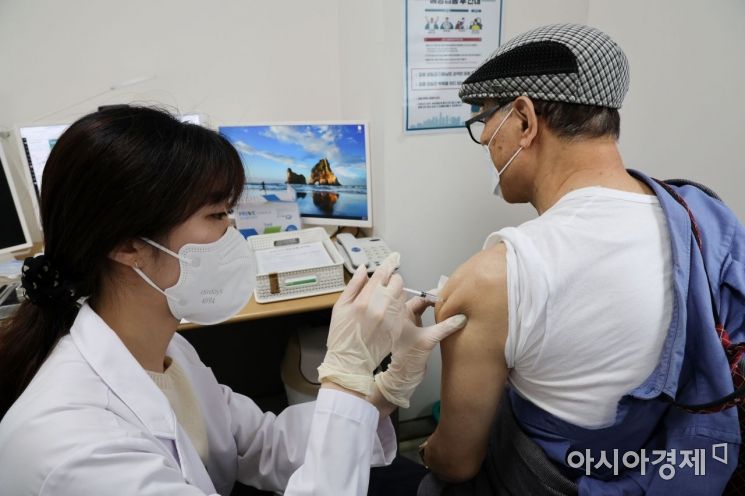 On the 25th, when the 4th COVID-19 booster vaccination for those aged 60 and over who made advance reservations began, a citizen is receiving the vaccine at Bumin Hospital in Gangseo-gu, Seoul. April 25, 2022 Photo by Joint Press Corps (Portrait rights consent obtained)
Declining Interest in COVID-19... Is It Safe to Relax?
During these repeated COVID-19 resurgences, nearly half of the domestic population has been infected. As of midnight on the 14th, the cumulative number of confirmed cases reached 25,076,239, accounting for 48.6% of the estimated domestic population this year (51,628,117) according to Statistics Korea. Considering that there are likely many 'hidden infections' who were infected but did not get tested, it is estimated that more than half of the population has already been infected with COVID-19.
The COVID-19 fatality rate reached 2.37% on May 7, 2020, but has recently dropped to 0.11% (cumulative). This reflects a decreasing sense of risk and public interest in COVID-19.
However, quarantine experts warn about a possible '7th wave' this winter. Professor Kim Woo-joo of the Infectious Diseases Department at Korea University Guro Hospital said, "With social distancing and outdoor mask mandates lifted, and the removal of rapid antigen (PCR) testing requirements for incoming travelers from abroad, the possibility of exposure to variant viruses has increased. There is also concern about influenza infections. Given that viruses spread rapidly in cold winters, we must prepare for another resurgence through vaccination and other measures."
© The Asia Business Daily(www.asiae.co.kr). All rights reserved.



















