Rapid Yen Sell-Off Amid US Inflation Surge
Weakness Persists Despite Foreign Exchange Authorities' Intervention
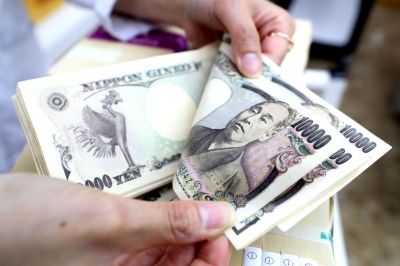
[Asia Economy Reporter Lee Ji-eun] As U.S. economic indicators exceeded market expectations, the value of the yen against the dollar briefly surpassed the 147 yen level, marking its lowest point in 32 years. Despite a one-time intervention by the Bank of Japan in the foreign exchange market, the yen's weakness is further fueled by the failure to improve the trade deficit due to declining export competitiveness.
According to Bloomberg on the 13th (local time), the yen exchange rate in the Tokyo foreign exchange market was trading at 147.27 yen per dollar. The previous day, the dollar-yen exchange rate briefly reached 147.59, breaking the 147 yen level for the first time in 32 years since August 1990. The U.S. September Consumer Price Index (CPI) rose 8.2% year-on-year, surpassing the market forecast of 8.1%, leading to expectations that the U.S. Federal Reserve's tightening stance will continue, which in turn triggered yen selling.
Although the currencies of major countries have been declining recently, the yen's weakness has shown little improvement despite intervention by foreign exchange authorities. Experts see Japan's weakened economic structure as the main factor deepening the yen depreciation phenomenon. According to Japan's trade statistics report, Japan's trade deficit in August was 2.8173 trillion yen (approximately 27.9394 trillion won), marking the largest deficit in 43 years.
The chronic trade deficit structure in Japan is due to a decline in manufacturing competitiveness. Leading Japanese companies such as Sony, Panasonic, and Toshiba have struggled against Samsung Electronics and Taiwan's TSMC, causing the economic structure that maintained a current account surplus through foreign investment income from trade surpluses to collapse. The relocation of factories overseas and the sharp rise in raw material prices due to the Russia-Ukraine war also contributed to the deepening trade deficit, as money outflows increased beyond earnings from abroad.
When the trade deficit widens like this, the selling pressure on the yen accelerates, leading to a 'vicious cycle of yen depreciation' where the yen's value falls. This explains why the yen depreciation has not stopped despite recent government market interventions.
Regarding this, the Nihon Keizai Shimbun explained, "The structure of relying solely on energy imports and the overseas relocation of production bases have solidified the trade deficit structure, increasing yen selling," adding, "This also proves that Japan has failed to resolve chronic issues such as falling prices and wages since the bubble economy collapse."
It further suggested that a large-scale structural reform to restore export competitiveness is required to improve the yen depreciation phenomenon. Nihon Keizai stated, "The reason why Japan's financial policy has not normalized is because the Japanese economy has weakened," explaining, "In 1998, yen selling increased due to temporary financial market instability, but currently, yen selling is accelerating due to chronic economic stagnation such as falling prices and wages."
© The Asia Business Daily(www.asiae.co.kr). All rights reserved.

















