Temple where Wonhyo Daesa saw Gwanse-eum Bosal
Topography of a turtle carrying a sutra entering the Dragon Palace
Hyangilam is counted as one of the 4 major sea Gwanse-eum prayer sites
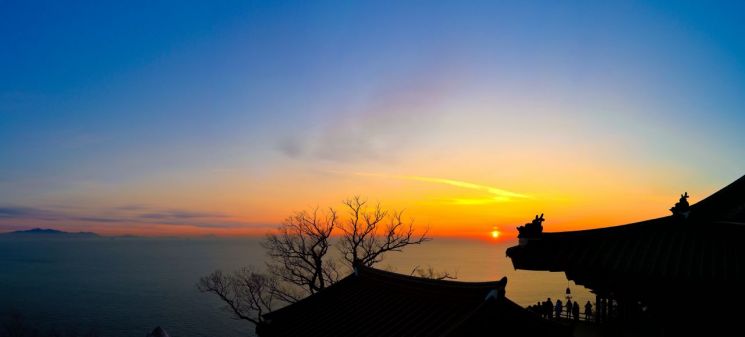
Hyangilam (向日庵) is located on Geumosan Mountain in Dolsan-eup, Yeosu City, Jeollanam-do. It is a temple founded by the monk Wonhyo, who is said to have seen Avalokitesvara Bodhisattva while practicing asceticism there. In modern times, the rocks on the back mountain were said to resemble a turtle's back, so it was called Yeongguam (靈龜庵). The recently renamed Hyangilam means a temple facing the sunlight. The sunrise there is exceptionally beautiful.
The 'Yeosu Geumosan Hyangilam area,' which offers a view of the magnificent natural scenery, is set to be designated as a nationally recognized scenic site. The Cultural Heritage Administration announced on the 13th that it will collect opinions from various sectors for a month and decide on the designation after a review by the Cultural Heritage Committee.
This place is an optimal natural viewpoint featuring sunrise scenery rising above the Namhae horizon, the horizon of Bonghwangsan (the parent mountain of Geumosan) touching the sky, and various maritime views including Geumsan in Namhae across Yeosu Bay. The terrain resembles a turtle (Geumosan's shape) carrying a sutra (Hyangilam) on its back, entering the Namhae Dragon Palace. The rock formations with turtle shell patterns, stone gates (inscriptions on steles and bricks), and the dense camellia forest between the rugged cliffs harmonize to create an outstanding natural landscape. It has been managed as a cultural asset since being designated as a Jeollanam-do cultural material in 1984.
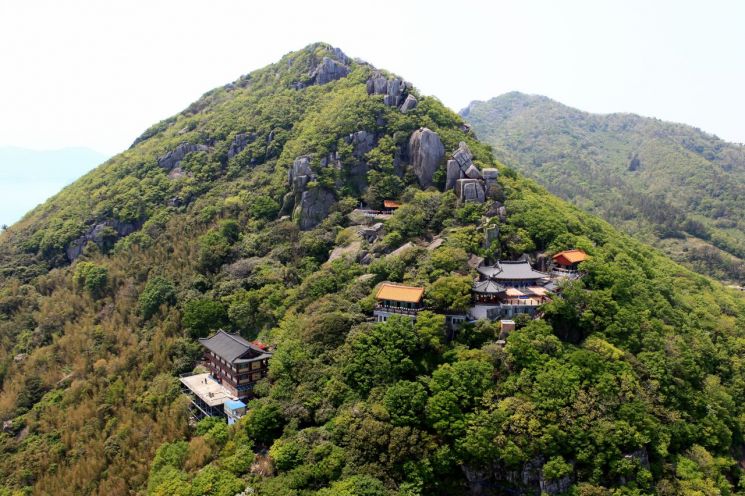
Hyangilam, the centerpiece, is considered one of Korea's four major seaside Avalokitesvara prayer sites, along with Naksansa in Yangyang, Boriam in Namhae, and Bomunsa in Ganghwa. It is often cited as an example of Buddhist culture in island regions. Nearby cultural heritage sites such as Dolsan County Office, Dolsan Hyanggyo Confucian School, Eunjeokam Hermitage, Bangdapjin Fortress (a Joseon naval base fortress), and Gulgang (a Joseon military facility for ship docking, repair, and maintenance) add to its historical and academic value.
A Cultural Heritage Administration official stated, "It is essentially a scenic viewpoint composed of pavilions and natural features," and added, "Natural elements, natural phenomena, residential areas, and relics?all conditions for scenic site designation?are all confirmed here."
© The Asia Business Daily(www.asiae.co.kr). All rights reserved.


















