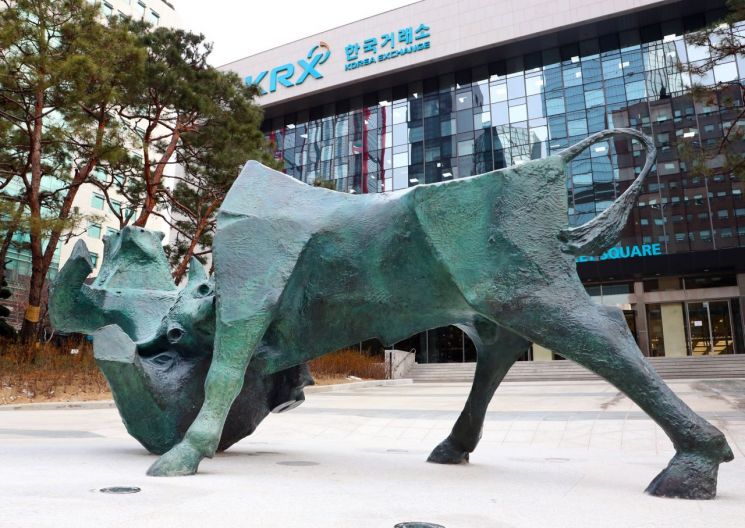
[Asia Economy Reporter Minji Lee] The Korea Exchange announced on the 7th that it will hold the ‘2022 Sound Stock Market Forum’ at the KRX Conference Hall, attended by over 150 experts from academia, the legal sector, financial investment industry, and related organizations.
This forum has been held annually since 2005 by the Exchange’s Market Surveillance Committee to discover policy tasks and seek improvement directions for enhancing the soundness of the capital market and protecting investors.
This year’s forum reflected opinions from various sectors emphasizing the need to improve market fairness by enhancing the effectiveness of detecting and sanctioning unfair trading. Presentations and panel discussions were held on two main topics: △ Diversification of sanctions for unfair trading △ Patterns of unfair trading in leading chat rooms and regulatory directions.
On the day, Sohn Byung-doo, Chairman of the Korea Exchange, said in his opening remarks, “I hope this discussion will serve as an opportunity for our capital market to develop into a trustworthy market,” and added, “We will continue to work closely with related organizations to eradicate unfair trading and enhance investor confidence.”
Kim Jung-gak, Standing Commissioner of the Securities and Futures Commission, said in his congratulatory speech, “The diversification of sanctions for unfair trading, which the government is promoting, is expected to greatly contribute to preventing repeated unfair trading,” and added, “To strengthen the detection of illegal short selling, we will enhance planned investigations related to short selling-linked unfair trading and pursue institutional improvements such as imposing long-term reporting obligations on short selling loans.”
In the first section related to the diversification of sanctions for unfair trading, Professor Kim Yoo-sung of Yonsei University presented the main issues of the Financial Services Commission’s initiatives on the ‘Insider Trading Pre-Disclosure System’ and the ‘Restrictions on Capital Market Transactions and Executive Appointments for Unfair Traders.’ The Insider Trading Pre-Disclosure System requires executives and major shareholders to publicly disclose their trading plans (purpose, price/quantity, period) at least 30 days before the planned trading date if they intend to trade 1% or more of the total shares issued by the listed company or trade amounts exceeding 5 billion KRW.
The restrictions on capital market transactions and executive appointments for unfair traders limit new transactions and account openings for financial investment products (regardless of listing status) and restrict the appointment of executives (directors, auditors, de facto executives) of listed companies for up to 10 years for those who violate unfair trading regulations.
Professor Kim stated, “There are limitations to preventing illegal insider activities solely through ex-post disclosure and sanctions, which recognizes the necessity of the pre-disclosure system,” and added, “To ensure the system’s effectiveness, prohibiting duplicate disclosures of trading plans and excluding exemptions from disclosure obligations for entities such as pension funds need to be reflected.” Furthermore, Professor Kim noted, “Regarding transaction restrictions for unfair traders, the Securities and Futures Commission should decide restriction periods on a case-by-case basis, but it is necessary to set detailed criteria reasonably.”
In the second section on the patterns of unfair trading in leading chat rooms and regulatory directions, Jeon Yang-jun, Team Leader of the Capital Market Investigation Division at the Financial Services Commission, introduced specific cases of unfair trading in leading chat rooms and presented response tasks related to these chat rooms.
Team Leader Jeon said, “Considering the widespread illegal activities occurring in leading chat rooms and the prolonged investigation and prosecution periods, prompt responses are necessary,” and added, “It is essential to swiftly secure substantial evidence by utilizing the Financial Services Commission’s investigation authorities such as search and seizure and on-site inspections.” He also mentioned, “It is necessary to consider applying market order disturbance offenses and to ensure rapid case handling through organic cooperation among related organizations.”
© The Asia Business Daily(www.asiae.co.kr). All rights reserved.

















