[Report] Visiting Seoul F&B Wonju Plant Producing 900,000 Dairy Beverage Units Daily
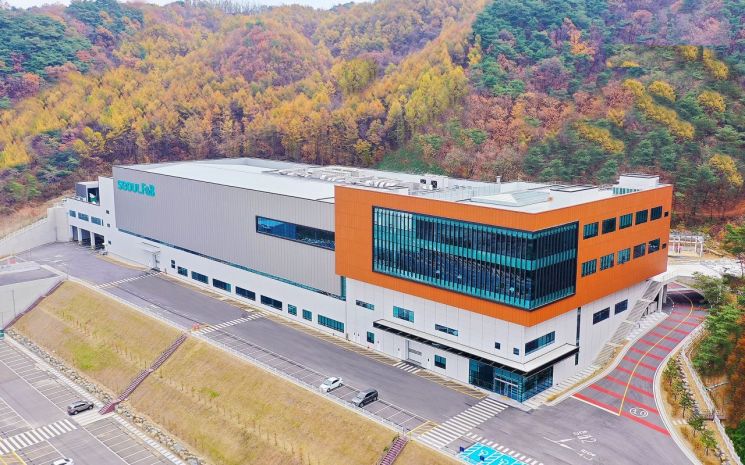
[Asia Economy Reporter Choi Dong-hyun] On the 6th, I visited the corporate city in Wonju-si, Gangwon Province. The Seoul F&B Wonju factory, about the size of five soccer fields (36,398㎡), is located on the foothills of Yeoubakgol Mountain, overlooking the new town apartment complex. This factory, where Seoul F&B established a smart factory for the entire production process and first operated in 2020, produces about 600,000 to 900,000 various types of dairy beverages daily. Park Hyun-jung, the factory manager of Seoul F&B Wonju, said, "Except for about 5 to 6 hours a day spent on cleaning, the production equipment runs at full capacity."
Seoul F&B is the largest domestic dairy beverage manufacturer producing over 450 products including cup coffee commonly seen in convenience stores, soy milk, refrigerated juice, and health functional foods. It has capabilities in Original Equipment Manufacturing (OEM), Original Design Manufacturing (ODM), and Original Brand Manufacturing (OBM). About 80 companies, including Seoul Milk, Maeil Dairies, Binggrae, Coca-Cola, E-Mart, and Homeplus, are clients of Seoul F&B.
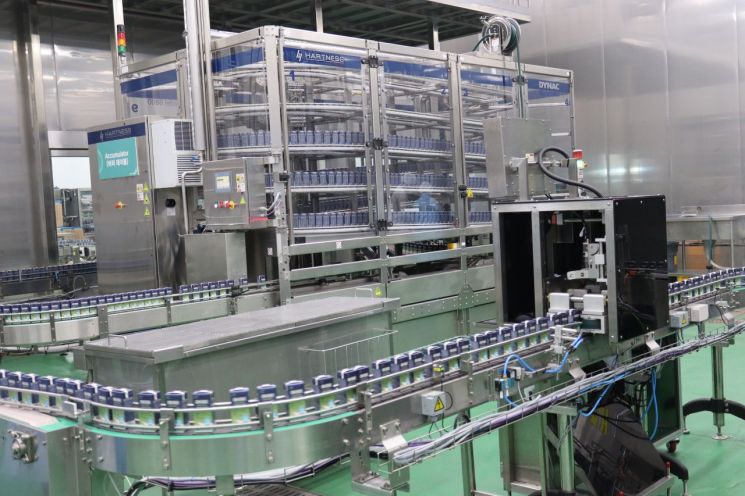
After changing into sanitary clothing and completing an air shower, I entered the production facility where the famous protein drink of Company A, the number one protein food company in Korea, was busily moving along the conveyor belt. At the beginning of the production line, containers for the drinks are stacked flat. When these containers enter the equipment, they are automatically assembled into drink containers. Then, hydrogen peroxide steam is sprayed for sterilization before the beverage is filled. After sealing the container opening, printing the expiration date, and attaching a straw, the production process is complete. An Pil-soon, Director of Production Management at Seoul F&B, explained, "All processes of beverage production are automated. Sensors carefully inspect whether the beverage is properly filled in the container and whether any defects occur during packaging into boxes before sending the products to the shipping area."
Seoul F&B’s smart factory is at the first stage of advancement. According to the Ministry of SMEs and Startups, the smart factory construction stages are divided into basic, stage 1, and stage 2. Stage 1 requires real-time data collection and analysis functions, while stage 2 requires real-time control functions. A Seoul F&B official said, "We plan to complete the first stage of advancement by the first half of next year and leap to stage 2. The ultimate goal of advancement is not only production automation but also ensuring that incorrect raw materials or defective products do not proceed to the next process, producing only perfect products."
Founded Seoul F&B after Backpacking Trip... "Inno-Biz Certification Was a Great Help"
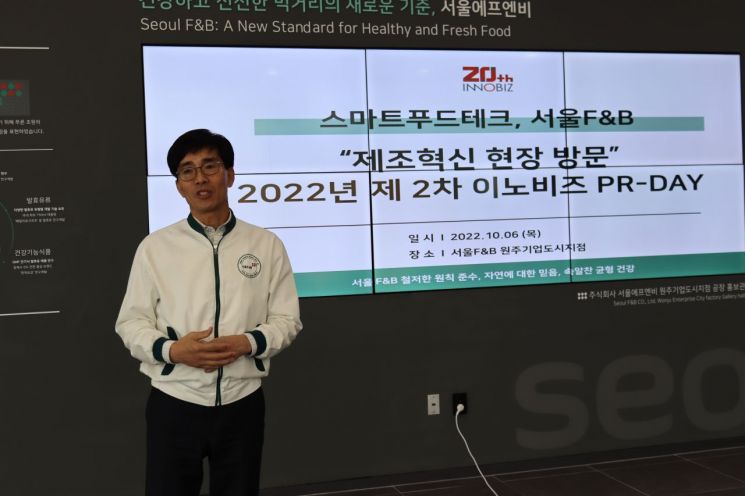
Oh Deok-geun, CEO of Seoul F&B, was a founding member of Pasteur Dairy, which introduced low-temperature pasteurized milk in Korea for the first time. However, when Pasteur went bankrupt due to the foreign exchange crisis in January 1998, he ended his 10 years and 6 months of employment. Afterwards, Oh set off with a backpack to Denmark, the homeland of dairy products, without a specific plan. He traveled around Europe for 10 months, contemplating what kind of work he should pursue in the future. Oh said, "In Denmark, I only saw dairy cows, and in Greece, I was only interested in cheese. Throughout the trip, I was immersed in dairy products," adding, "When I returned to Korea, the well-being trend was rising, so I founded Seoul F&B in 2005."
In the early days of the business, Oh did not receive any external consulting and personally designed the factory production line. He said, "I started the business with seed money of 380 million KRW. I purchased materials and directly hired welders to build the factory." He added, "Now that the company has grown, I only present the big picture, and capable personnel take care of the rest. We also designed the smart factory ourselves without external help," proudly stated.
During the startup phase, Oh needed additional funds to expand the business. However, banks rejected him repeatedly because the company was small and had no collateral. But after achieving sales of about 30 billion KRW and receiving the 'Inno-Biz Certification' in June 2012, the situation changed. The Inno-Biz certification is a system that selects technology-innovative small and medium enterprises with excellent technology and competitiveness and provides various benefits at the national level. Oh advised, "Thanks to the Inno-Biz certification, it became easier to secure funding. In the past, loans were difficult with technology alone, but recently, the situation has changed a lot, so companies should make good use of systems like Inno-Biz certification."
Challenging IPO in 2025
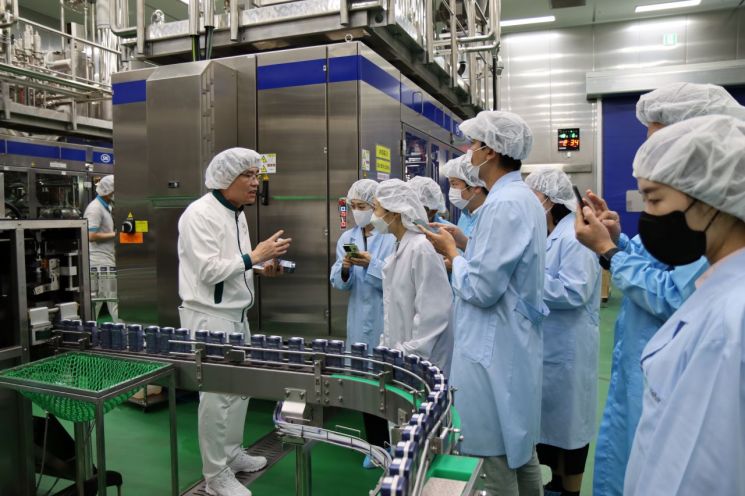 An Pil-sun, Director of Production Management Headquarters at Seoul F&B, is explaining the manufacturing process.
As of last year, Seoul F&B has grown into a company with sales of 136.5 billion KRW, operating profit of 5.3 billion KRW, and 450 employees. Forty percent of total sales come from its own brand OBM, and the rest from OEM and ODM. It also exports to more than 10 countries including the United States, China, Canada, and Thailand.
CEO Oh plans to list Seoul F&B around 2025. He said, "We are currently receiving estimates from three major domestic securities firms, and the company’s situation is stable enough that they all want to work with us. We plan to go public when sales grow to about 400 billion KRW and employee wages reach about 90% of those at large corporations."
Oh also plans to share the benefits of the IPO with employees. He stated, "After the listing, we plan to select employees who have worked hard for a long time and provide special bonuses over 10 years. We will make the company a place where employees can work longer in the future."
© The Asia Business Daily(www.asiae.co.kr). All rights reserved.



















