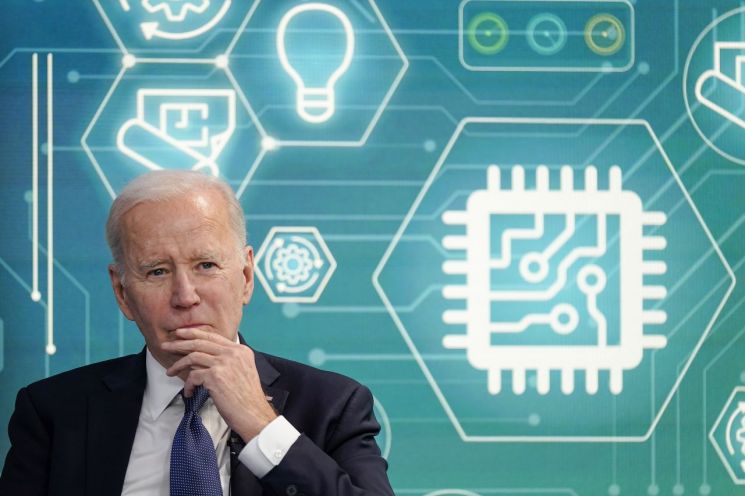
[Asia Economy Reporter Jeong Hyunjin] Reports have emerged that the U.S. administration under Joe Biden is expected to soon announce semiconductor industry regulations targeting China, but measures will likely be taken to ensure that companies such as Samsung Electronics and SK Hynix, which produce memory semiconductors in China, are not adversely affected. Since the regulations aim to curb the growth of China's semiconductor industry, efforts will be made to avoid difficulties for foreign companies. However, from the perspective of domestic semiconductor firms, the emergence of new regulations means that some impact is inevitable.
Some analysts suggest that as Chinese companies, which have been showing growth in the memory semiconductor market, face U.S. sanctions, domestic firms?recognized as 'memory market leaders'?may find an opportunity to catch their breath and further solidify their market position.
On the 6th (local time), major foreign media reported that the U.S. Department of Commerce plans to announce measures this week effectively banning the sale of U.S. semiconductor equipment to Chinese semiconductor companies. The primary targets of these regulations are Chinese memory semiconductor manufacturers such as Yangtze Memory Technologies Co. (YMTC) and Changxin Memory Technologies. These companies have recently been enhancing their memory semiconductor technology and rapidly expanding their market share.
According to reports, the new U.S. semiconductor industry sanctions against China under preparation include provisions requiring U.S. companies to obtain separate licenses before selling advanced technology to Chinese firms producing DRAM with 18 nanometers (nm; 1 nm is one billionth of a meter) or less, NAND with 128 layers or more, and logic chips with 14 nm or less.
A key issue is whether domestic companies with factories in China will fall under the scope of these regulations. Samsung Electronics operates a memory semiconductor plant in Xi'an, China, and SK Hynix has one in Wuxi. Multiple sources told foreign media that exports to foreign companies producing memory semiconductors in China will be subject to case-by-case reviews, with a high possibility of equipment export approvals. A source familiar with the matter stated, "The purpose of these regulations is not to harm companies other than Chinese firms."
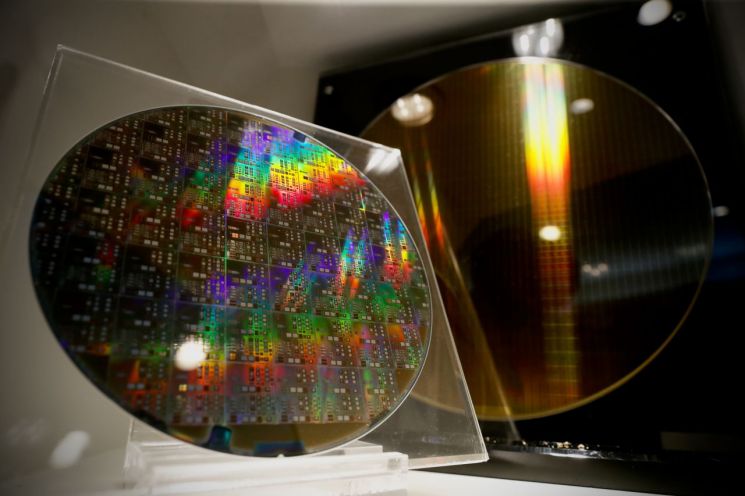
Based on this, foreign media reported that the Biden administration plans to take measures to ensure that Samsung Electronics and SK Hynix are not adversely affected by the new regulations.
However, for overseas semiconductor companies operating in China, the introduction of a case-by-case review process inevitably increases uncertainty. Since the U.S. government does not guarantee definite approval, business decisions such as importing semiconductor equipment may be affected depending on the issue and timing. Foreign media reported, "The case-by-case review is far from an 'explicit greenlight' for bringing U.S. equipment into Chinese manufacturing facilities, and foreign semiconductor companies remain concerned about potential conflicts with regulatory authorities."
On the other hand, some analysts argue that since Chinese semiconductor companies have recently grown rapidly in the memory semiconductor market, these sanctions could serve as a check, thereby strengthening the position of domestic semiconductor firms. The Wall Street Journal (WSJ) reported on the 5th that "the political nature of the semiconductor industry is increasing," and this trend simultaneously presents both challenges and opportunities for Samsung Electronics.
In addition to memory semiconductor-related content, foreign media have reported that the new sanctions the U.S. is preparing may include the 'Foreign Direct Product Rule (FDPR)' concerning the export of U.S. technology and equipment in foundry (semiconductor contract manufacturing) and other sectors. This rule allows the U.S. Department of Commerce to control exports not only of products made in the U.S. but also those produced overseas using U.S. technology and equipment. Since advanced semiconductor development and production are impossible without U.S. technology and equipment, this is interpreted as an effort to effectively control global semiconductor exports by leveraging technological capabilities.
Meanwhile, President Biden visited a manufacturing facility in New York where IBM is investing $20 billion and said, "Supply chains will start and end in the U.S. Government funding is crucial for revitalizing manufacturing and protecting U.S. national security by producing important products domestically that are currently made overseas."
He emphasized, "More will change for the better in the next 10 years than has happened in the past 40 years. We are in a more advantageous position than any other country in the second quarter of the 21st century," adding, "Semiconductors are necessary to build weapons systems for the future."
© The Asia Business Daily(www.asiae.co.kr). All rights reserved.


















