1st and 2nd Trials "Must Interpret as 'Planned Intent' Only"
Supreme Court "No Grounds to Limit to Planned Intent"
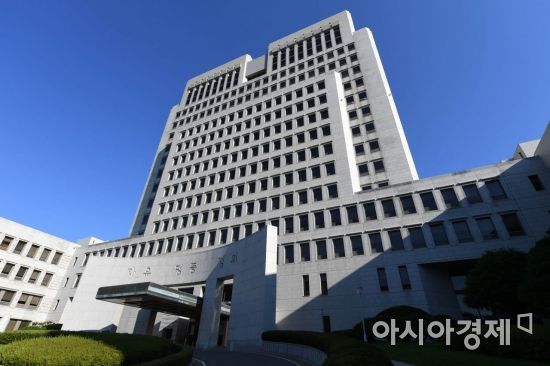
[Asia Economy Reporter Heo Kyung-jun] The Supreme Court has ruled that the term ‘wilful’ (intentional) stated in an English contract can be broadly interpreted to include ‘indirect intent’ as well.
The Supreme Court’s 3rd Division (Presiding Justice Kim Jae-hyung, former Supreme Court Justice) overturned the lower court’s ruling that favored plaintiff A Asset Management in an insurance claim lawsuit against KB Insurance and remanded the case to the Seoul High Court on the 7th.
In 2007, Company A attracted 12 billion KRW in investment funds for a real estate development project in the Tashkent region of Uzbekistan. The funds were then loaned to the project developer, but the project was canceled in 2013. Ultimately, investors filed a lawsuit claiming that Company A caused losses by lending funds without sufficient collateral, and some compensation rulings were finalized.
The issue arose when Company A filed an insurance claim for the compensation it had to pay to investors. KB Insurance argued that there was no reason to pay insurance because Company A operated the investment funds without sufficient collateral and caused losses to investors.
The key point in the trial was how to interpret the term ‘wilful’ in the exemption clause of the insurance contract written in English by both companies. The contract stated, “No damages shall be paid if compensation is claimed due to intentional fraud, neglect of duty, or wilful violation of laws by the insured.”
The first and second trials interpreted ‘wilful’ as limited to ‘planned intent’ and ruled that it was difficult to see that Company A had planned intent to violate the law, thus ordering the insurance payout.
However, the Supreme Court stated, “There is no reasonable basis to limit the meaning of ‘wilful’ to planned intent rather than general intent, and there is no reason to exclude ‘indirect intent.’ Since the judgment may differ depending on whether it falls under a violation of laws by ‘indirect intent,’ this part should be further examined and judged.”
© The Asia Business Daily(www.asiae.co.kr). All rights reserved.

















