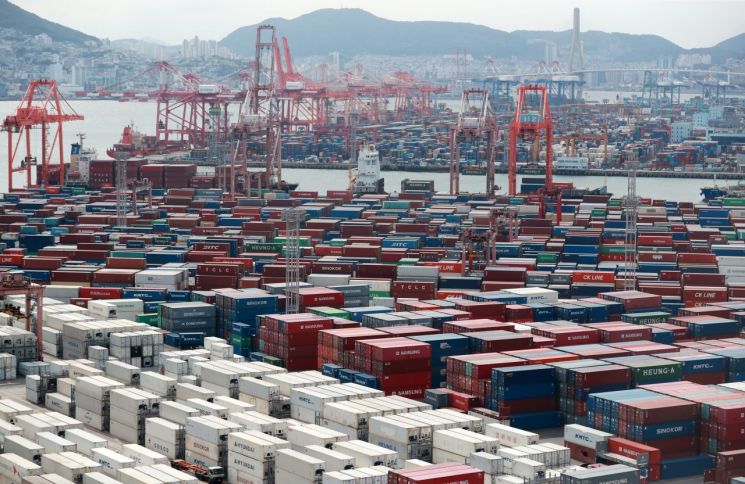
[Asia Economy Reporter Lee Ji-eun] The World Trade Organization (WTO) forecasted on the 5th (local time) that the global trade growth rate next year will be limited to 1%, as the rise in energy prices triggered by the Russia-Ukraine war and interest rate hikes coincide. If international trade slows down, there are concerns that the export-dependent South Korean economy could also be impacted.
In a report released that day, the WTO stated, "The global economy is facing multiple crises, and the economic outlook for 2023 is expected to be considerably bleak," lowering its previous global trade growth forecast from 3.4% to 1%. The global economic growth forecast was also revised down from 3.3% to 2.3%.
The WTO anticipated that Western countries' sanctions on Russia and the interest rate hike trend among major countries worldwide will affect the global trade market. In particular, it warned that if central banks of major countries raise benchmark interest rates excessively to curb inflation, a deeper economic recession could occur.
WTO Director-General Ngozi Okonjo-Iweala expressed concern, saying, "Low-income and developing countries are facing increasingly difficult economic conditions due to unstable food supplies and a debt crisis."
On the other hand, the trade growth forecast for this year was slightly raised from 3% to 3.5%. The WTO explained that this was influenced by countries that had depended on Russian energy increasing their imports of oil and gas from other countries, including those in the Middle East, thereby boosting trade volume.
The reason for the decline in global trade volume is analyzed as the trade volume, which temporarily increased due to the economic recovery from the COVID-19 recession, has subsided again. The Wall Street Journal reported, "The export growth that surged after the spread of COVID-19 is gradually slowing down," adding, "In China's case, severe real estate market downturn and strict COVID-19 control measures have reduced import demand."
The total value of U.S. goods exports and imports in August reflected these signs of economic slowdown. The U.S. Department of Commerce announced that goods exports in August decreased by 0.3% compared to the previous month, marking the first decline since January.
However, the WTO also analyzed that the slowdown in global trade growth has a positive aspect in reducing inflationary pressures. The decrease in trade volume improves supply chain conditions and reduces transportation costs.
Fred Neumann, Chief Asia Economist at HSBC Bank, explained, "Factory gate prices of companies located in Asia fell for the first time since mid-2020 in September," adding, "This is a sign that the slowdown in trade growth could influence inflation easing."
© The Asia Business Daily(www.asiae.co.kr). All rights reserved.

















