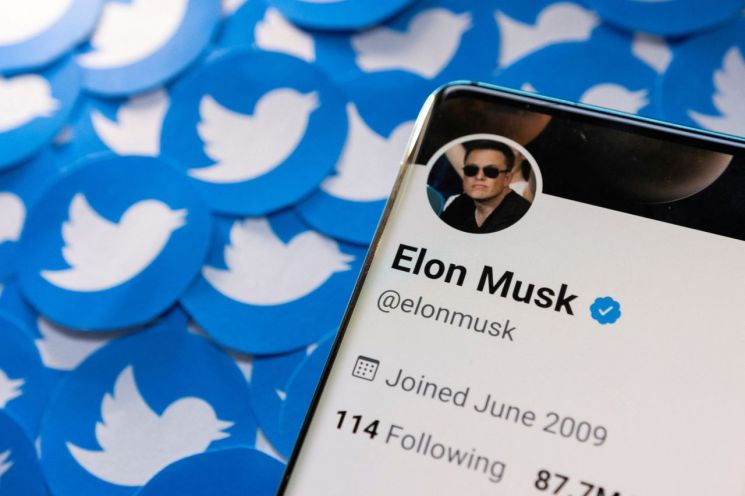
[Asia Economy Reporter Jeong Hyunjin] Elon Musk, CEO of Tesla, decided on the 4th (local time) to acquire the social networking service (SNS) Twitter as planned, causing mixed feelings among U.S. investors and Wall Street banks. Since the acquisition announcement in April, the direction of this deal has fluctuated over the past six months, creating both winners and losers in the process.
The Wall Street Journal (WSJ) reported on investors who stand to gain significantly following the news of the Twitter acquisition. According to the report, Carl Icahn, a famous billionaire investor known as a "corporate raider," has rapidly purchased approximately $500 million (about 710 billion KRW) worth of Twitter shares over recent months. At the time Icahn bought the shares, Twitter's stock price was estimated to be in the mid-$30 range. Reflecting the fact that Twitter's stock price rose more than 22% on the day the acquisition news broke, it is estimated that Icahn Enterprises, operated by Icahn, could realize profits exceeding $250 million.
WSJ also noted that besides Icahn, hedge funds such as D.E. Shaw Group and Third Point, led by billionaire investor Dan Loeb, have recently bet on Twitter shares and are expected to earn substantial profits. Sources told WSJ that Icahn believed Musk would not pursue a lawsuit he expected to lose, and even if a lawsuit proceeded and Musk won, the mid-$30 stock price would still justify the investment.
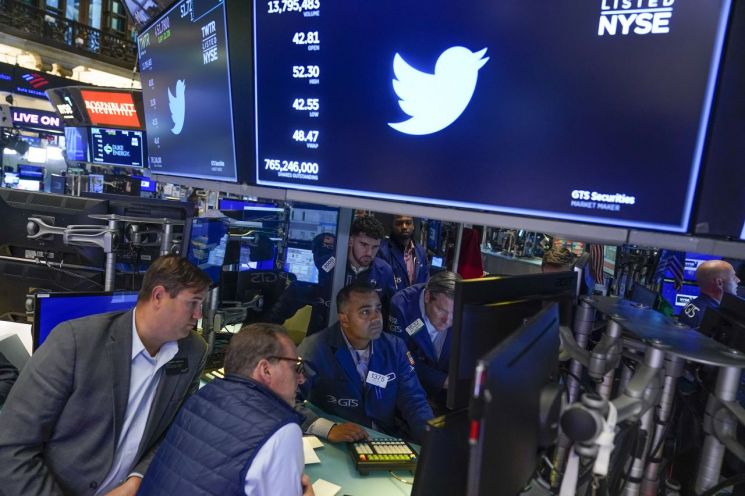
On the other hand, Wall Street banks are facing deep concerns. WSJ reported that some banks have breathed a sigh of relief for the time being. This is because banks involved in advising on the Twitter-Musk CEO deal are expected to earn advisory fees. Goldman Sachs, JP Morgan, and Allen & Company are advising Twitter, while Morgan Stanley, Bank of America (BoA), and Barclays are assisting Musk. If the acquisition is completed, these banks are expected to receive advisory fees totaling around $200 million.
However, Bloomberg News reported that banks helping Musk secure funding, such as Morgan Stanley, are likely to face headaches. In a letter sent to Twitter the previous day, Musk informed that he is waiting for the funds he planned to borrow. Initially, Morgan Stanley and others planned to lend to Musk and then sell these bonds to institutional investors, but concerns about a recession and difficulties in the financial market are expected to complicate this process.
There is another party sighing over this news. The stock price of the special purpose acquisition company (SPAC) created by former U.S. President Donald Trump has hit its lowest point. According to CNBC, the stock price of Digital World Acquisition Corp. (DWAC), known as the "Trump SPAC," closed at $17.10, down more than 5% from the previous day. This company planned to go public via a reverse merger with Trump Media, and the stock price on this day was the lowest since former President Trump announced the merger in October last year.
The reason for the SPAC's stock price decline is speculation that former President Trump will no longer need Truth Social. After being banned from Twitter following the January 6 Capitol riot last year, Trump created and has been using his own SNS, Truth Social. Musk previously stated that if he acquired Twitter, he would lift the suspension on Trump's account.
© The Asia Business Daily(www.asiae.co.kr). All rights reserved.


















