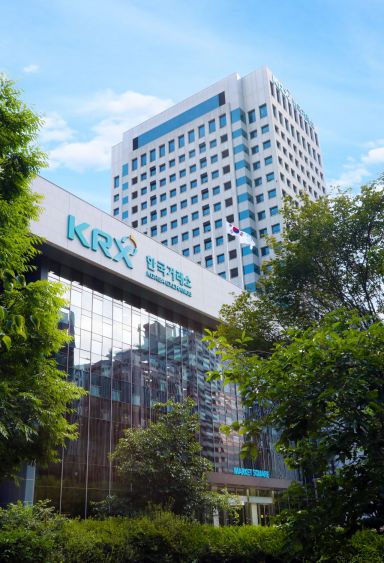
[Asia Economy Reporter Kwon Jae-hee] Ahead of the scheduled KRX regular index changes in December, investor interest is gathering around the 'index effect.' This comes as the stock market has continued a sluggish trend amid triple hardships of high inflation, high exchange rates, and high interest rates this year, raising expectations for positive catalysts. Given the large scale of passive funds tracking these indices, effectively leveraging this can increase profit potential, but caution is advised due to selling pressure from short selling.
According to the Korea Exchange on the 5th, the KRX index regular changes are set to take place on December 9. The review period covers May through October, with inclusion and exclusion of stocks determined based on the six-month (May 1 to October 31) average daily market capitalization. Currently, about 80% of the review period has passed, revealing the outline of the stocks to be included or excluded.
From an investor's perspective, the KRX regular changes present a good opportunity to benefit from the index effect by anticipating which stocks will be included or excluded. The KOSPI 200 and KOSDAQ 150 are the most widely used benchmark indices in the domestic stock market, and large-scale inflows from passive funds tracking these indices cause a temporary price increase effect, known as the 'index effect.'
In the securities industry, it is expected that in this December's regular changes, Samyang Foods and Lotte Confectionery have a high likelihood of being included in the KOSPI 200. Stocks expected to be excluded are Samyang Holdings and Boryung. On the rebalancing day, passive buying demand for Samyang Foods and Lotte Confectionery is projected to be approximately 29.5 billion KRW and 24.8 billion KRW, respectively. Especially, Lotte Confectionery, which has a relatively low average daily trading volume, is expected to experience the index effect on the rebalancing day. The inflow ratio compared to the expected trading volume is about 1473%. As of 9:36 AM on the 5th, Samyang Foods was trading at 106,500 KRW, down 2.29% from the previous trading day, and Lotte Confectionery was trading at 132,500 KRW, down 2.57%. Whether Samyang Foods will be included depends on its stock price trend during the remaining review period; if the decline is not significant this month, the likelihood of inclusion is high. There is also analysis that if Samyang Foods fails to be included in the KOSPI 200, Boryung may remain in the KOSPI 200 index.
In fact, institutional investors have generally shown net buying in the stocks expected to be included or excluded. The net buying ratio by institutional investors (excluding financial investment institutions) relative to market capitalization is relatively high at 0.8% for Lotte Confectionery and 1.3% for Samyang Foods.
For the KOSDAQ 150, 10 stocks are expected to be included and 10 stocks excluded. Stocks expected to be included are ▲Sungil Hitech ▲Eoflow ▲ISC ▲Canaria Bio ▲Fine Technics ▲Nextin ▲Intops ▲DearU ▲HPSP ▲The Nature Holdings.
Stocks expected to be excluded include ▲Dev Sisters ▲CMG Pharma ▲AP System ▲Apta Bio ▲Cafe24 ▲Gradient ▲Kona I ▲RSUPPORT ▲Wonik Holdings ▲Seoul Viosys.
However, it is important to note that short selling is increasing among the newly included stocks.
Lee Jae-rim, a researcher at Shinhan Investment Corp., said, "Since 2015, using a strategy of buying 50 trading days before rebalancing and selling on the rebalancing day has yielded an average relative return of about 5 percentage points compared to the KOSPI 200," adding, "It is necessary to refer to institutional demand and supply to confirm the pre-reflection of the index effect."
© The Asia Business Daily(www.asiae.co.kr). All rights reserved.
![Clutching a Stolen Dior Bag, Saying "I Hate Being Poor but Real"... The Grotesque Con of a "Human Knockoff" [Slate]](https://cwcontent.asiae.co.kr/asiaresize/183/2026021902243444107_1771435474.jpg)
















