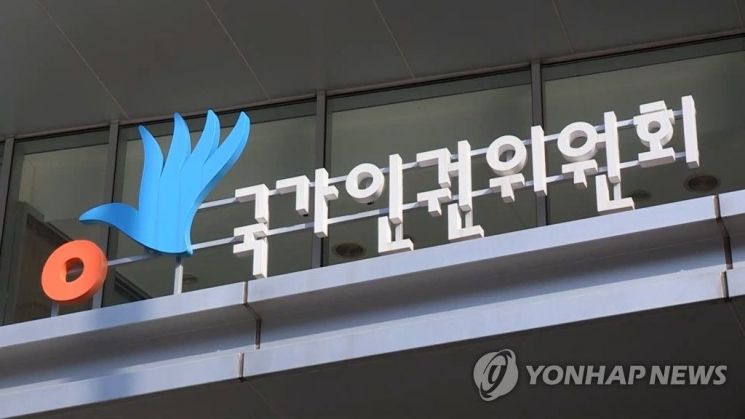
[Asia Economy Reporter Gong Byung-sun] The National Human Rights Commission of Korea (NHRCK) has recommended the Ministry of Justice improve the residence status for foreigners who wish to stay in Korea to raise their children with Korean nationality alone.
On the 4th, the NHRCK stated, "We recommend the Minister of Justice to improve the residence status so that foreigners can stably find employment and receive support from social security systems."
According to the NHRCK, a foreign national, Ms. A, stayed in Korea under a language training visa (D-4-1) and dated a Korean national man with the intention of marriage. During their relationship, she became pregnant and gave birth, but later found out that the man had lied about his name, age, and marital status, leaving her to raise the child alone.
When Ms. A's language training visa expired, she requested the Immigration Office to change her residence status to marriage immigrant (child-rearing, F-6-2), but was instead granted a visiting cohabitation visa (F-1). Ms. A claims that the F-1 visa’s two-year duration is too short and does not allow employment, making it difficult to raise her child alone. However, the Immigration Office argued that under the current Immigration Control Act, the marriage immigrant visa can only be granted when raising a child born from a marriage with a Korean national, and that employment is sufficiently possible under the F-1 visa. They also stated that although the residence period is two years, it can be extended continuously, so there is no problem.
The NHRCK viewed that the F-1 visa alone makes it difficult for single-parent families to raise children. The commission explained, "Even if economic activities are permitted outside the residence status, employment is limited to certain fields such as foreign language conversation instructors or seasonal workers," and added, "Paying fees every two years and having to change residence status is also burdensome." Furthermore, "The visiting cohabitation visa is generally granted to those staying for the simple purpose of 'family cohabitation,'" and "It is inappropriate to grant the visiting cohabitation visa to foreigners in single-parent families who wish to stay in Korea to raise their children," the commission added.
The NHRCK also judged that it is unreasonable to exclude foreigners raising children with Korean nationality from necessary social security systems such as the Basic Livelihood Security Program, Emergency Welfare Support Program, and Multicultural Family Support Program, even if they are not married to a Korean national.
However, the NHRCK concluded that this case does not constitute a human rights violation, as foreigners can stay in Korea and engage in limited employment activities under the visiting cohabitation visa alone.
© The Asia Business Daily(www.asiae.co.kr). All rights reserved.

















