Low Entry Barriers Lead to Illegal Cultivation and Distribution
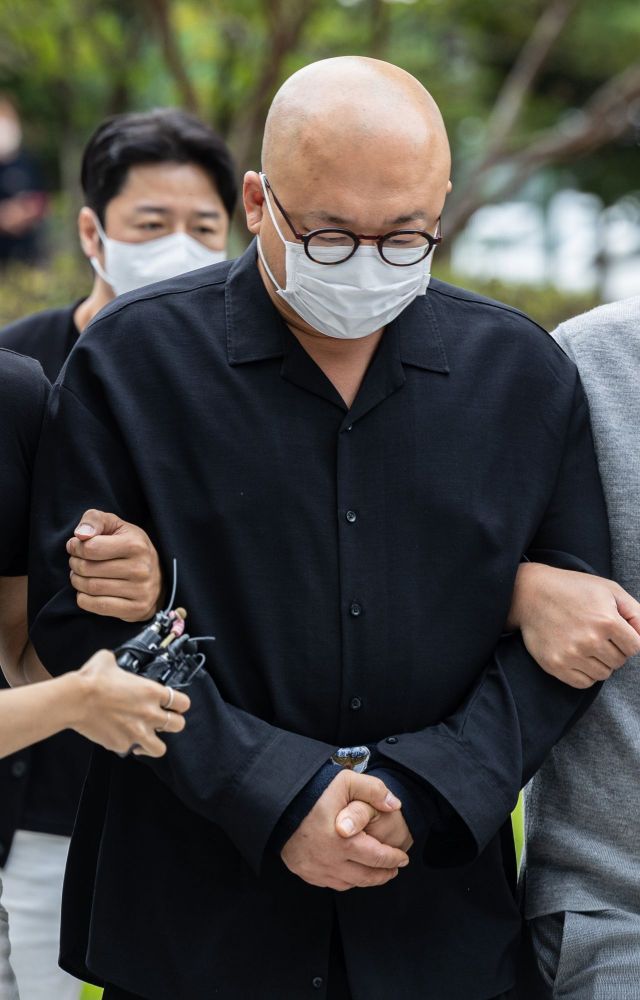 On September 28, renowned composer Don Spike was undergoing a warrant hearing on charges of drug use. Don Spike was previously sentenced for marijuana smoking over 10 years ago. [Image source=Yonhap News]
[Asia Economy Culture Young Intern Reporter] "Once you start with marijuana, you tend to seek stronger drugs like cocaine and heroin."
Composer and businessman Don Spike (real name Kim Min-su), who was arrested on drug use charges, is known to have smoked marijuana several times over 10 years ago. He was sentenced twice in 2010 for violating the Narcotics Control Act, and it is reported that from 2008 to 2009, he engaged in buying, receiving, and smoking marijuana about 20 times.
Some voices argue that stronger punishment is necessary since marijuana is considered an introductory drug. As drug problems worsen, there are calls to eradicate marijuana, known as a so-called "gateway drug," which leads to more serious drug use.
◆ Increase in marijuana-infused foods such as marijuana cookies
The number of drug offenders continues to rise. Last year, the amount of drugs seized by prosecutors reached a record high, and from January to July this year, 10,575 drug offenders were caught, a 12.9% increase compared to 9,363 during the same period last year.
According to the Narcotics Control Act, purchasing, possessing, consuming, or transporting marijuana is punishable by up to five years in prison or a fine of up to 50 million won. Various marijuana products such as liquid marijuana, jelly, cookies, candy, and chocolate are increasingly being seized. Liquid marijuana is a concentrated form of the hallucinogenic component of marijuana and is over 40 times stronger in hallucination effects than regular marijuana. The highest-grade marijuana grown in Europe sells for about 150,000 won per gram. Unlike marijuana, it emits almost no smell, making it easy to disguise as a regular e-cigarette.
Incheon Customs reports that as regions like the United States and Canada legalize marijuana, the number of domestic import cases has increased. Most areas in the U.S. have legalized medical marijuana, and some states have even allowed recreational use.
Canada and Thailand are also countries that have legalized marijuana. In Thailand, minors are being exposed to marijuana-containing foods without protection. Local media reported that a 3-year-old girl was hospitalized after eating a marijuana cookie, and a 16-year-old youth experienced vomiting, anxiety, and hallucinations after consuming marijuana chocolate. As misuse cases surge, medical experts are concerned about the health and safety of children and adolescents.
Experts point out that concerns about domestic importation are rising due to countries legalizing marijuana. Oh Yoon-sung, a professor in the Department of Police Administration at Soonchunhyang University, said, "Since many countries have legalized marijuana, it can become an entry point. Marijuana is a definite drug, but because it is considered less potent than other drugs, the punishment is lighter. The most important thing is to strengthen 'detection' and 'punishment.'"
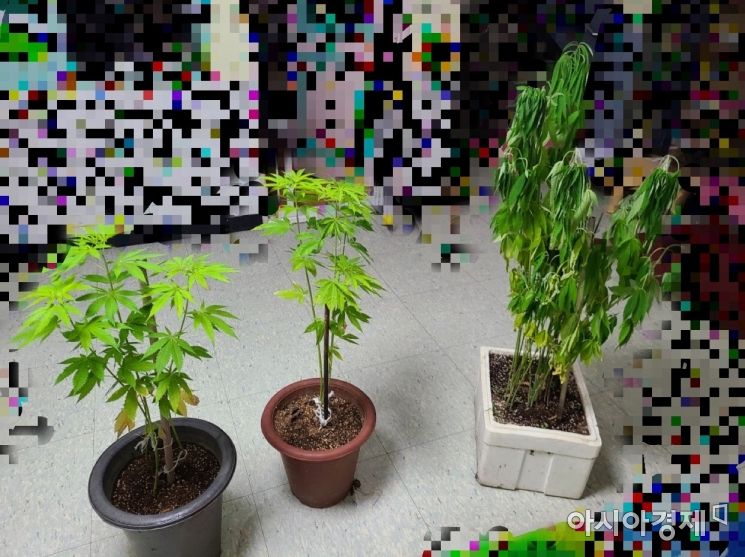 In August of last year, marijuana was found being cultivated inside a daycare center in Incheon. The daycare center director's son grew 13 marijuana plants inside the facility to avoid detection. When the plants grew over 1 meter tall, they were transplanted into pots. After being caught, 260 grams of marijuana were seized, which is enough for approximately 4,300 doses.
◆ Increase in marijuana cultivation sites… illegal cultivation and distribution also occurring
Recently, the number of reported marijuana cultivation sites in Korea has increased 2.7 times over five years. According to data on "Marijuana Cultivation Status" received by Democratic Party lawmaker In Jae-geun, a member of the National Assembly's Health and Welfare Committee, from the Ministry of Food and Drug Safety, in the first half of 2017, the number of reported cultivation households was 254, actual cultivating households 75, and cultivation area reached 31.1285 hectares.
To cultivate marijuana for medical or other purposes, permission must be obtained from the special self-governing mayor, mayor, county governor, or district head, and cultivation area, production status, and quantity must be reported twice a year. However, illegal cultivation is taking place by exploiting loopholes in the system and inadequate field inspections.
Marijuana is also illegally cultivated and distributed by renting commercial buildings or abandoned factories. In June, police caught a case where a plant cultivation tent was installed in an abandoned factory in Gyeonggi Province. They had installed ventilation devices to remove odors generated during marijuana cultivation and drying, and it was confirmed that the products were sold on dark web sites. Dark web sites require special programs to access and cannot be traced by normal methods, making them prone to illegal cybercrime use.
Due to the nature of marijuana cultivation sites, which are often in remote mountainous or isolated areas, it is difficult for enforcement officers to inspect all locations directly. Accordingly, the police recently notified the Ministry of Food and Drug Safety of the need for system improvements, considering the high possibility of marijuana-related crimes.
The government is also working to eradicate drug crimes through legal amendments. According to the amendment to the Narcotics Control Act announced by Democratic Party lawmaker Seo Young-seok of the National Assembly's Health and Welfare Committee in April, penalties for providing marijuana to minors or causing them to smoke or consume it have been strengthened from imprisonment of one year or more to imprisonment of three years or more. Additionally, a clause proposing imprisonment of five years or more for habitual offenders was also suggested.
© The Asia Business Daily(www.asiae.co.kr). All rights reserved.


















