OPEC+ Large-Scale Production Cuts Expected, International Oil Prices Surge
High Exchange Rates Drive Import Price Increases, Adding Oil Price Uncertainty
Tight Monetary Policy Inevitable if High Inflation Continues in Second Half
Next Week's Bank of Korea Monetary Policy Meeting... Calls for 'Big Step' Increase
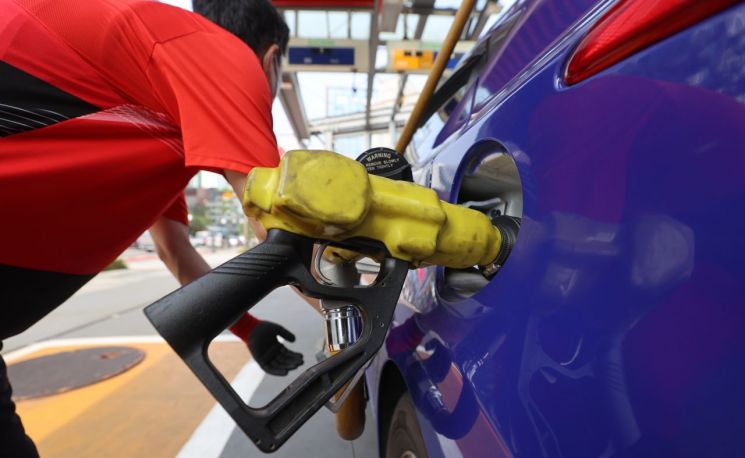
Amid rising import price pressures due to the high exchange rate, international oil prices are showing instability as recent forecasts suggest major production cuts by oil-producing countries. If oil prices, which had stalled in the second half of the year, continue their high ascent, domestic inflationary pressures will inevitably increase, leading to expectations that the Bank of Korea will accelerate its tightening monetary policy.
On the 3rd (local time) at the New York Mercantile Exchange (NYMEX), November delivery West Texas Intermediate (WTI) crude oil closed at $83.63 per barrel, up 5.2% ($4.14) from the previous trading day. December Brent crude oil on the London ICE Futures Exchange also traded up 4.4% ($3.72) at $88.86 per barrel.
The international oil price surged more than 3% intraday due to growing expectations that the Organization of the Petroleum Exporting Countries (OPEC) and its allied group including Russia, known as ‘OPEC Plus’ (OPEC+), will agree on large-scale production cuts at their regular meeting on the 5th. Due to the war between Russia and Ukraine, international oil prices, which soared well above $100 earlier this year, fell to the $80 range this month for WTI amid strong U.S. monetary tightening and economic recession concerns. Therefore, oil-producing countries are likely to cut production to push prices back up.
If OPEC+ agrees to cut production by about 1% of global supply, approximately 1 million barrels per day as market forecasts suggest, the resulting oil price shock could impact the global economy and deliver a shock to the domestic market as well. South Korea is already facing increased import price burdens due to the won-dollar exchange rate rising to the 1,440 won level recently, so the damage from rising oil prices could be even greater. The domestic consumer price inflation rate surged to the 6% range in June and July but fell to 5.7% in August, largely due to the decline in oil prices. If high oil prices become more pronounced in the second half of the year, the peak of inflation could be delayed.
In this case, the Bank of Korea’s monetary policy, which has been playing the role of an ‘inflation fighter,’ is expected to face deeper challenges. Bank of Korea Governor Lee Chang-yong has so far issued forward guidance on inflation trends based on the assumption that there would be no changes in overseas factors such as oil prices. If a variable such as large-scale production cuts by oil-producing countries emerges contrary to Governor Lee’s expectations, there is a growing possibility that the Monetary Policy Committee will pull out the ‘big step’ card (a 0.50 percentage point base rate hike) in the remaining meetings of October and November this year to curb inflation.
However, the United States, which is rapidly raising its base interest rate due to severe inflation, opposes the production cut plans, and concerns about a global economic recession are also growing, so downward pressure on international oil prices is expected to be significant. Kim Kwang-rae, senior researcher at Samsung Futures, explained, “Oil prices are rising because OPEC+ announced plans to consider production cuts exceeding 1 million barrels per day. However, just three months ago, production cuts exceeding 1 million barrels compared to the current level were effectively already in place, and the actual OPEC production volume shows a difference close to 2 million barrels compared to the production target, so the likelihood of a large-scale production cut actually occurring in November is not high.”
© The Asia Business Daily(www.asiae.co.kr). All rights reserved.

















