'Jaejikja Jeonhyeong' New Student Enrollment Rate: 96.2% in Seoul Metropolitan Area, 49.2% in Non-Metropolitan Areas
75% of National Scholarship Recipients for High School Graduates Are Students at Seoul Metropolitan Universities
Significant Regional Disparities in Number of Universities and Departments, Limited Choices in Non-Metropolitan Universities and Departments
[Asia Economy Honam Reporting Headquarters, Reporter Heo Seon-sik] As high school graduate recruitment expands, the number of so-called "Jikdaeding" youth?those who enter the workforce immediately after graduating from specialized high schools and simultaneously attend university while working?has significantly increased. However, there is a substantial gap between Jikdaeding youth in the Seoul metropolitan area and those in non-metropolitan regions.
According to data on new student enrollment status by university for the "Employed Worker Admission Track" (hereafter referred to as the Employed Worker Track) submitted by the Ministry of Education to National Assembly Education Committee member Seo Dong-yong (Democratic Party, Jeonnam Suncheon-Gwangyang-Gokseong-Gurye Eul), metropolitan universities had 2,930 enrollments out of 3,030 recruitment spots, resulting in a registration rate of 98.7%. In contrast, non-metropolitan universities enrolled only 1,246 students out of 2,534 spots, achieving just 49.2%, failing to fill even half of their total recruitment quota.
Furthermore, when high school graduate employees enter university, the government actively supports them through national scholarships covering 50% to 100% of tuition fees to help balance work and study. However, these national scholarships are primarily awarded to students attending universities in the metropolitan area.
Reviewing the Korea Student Aid Foundation's scholarship status for "Post-High School Learners (Hope Ladder II Type)" over the past three years, the number of scholarship recipients has increased annually. During the same period, the number of scholarship recipients at metropolitan universities increased by 1,268, while non-metropolitan universities saw an increase of only 509 students. Approximately 75% of scholarship recipients were students from metropolitan universities.
The Employed Worker Track mainly targets adult learners ranging from early career workers to middle-aged individuals, who have a high demand for retraining related to their occupations. This should be viewed separately from the issue of declining enrollment at regional universities due to a decrease in the school-age population.
In particular, high school graduate employees still face limitations in workplace conditions such as salary and promotion compared to university graduates. Therefore, many young high school graduate employees pursue the Employed Worker Track to balance work and study in hopes of better working conditions or changing to better jobs.
Nonetheless, compared to the metropolitan area, youth in non-metropolitan regions face practical difficulties in balancing work and study due to a lack of universities offering the track, distance between workplace and university, and working conditions related to company size.
Looking at the nationwide status of universities implementing the Employed Worker Track, except for Seoul, Gyeonggi, and Busan, few universities in other regions offer this track. Some regional flagship national universities do not even implement this admission track.
Examining the offered departments, they are mainly composed of humanities and social sciences such as business administration, economics, and public administration. Conversely, departments in engineering or natural sciences, which could strengthen specialized education for graduates of specialized high schools, are very scarce.
Due to the mismatch between regional industrial demand and vocational education, it is pointed out that it is difficult to encourage participation from companies to train high school graduate employees, especially in regions with many small and medium-sized enterprises.
Interviews with students admitted through the Employed Worker Track reveal that many could not find their desired major when choosing a university. Ultimately, distance from the workplace and the pros and cons of the admission track were the biggest considerations in selecting a university.
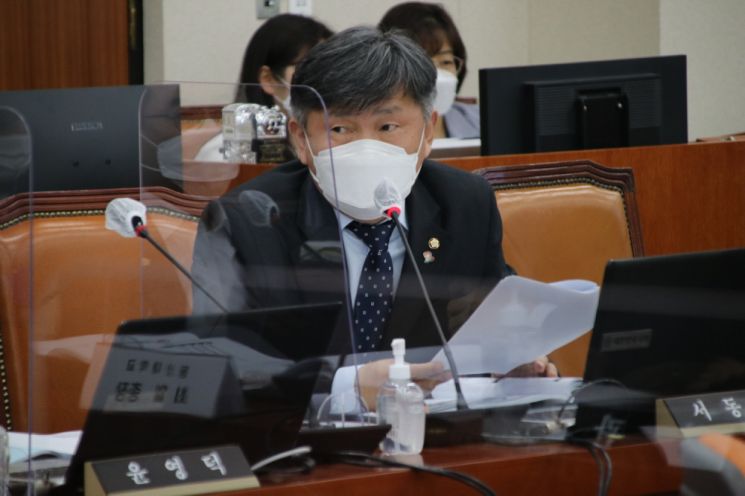
Assemblyman Seo Dong-yong stated, "As the number of so-called Jikdaeding youth who balance work and study steadily increases, perceptions of high school graduate workers have greatly improved. However, university infrastructure and learning environments are concentrated in the metropolitan area, making it difficult for high school graduate youth living in regional areas to participate." He added, "This inevitably leads to a significant gap in the cultivation of high-level talent between metropolitan and non-metropolitan areas."
Finally, Assemblyman Seo said, "To ensure that Jikdaeding youth can receive quality higher education services regardless of region, we must actively expand university curricula and online lectures to improve educational accessibility. Through this, our society should strive to improve negative social perceptions, treatment, and motivation related to high school graduate employment."
Asia Economy Honam Reporting Headquarters, Reporter Heo Seon-sik hss79@asiae.co.kr
© The Asia Business Daily(www.asiae.co.kr). All rights reserved.
![User Who Sold Erroneously Deposited Bitcoins to Repay Debt and Fund Entertainment... What Did the Supreme Court Decide in 2021? [Legal Issue Check]](https://cwcontent.asiae.co.kr/asiaresize/183/2026020910431234020_1770601391.png)















