[Seoul District News] Seongdong-gu to Conduct 'Metaverse-Based Safe School Route Living Lab Class' for Eungbong Elementary 4th and 5th Graders in September & Invests 310 Million KRW Reflecting Children's Opinions; Responsive Keybot and Smart Alley Warning Lights to Be Installed... Gwanak-gu Provides Up to 1.2 Million KRW for Flood Victims' Home Renovation... Guro-gu Offers Up to 800,000 KRW Discount on Real Estate Brokerage Fees for Flood-Affected Residents
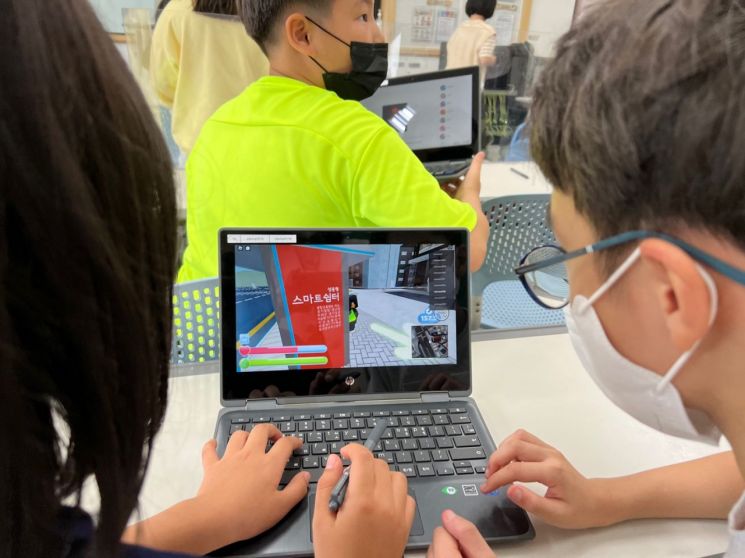 Students of Eungbong Elementary School participating in the 'Living Lab for Safe School Routes Created with the Metaverse' class
[Asia Economy Reporter Park Jong-il] Seongdong-gu (Mayor Jung Won-oh) is promoting a smart safe school route project that directly involves children. When it comes to safety issues, wouldn't traffic experts or at least local adults know best? The answer is "No."
Alleys that seem harmless to adults can be frightening places for children, who may fear that "there are bad people threatening them" and thus avoid these routes. The essence of a living lab is that the experts who identify and solve problems are none other than the stakeholders themselves, and Seongdong-gu has attempted a living lab to address children's safety issues.
First, there was a question of how to involve children in school commute safety issues. The solution devised was the "Living Lab for Safe School Routes Created in the Metaverse." They created a game called Sweet Home, Safe School on Roblox, the metaverse game most loved by elementary school students, simulating the journey from home to school.
Seongdong-gu developed a curriculum reflecting social problem-solving content from elementary social studies after virtually experiencing the school routes through this game. Collaborating with Eungbong Elementary School, they organized three regular class sessions for all 4th and 5th-grade classes and conducted the program throughout September.
After the game competition, the living lab for establishing safe school routes was actively conducted. Children diligently worked by placing stickers on maps around the elementary school to indicate dangerous spots and suggest possible solutions.
From minor opinions like "There is a lot of trash in the playground" and "A dog without a leash near the school park scares me" to traffic policy improvement suggestions such as "The green light at the school crosswalk is too short" and "There are many steep slopes," a variety of voices were gathered.
Based on the opinions collected during the children's living lab classes, the district will invest a total budget of 310 million KRW, including funds secured through a digital public contest and district funds, to improve school routes. Various smart solutions such as responsive Keybots, smart reflectors, intelligent electronic signboards, and intelligent CCTVs will be installed on the routes. These installations will be reflected back into the metaverse game so that children can experience their effects in the virtual world as well.
Seongdong-gu conducted the first phase of the safe school route living lab over three years from 2018 to 2020, targeting all 21 elementary schools. Various residents including school staff, parent groups, and local merchants participated alongside traffic experts and related government officials, resolving a total of 94 safety issues and receiving significant positive feedback.
Jung Won-oh, Mayor of Seongdong-gu, said, "While it is important for the authorities to propose solutions to children's safety issues, that alone has its limits. Going forward, we will expand the smart safe school route project that children participate in themselves to create a safer city."
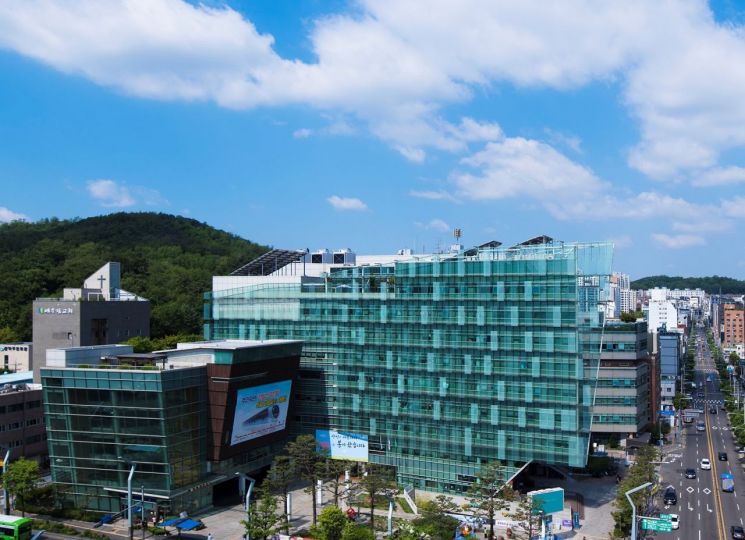
Gwanak-gu (Mayor Park Jun-hee) began accepting applications on the 4th for "Flooded Household Home Repair Support" to help residents affected by recent record-breaking heavy rains quickly return to their daily lives.
The home repair support targets 4,816 households recognized as flood victims whose homes were damaged in August, providing up to 1.2 million KRW to landlords and tenants.
Eligible expenses include wallpaper and flooring replacement, waterproofing work, repairs to sinks, washbasins, and toilets caused by flooding.
Repair costs will be paid after verifying objective evidence such as receipts and payment details, and will be provided to households meeting the payment criteria. Reimbursement is also possible for households that have already completed repairs upon verification of receipts and other evidence.
If landlords and tenants jointly carry out home repairs, the support will be provided proportionally according to their share of repair costs.
Applications will be accepted at the respective community service centers until October 28, with payments made after review and confirmation.
The district has prepared detailed guidelines through consultations with Seoul City to ensure prompt support for flood-affected households and has simplified required documents to facilitate easier applications, supporting faster recovery for residents.
Before the Chuseok holiday, the district already paid 2.5 million KRW to households recognized as flood victims. This includes the existing 2 million KRW housing flood recovery fund plus an additional 500,000 KRW from district funds as a "Disaster Recovery Living Stability Support Fund."
Additionally, approximately 2.7 billion KRW in "Living Stability Support Funds" of up to 2.5 million KRW each have been paid to 1,918 flood-affected homeowners. The district extended the application deadline until the end of October for homeowners who have not yet applied.
Furthermore, the district secured an additional budget of 800 million KRW for flood prevention facilities such as underground housing water barriers and indoor backflow prevention devices, re-inspected and urgently dredged 18,717 rainwater inlets in affected areas, and is promoting flood insurance enrollment to ensure effective compensation for property damage, making every effort to create a flood-safe Gwanak.
Mayor Park Jun-hee said, "Although significant damage occurred due to record-breaking heavy rains, we are doing our best to prepare various measures so residents can return to their daily lives as soon as possible. We will continue to implement policies that minimize flood damage and provide practical assistance to residents."
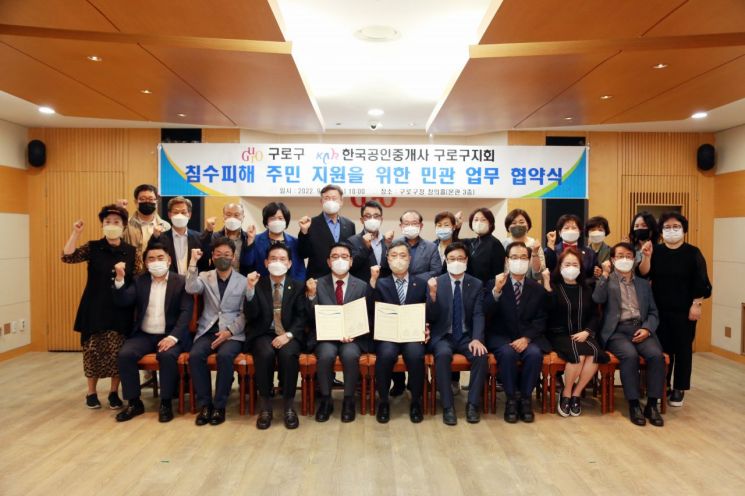
Guro-gu (Mayor Moon Heon-il) announced that on the morning of the 28th of last month at Guro-gu Office, it signed a public-private business agreement with the Guro-gu branch of the Korea Association of Realtors to support residents affected by flooding.
About 30 people attended, including Mayor Moon Heon-il, Yang Dong-in, head of the Guro-gu branch of the Korea Association of Realtors, former branch head Kim Jin-guk, and other officials.
This agreement was prepared to alleviate the economic burden on residents affected by record-breaking heavy rains, and a district official explained, "The significance lies in the foundation of public-private cooperation."
According to the agreement, flood-affected residents can receive a 50% discount on brokerage fees, up to 800,000 KRW, when signing housing sales contracts with a sale price of 400 million KRW or less, or lease contracts with a converted deposit of 100 million KRW or less, at participating local real estate offices during the project period.
The project period is six months, from October 1, 2022, to March 31, 2023, matching the duration of the agreement. The district plans to actively promote the program to ensure all eligible residents can benefit.
Residents registered at the flood-affected location as landlords or tenants at the time of the August damage can apply once per household by submitting a brokerage fee discount application form via visit, fax, mail, or email.
Participating real estate offices can be confirmed by calling the Real Estate Information Division of Guro-gu Office. The district plans to enable verification of participating offices via the "Smart Seoul Map" on smartphones and PCs in the future.
Mayor Moon Heon-il said, "I appreciate the Korea Association of Realtors Guro-gu branch for empathizing with the difficulties faced by flood-affected residents and working together to find solutions. We will strengthen public-private cooperation through this agreement to resolve residents' hardships and improve their lives."
© The Asia Business Daily(www.asiae.co.kr). All rights reserved.
![Clutching a Stolen Dior Bag, Saying "I Hate Being Poor but Real"... The Grotesque Con of a "Human Knockoff" [Slate]](https://cwcontent.asiae.co.kr/asiaresize/183/2026021902243444107_1771435474.jpg)












