Incheon City Repays Principal and Interest for Gyeongin Expressway Straightening and Incheon Line 2 Connection Projects
Agreement Specifies Offset of Luwon City Losses with Development Profits from Geomdan New Town

[Asia Economy Reporter Park Hyesook] Korea Land and Housing Corporation (LH) is expecting a loss exceeding 1 trillion won in the Incheon Luwon City urban development project scheduled for completion next year. However, there are claims that LH should not shift the responsibility for losses caused by poor project management, such as failing to minimize financial costs, onto Incheon City.
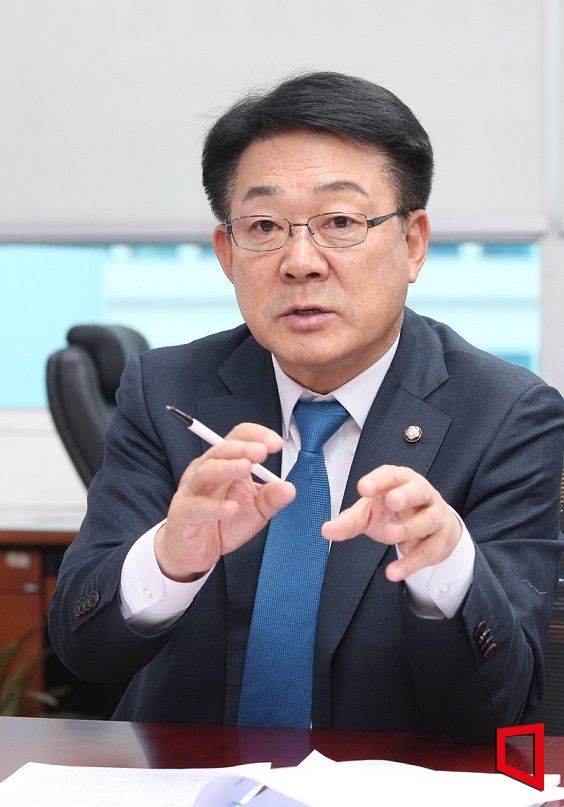
According to data submitted by LH to Heo Jongsik, a member of the National Assembly from the Democratic Party representing Incheon Dong-gu Michuhol-gu Gap, the total project cost for Luwon City is 2.4 trillion won, and the net present value (NPV) at the time of completion is projected to be a loss of 1.25 trillion won.
While it is tentatively estimated that 2.15 trillion won will be recovered through land sales, the mention of a loss exceeding 1 trillion won is because LH included financial costs (interest) of 1.014 trillion won in the project expenses.
Rep. Heo stated, "Although LH completed land compensation at the end of 2010, it delayed construction citing the financial crisis, resulting in massive interest costs exceeding 1 trillion won. Therefore, financial costs should be excluded when settling project expenses with Incheon City," adding, "The responsibility for reckless management due to poor risk management should not be imposed on local governments."
Previously, according to the 'Development Agreement for Joint Implementation of the Incheon Gajeong Five-way Urban Regeneration Project (currently the Luwon City Urban Development Project)' signed in 2006 between Incheon City and the Korea Housing Corporation (before the LH merger), Incheon City and the Housing Corporation agreed to respectively bear and manage the linked project costs (such as the straightening of the Gyeongin Expressway and Incheon Urban Railway Line 2) and regeneration project costs (compensation, construction costs, etc.).
Accordingly, Incheon City has been diligently repaying principal and interest through funds and local bond issuance.
In this project, the Housing Corporation invested 2.4 trillion won in regeneration project costs, and Incheon City invested about 550 billion won in linked project costs. Although the invested amounts differ, they agreed to hold 50% equity and rights each.
In summary, the structure is not such that Incheon City and LH receive returns proportional to their investments. Whether project costs are covered by equity or external borrowing, each party is responsible for their respective costs. Therefore, Rep. Heo argues that LH’s interest costs are LH’s responsibility and there is no reason to claim them from Incheon City.
Additionally, a clause in the agreement stating that if LH incurs losses in the Luwon City project, these can be offset by profits from other projects has also drawn attention.
Article 8 (Project Feasibility Analysis, etc.) of the agreement specifies that Incheon City will cooperate and support LH’s priority participation in land development and urban regeneration projects such as the Geomdan New Town development project.
Article 19 (Handling of Development Profits and Losses, etc.) states that development profits generated from other projects jointly implemented by Incheon City and LH can be used to compensate or offset losses from the regeneration project (Luwon City).
In other words, it can be inferred that LH anticipated that even if it incurs losses in Luwon City, it could profit from the Geomdan New Town development.
Regarding this, LH reportedly told Rep. Heo’s office, "We will jointly commission a professional institution with Incheon City to finalize the development profits and losses."
Rep. Heo pointed out, "Luwon City is considered the project with the largest loss among LH projects," adding, "LH failed to manage the project properly, including minimizing financial costs, and especially including financial costs in the project expenses is a typical example of reckless management."
He continued, "If the practice of shifting losses onto local governments continues, which local government would want to jointly implement projects with LH?" and added, "LH must ensure transparency in project cost settlements, using the Luwon City project as an opportunity."
© The Asia Business Daily(www.asiae.co.kr). All rights reserved.


















