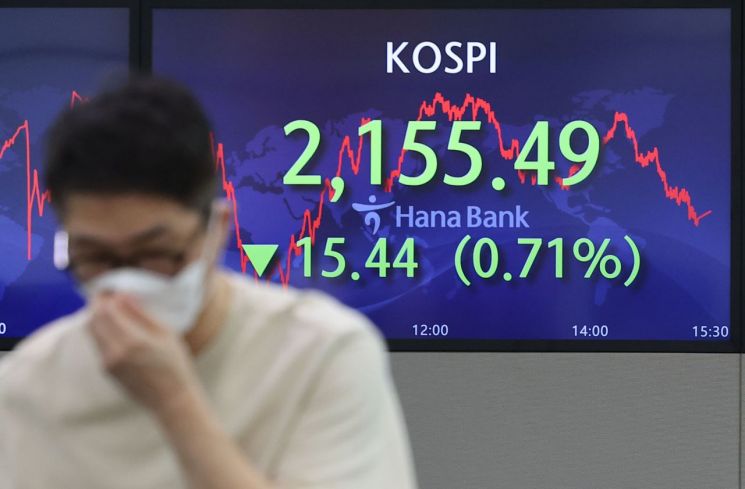
[Asia Economy Reporter Ji Yeon-jin] Foreign investors have switched to net buying domestic stocks for the first time in four weeks. However, due to the possibility of an economic crisis in Europe earlier last month and the impact of the U.S. Federal Reserve's three consecutive giant steps, they sold off more than 2.5 trillion won worth of Korean stocks over the month.
According to the Korea Exchange on the 3rd, foreign investors net bought 259.4 billion won worth of domestic stocks from the 26th to the 30th. This marked the first net buying dominance by foreign investors in four weeks since they switched to net selling at the beginning of last month.
As a result, foreign investors recorded a net sale of 2.5157 trillion won worth of domestic stocks over the past month. Continuing the 'Sell Korea' trend since the beginning of this year, foreign investors switched to net buying by purchasing about 1.8108 trillion won worth of domestic stocks in July, followed by a net purchase of 3.9825 trillion won in August.
However, since last month, concerns about an economic crisis due to the European energy shortage and fears that the U.S. would continue its aggressive tightening have emerged, causing the dollar's value to soar and prompting foreign investors to withdraw funds from the domestic stock market.
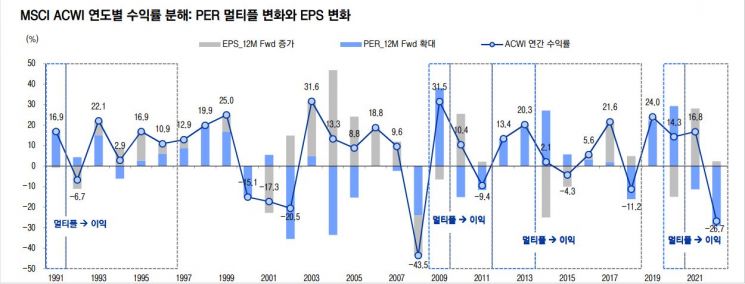
Nonetheless, with the KOSPI price-to-book ratio (PBR) falling to 0.84, indicating that the domestic stock market is undervalued to levels seen during the financial crisis, it is interpreted that foreign investors have been buying domestic stocks.
Last week, the stock most purchased by foreign investors was Hanwha Aerospace, with net buying worth 108.5 billion won. This was followed by KT&G (72.3 billion won), POSCO Chemical (56.2 billion won), Samsung Electro-Mechanics (45.0 billion won), and Doosan Enerbility (40.1 billion won).
On the other hand, Samsung Electronics was the most sold, with net sales worth 210.8 billion won, followed by L&F (-96.9 billion won), LG Innotek (-89.8 billion won), Samsung Electronics Preferred (-88.0 billion won), and POSCO Holdings (-68.1 billion won).
Jeong Da-woon, a researcher at Ebest Investment & Securities, said, "The point at which the stock market breaks out of the downward trend is difficult to expect immediately due to the easing of inflation, which is the trigger for the U.S. Federal Reserve's policy," adding, "In the short term, a technical rebound may be possible when it is confirmed that concerns were excessive during this year's third-quarter earnings season."
© The Asia Business Daily(www.asiae.co.kr). All rights reserved.


















