Concerns Over School Meal Quality Due to Insufficient Food Cost Increases in the Past 3 Years
-
While Vegetable Prices Rose 28%, School Meal Food Costs Increased Only 8.7%
High Inflation Realizes Poor Meal Quality, Food Cost Support for School Meals Must Be Further Expanded
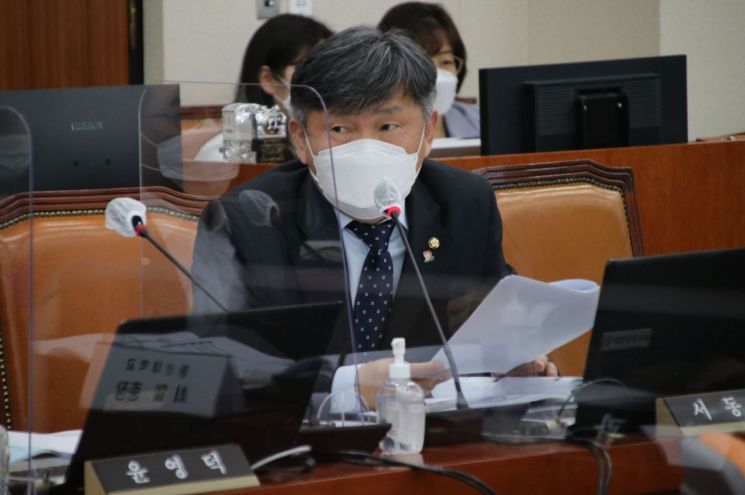
[Asia Economy Honam Reporting Headquarters, Reporter Heo Seon-sik] It has recently been revealed that the per-student food cost unit price (the cost of purchasing food ingredients necessary for school meals, excluding operating and labor costs) for elementary, middle, and high school meals by city and province nationwide has been woefully insufficient compared to the recent inflation trend.
According to data submitted by the Ministry of Education on the 2nd, provided by Seo Dong-yong, a member of the National Assembly's Education Committee from the Democratic Party of Korea (representing Suncheon, Gwangyang, Gokseong, and Gurye), the food cost for school meals nationwide increased by an average of 8.7% in the second semester of 2022. However, with food price inflation such as cabbage prices rising by 78% and cooking oil by 47% compared to the same month the previous year, there are concerns about the serious deterioration of school meal quality.
Looking at the August fresh food index announced by Statistics Korea (composed of 51 food items including vegetables, seafood, and fruits that gauge the perceived price of groceries), the prices of items such as pumpkin rose by 83.2%, radish by 56.1%, green onions by 48.9%, and potatoes by 37.1%, showing a steep upward trend.
Considering that most of the sharply rising food ingredients are essential items for school meals, the 8.7% increase in food costs for the second semester is widely regarded as tight for procurement on the ground.
Although there were exceptional efforts by education offices and local governments nationwide to raise the food cost unit price for the second semester, the biggest problem lies in the fact that the perceived inflation level on the ground is much higher than the increase level.
It was revealed that the food cost for elementary school meals in Ulsan for the second semester is only 2,760 KRW per student, middle school meals 3,230 KRW, and high school meals in Gwangju are the lowest nationwide at 3,353 KRW.
It is also true that when looking at the food cost unit prices in cities and provinces significantly below the national average, doubts arise as to whether quality meals can truly be provided to students.
Comparing the food cost increase rates and fresh food indices by city and province over the past three years, it was found that many cities and provinces have not properly reflected inflation in school meal food costs.
With the accumulated gap between food ingredient and meal cost increases, there are many concerns about whether the one-time increase this second semester will be sufficient to procure quality ingredients for school meals. There is growing support for linking school meal food costs to the actual inflation rates of major consumption items on the ground.
Meanwhile, it is also worth noting that both education offices and local governments should take a proactive stance on increasing food cost unit prices.
In fact, Jeonnam and Gyeongbuk, which decided on the second semester food cost increase independently without separate consultations, showed higher increase rates compared to other cities and provinces.
This is interpreted as a result of no city or province trying to bear less of the burden when education offices and local governments should share and negotiate the increase.
This highlights the need for education offices and local governments to take a more active approach in budgeting and executing the food cost budget for students' school meals.
The survey results sent by the Korean Dietitians Association on the 27th (conducted from September 24 to 26) also support the call for additional food cost increases.
When 2,341 nutrition teachers from elementary, middle, and high schools nationwide were asked about the "appropriate food cost to provide balanced meals with quality ingredients," the average response indicated a need for an additional 12.61% increase compared to the current second semester food cost.
Since the food cost unit price is directly linked to the quality of school meals, it is necessary to actively reflect field opinions in next year's school meal unit price budget planning.
Assemblyman Seo Dong-yong stated, "School meals are the most universal right in education."
He expressed concern that "using low-cost ingredients leads to low-quality meals," emphasizing, "We should not hesitate to expand budget allocation so that children can have balanced meals with quality ingredients."
He also pointed out, "So far, both education offices and local governments have hesitated to actively raise meal costs, each trying to bear less loss than the other," adding, "School meals for children are not a matter for compromise. Now, when the school meal field is suffering from high inflation, it is time to actively operate fiscal policies."
Although the meal cost unit price includes budgets for operating and management costs, making direct comparison with inflation and school meal quality difficult, this recent investigation focusing solely on food costs is meaningful in enabling direct comparison.
Asia Economy Honam Reporting Headquarters, Reporter Heo Seon-sik hss79@asiae.co.kr
© The Asia Business Daily(www.asiae.co.kr). All rights reserved.
![User Who Sold Erroneously Deposited Bitcoins to Repay Debt and Fund Entertainment... What Did the Supreme Court Decide in 2021? [Legal Issue Check]](https://cwcontent.asiae.co.kr/asiaresize/183/2026020910431234020_1770601391.png)
















