Visiting UCL Jeju Factory in Eoeum-ri, Aewol-eup, Jeju City
Annual Production of 30 Million Natural Cosmetics
Collaboration with Jeju Farmers
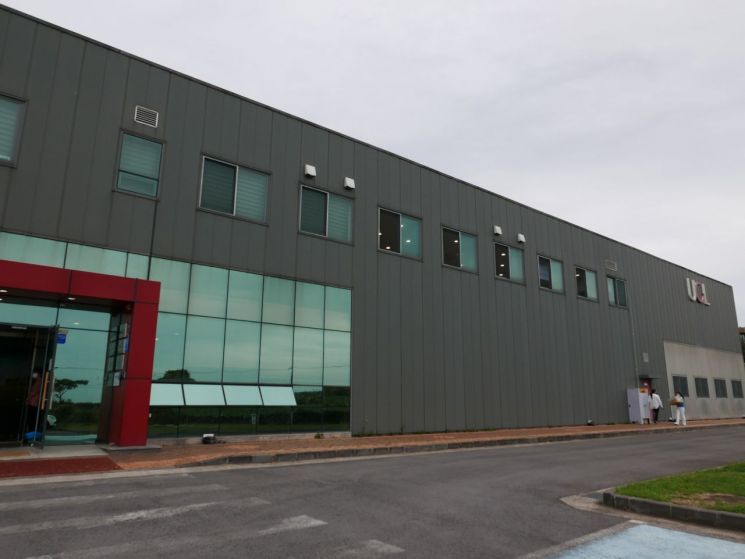
[Asia Economy Reporter Donghyun Choi] On the 28th of last month, I visited the UCEL Jeju Factory located in Eoeum-ri, Aewol-eup, Jeju City. There, I met Lee Ji-won, CEO of UCEL, who shared the story of building the second factory in Jeju, specifically in Aewol, following Incheon. While searching for a site to establish the factory, CEO Lee traveled across Jeju and stayed in Aewol on a snowy winter day. He witnessed fresh crops like cabbage and broccoli thriving despite the midwinter season. CEO Lee said, "Aewol's soil does not freeze easily, making it possible to farm year-round. I thought this would be an ideal place to develop cosmetics utilizing Jeju Island's diverse natural resources."
Founded in 1980, UCEL is a first-generation company in the cosmetics Original Equipment Manufacturer (OEM) and Original Design Manufacturer (ODM) industry. In 1995, it completed a CGMP (Cosmetic Good Manufacturing Practice) factory in Namdong Industrial Complex, Incheon, and in 2013, built its second factory in Jeju. The UCEL Jeju Factory sits on a 12,494㎡ site, comprising Production Building 1 (2,517㎡), Production Building 2 (1,497㎡), and a warehouse (1,319㎡). It is the largest cosmetics manufacturing plant in Jeju, capable of producing 30 million basic, hair, body care, and baby cosmetic products annually.
The main products of the UCEL Jeju Factory are naturalistic basic, hair, body care, and baby cosmetics based on the "Jeju Cosmetics Certification System" (JCC). Implemented in May 2016, JCC is the first local government-certified regional cosmetics quality certification system guaranteed by Jeju Province. It requires that products contain at least 10% of clean natural ingredients from Jeju and that the finished products be manufactured locally. CEO Lee emphasized, "We independently operate manufacturing processes such as production, filling, packaging, and shipping to prevent cross-contamination or artificial accidents and maintain quality control."
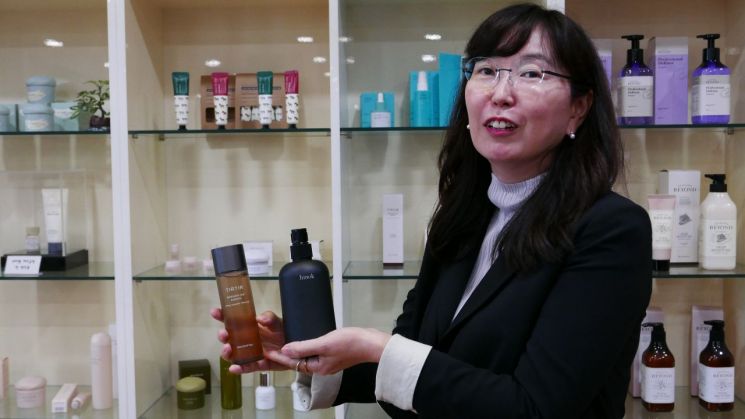
CEO Lee also collaborates with local Jeju farmers to procure raw materials. He said, "When I first came to Jeju, I collected leftover beeswax from honey harvested through a beekeeping cooperative and used it as a cosmetic ingredient. Now, due to a price difference of about 5 to 6 times compared to imported materials, we mix them." He added, "We also suggest to local residents that growing crops of the types and sizes we want could increase their income. Some cases have started to emerge where villages or individual units contact us and supply seasonally."
Recently, CEO Lee has been focusing on carrots, especially famous in Gujwa-eup, Jeju, as a cosmetic raw material. He explained, "Usually, only the roots of carrots are eaten, and the leaves are discarded, but our research found that carrot leaves contain many ingredients that help alleviate hair loss symptoms. We have completed patent registration and are preparing for commercialization."
UCEL's major clients include LG Household & Health Care, Yuhan-Kimberly, Amway, and Watsons. About 40% are global corporations, with the rest supplied to indie brands. CEO Lee said, "The cosmetics industry is diversifying as unique small indie brands are emerging, moving away from an era dominated by large corporations and global brands. I expect our client base to become richer in the future."
Although UCEL recorded sales of 32 billion KRW last year, it posted a loss of about 600 million KRW. CEO Lee said, "To succeed in exports, we need to interact frequently with buyers, but due to COVID-19, such opportunities were limited. However, we could not reduce our workforce, so we tightened our belts and took this as an opportunity to prepare for this year." He added, "Fortunately, this year, sales are expected to grow by more than 40% compared to the previous year, and the Jeju factory is anticipated to break even for the first time in 10 years since its establishment."
© The Asia Business Daily(www.asiae.co.kr). All rights reserved.
!["The Woman Who Threw Herself into the Water Clutching a Stolen Dior Bag"...A Grotesque Success Story That Shakes the Korean Psyche [Slate]](https://cwcontent.asiae.co.kr/asiaresize/183/2026021902243444107_1771435474.jpg)

















