Ownerless Property under Civil Law: "First Finder Owns It"
6,000 to 8,000 Lost Golf Balls Collected Monthly at a Single Golf Course
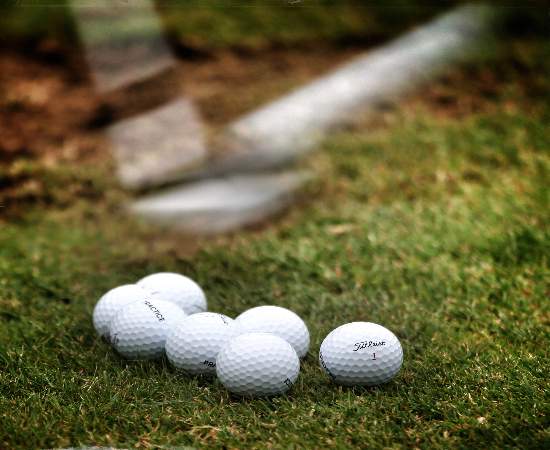
[Asia Economy Reporter Seohee Lee] "I lost a dozen eggs." This is a joke golfers make every time they lose a ball on the field. Unless you are at an advanced level, golfers usually lose at least one or two balls during play at the golf course. There is nothing more regrettable than hitting the ball deep into the forest or losing it in a water hazard.
What happens to the fate of the ‘lost balls’ that golfers lose? To conclude, collecting and reselling them can become a lucrative source of income. They are also called the ‘pearls inside the golf course.’
Lost balls sometimes end up in the hands of other golfers by chance or go through professional companies for distribution. Let's find out how many balls I lose on the field and how they are handled.
The ownerless lost balls, a lucrative 'side income' for golf courses
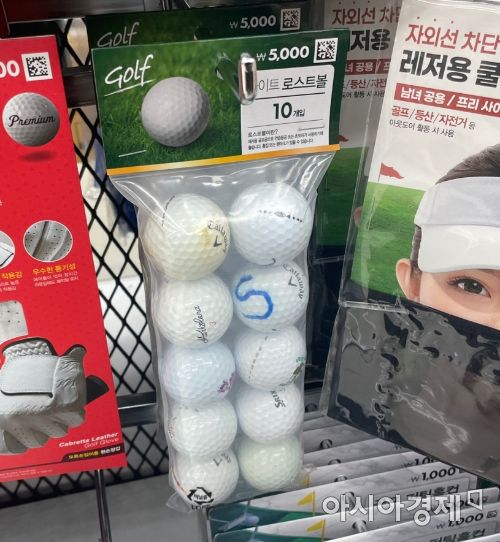
First, we need to find out who legally owns the lost balls. Under Korean civil law, lost balls are considered ownerless property. This is because if the owner golfer did not make special efforts to find the lost ball or did not express any intention to the golf course, it is judged that the original owner has abandoned ownership.
Therefore, ownership of lost balls is acquired by the first person who takes possession. This is based on Article 252, Paragraph 1 of the Civil Act, which states, "A person who possesses ownerless movable property with the intention of ownership acquires ownership." If a golfer finds a lost ball on the course that is likely ownerless during play, it is legally permissible to take it without any special procedure.
Many golf courses collect lost balls once or twice a year and use them as a ‘side income source.’ Generally, golf courses manage the course by draining water from hazards during the low season in winter when there are fewer customers. At this time, they collect balls that have fallen to the bottom of the hazard and sell them to professional purchasing companies for about 250 won per ball, according to an official.
An official from the course management team of a golf course in Pocheon, Gyeonggi Province, said, "I know that the revenue from lost balls can reach tens of millions of won," adding, "The revenue is mostly used for golf course operation costs, but many places also donate the sales proceeds to social organizations."
Reborn through professional cleaning... reasonable for beginner golfers
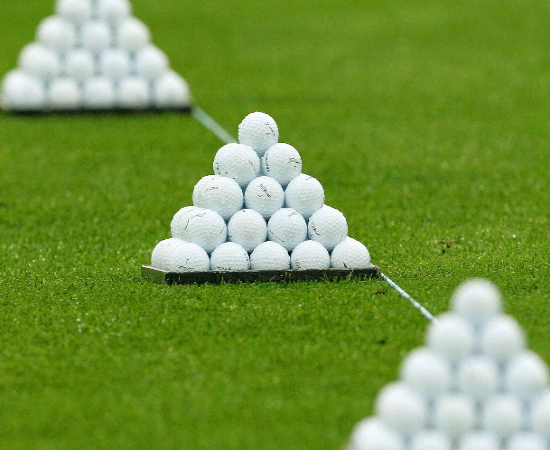
There is also an increasing number of companies that have exclusive contracts with golf courses to collect lost balls once or twice a month. These companies collect lost balls from golf courses, then clean and repaint them before selling to consumers. The industry explains that the number of lost ball collection and sales companies has tripled compared to three years ago due to the increase in golf population after COVID-19.
According to industry sources, about 6,000 to 8,000 balls are collected from one golf course once a month. Among these, balls that have been exposed to sunlight and water for a long time and are in poor condition are reborn like new balls through cleaning and painting processes. The surface peeled areas are painted and coated again. Balls made through this separate process are distinguished from regular lost balls and called ‘refinish balls.’
Refinish balls are classified into several grades depending on their condition before processing. The more scratches, pen markings, and discoloration, the lower the grade. Grades range from A+ to C0. Checking the official websites of refinish ball sellers, the selling prices per ball were about 1,300 to 1,500 won for Titleist, 800 to 1,000 won for Kirkland, 990 to 1,100 won for Volvik, and 790 to 900 won for Saint Nine.
These reborn balls mainly go into the hands of beginner golfers. For beginners who are likely to lose balls during rounds, using inexpensive refinish balls instead of expensive new balls is economical. Also, beginners do not perceive the slight ‘functional differences,’ which is the biggest drawback of refinish balls, so it does not affect their play. While experienced players are affected by subtle spins on the ball, beginners hardly distinguish these differences.
Kim Jeong-geun (53), who provides lost ball sales and startup consultations in Gyeongbuk, said, "Since COVID-19, the number of people wanting to start lost ball stores has nearly tripled. Most are couples or individuals starting businesses," adding, "Excluding labor and rent costs, the profit margin is about twice as good, and the initial capital is not burdensome at around 40 million won, so it is very popular."
© The Asia Business Daily(www.asiae.co.kr). All rights reserved.



















