California Industry Ahead of Implementation
Raises Funds to Block, Claiming "Delay and Vote"
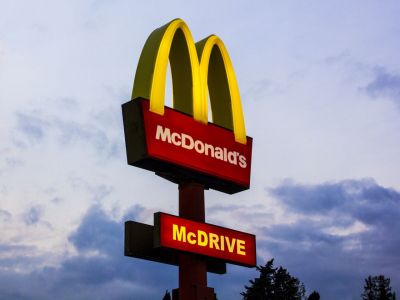 In California, USA, the minimum wage at fast food restaurants will increase to up to $22 (31,700 KRW) starting January 1 next year.
 [Image source=Pixabay]
[Asia Economy Reporter Juri Kim] Conflicts are deepening ahead of the minimum wage increase at fast food chains in California, USA.
According to a report by The Wall Street Journal (WSJ) on the 1st (local time), the minimum wage at fast food restaurants in California will rise to up to $22 (31,700 KRW) starting January 1 next year. This is about a 50% increase from the current $15.
This follows Governor Gavin Newsom signing the "Fast Food Accountability and Standards Recovery Act (A.B. 257)" containing this provision on the 5th of last month. The law applies to fast food restaurants with 100 or more locations and includes measures prohibiting employer retaliation against employees who raise complaints, as well as provisions for back pay and employment restoration.
In response, major fast food chains such as McDonald's, Domino's Pizza, and Subway, along with related industries, have started raising millions of dollars to block the implementation of the law.
The coalition "Save Local Restaurants" announced that it has currently raised $12.7 million (approximately 18.3 billion KRW). Corporate chains contributed $9.9 million, and individual franchise operators contributed $2 million.
Among corporate brands, McDonald's, Subway, Burger King, Domino's Pizza, and In-N-Out Burger each contributed $250,000, with Starbucks and Wendy's also participating.
The group is demanding a delay in the law's implementation, which is just three months away, and insists that the law's continuation should be decided by a statewide vote.
Matthew Haller, president of the International Franchise Association, argues, "California residents should have a say on whether this law remains in effect because they will bear the costs of the new law."
© The Asia Business Daily(www.asiae.co.kr). All rights reserved.
![Clutching a Stolen Dior Bag, Saying "I Hate Being Poor but Real"... The Grotesque Con of a "Human Knockoff" [Slate]](https://cwcontent.asiae.co.kr/asiaresize/183/2026021902243444107_1771435474.jpg)
















