Natural Gas Prices Soar Over 10 Times
Western Europe Strives to Save Energy
Eastern Europe Collects Firewood for Heating
World Bank: "Significant Time Needed to Break Energy Dependence"
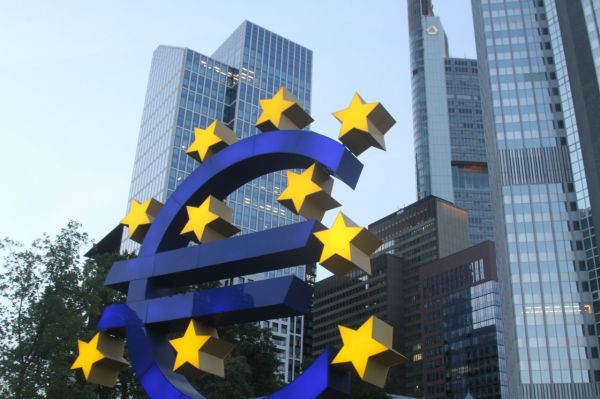 European countries are making efforts to save energy in preparation for the energy shortage crisis that is expected to materialize this winter.
 [Image source=Yonhap News]
[Asia Economy Intern Reporter Kim Gun-chan] Due to Russia's weaponization of energy, European countries are desperately focusing on energy conservation. Concerns are rising that a harsh winter will hit Europe as soaring gas prices make electricity rate hikes a reality.
On the 2nd, Russia suddenly suspended gas supply indefinitely through the Nord Stream 1 underwater pipeline connecting Russia and Germany, citing a gas leak discovery. On the 26th, three gas leak incidents, presumed to be caused by explosions, occurred in the Nord Stream underwater pipeline, further escalating energy insecurity.
As of the 30th, the Dutch TTF price (October contract), the benchmark for European natural gas prices on the London ICE Futures Exchange, was trading at around 207.18 euros per megawatt-hour (MWh). Compared to early last year when it was about 19 euros per MWh, the price has increased more than tenfold.
The surge in gas prices has led to electricity rate hikes. According to the UK environmental think tank Ember, as of the end of last month, wholesale electricity prices in European Union (EU) member states ranged from a minimum of 155 euros to a maximum of 544 euros, which is 5 to 6 times higher than the same period last year.
European countries are working hard to conserve energy in preparation for a potential energy shortage crisis this winter. On the 23rd (local time), the lights of the Eiffel Tower in Paris, France, were turned off more than an hour earlier than usual. Normally, the Eiffel Tower's lights perform a 5-minute light show every hour on the hour from sunset until 1 a.m. the next day, but on this day, all lights were turned off at 11:45 p.m.
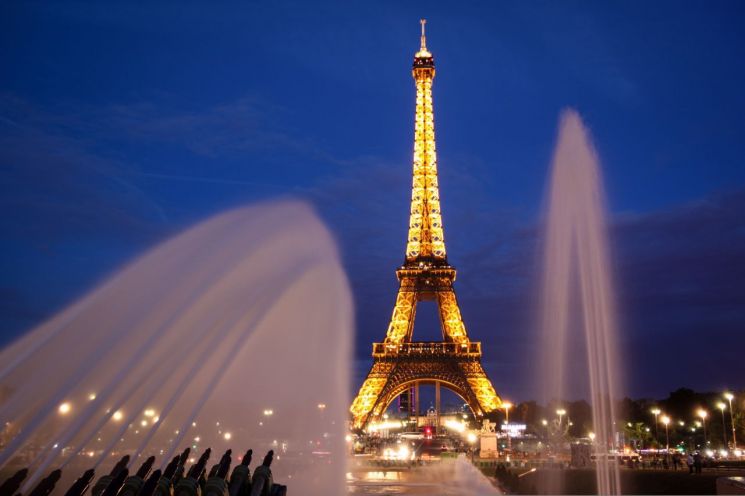 The lights of the Eiffel Tower in Paris, France, were turned off more than an hour earlier than usual, completely going out at 11:45 PM.
 [Image source=Pixabay]
Jean-Fran?ois Martin, the manager responsible for the Eiffel Tower, told AFP that this was a very symbolic measure reflecting increased awareness of energy conservation. The British daily The Guardian reported that this measure is expected to reduce the Eiffel Tower's annual electricity consumption by about 4%.
The city of Paris has set a goal to reduce energy consumption by 10% compared to last year, in addition to turning off the Eiffel Tower lights. On the 13th, Paris Mayor Anne Hidalgo announced, "Starting from the 23rd, public building lights in Paris will be turned off from 10 p.m., and heating temperatures will be adjusted to 18 degrees Celsius." Other Western European countries such as Germany, France, and Spain have also announced measures to limit heating temperatures during winter and turn off nighttime lighting.
The situation is similar in Eastern Europe. Slovakia is even considering nationalizing its domestic electricity supply in the worst-case scenario due to soaring electricity prices. Slovak Prime Minister Eduard Heger expressed this stance in an interview with the Financial Times (FT) on the 28th (local time).
Prime Minister Heger said, "Without billions of euros in support from the European Union (EU), the rise in energy prices caused by Russia's invasion of Ukraine will kill Slovakia." According to data from the European Energy Exchange (EEX), Slovakia's current electricity prices have increased nearly sixfold compared to the previous year.
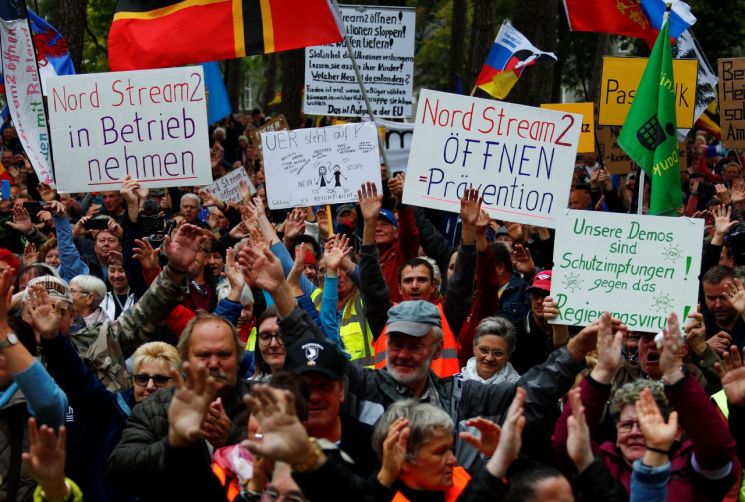 Protesters demonstrating against the surge in energy prices urged the opening of the Nord Stream 2 underwater gas pipeline at the onshore receiving station in Lubmin, Germany, on the 25th (local time).
 [Image source=Yonhap News]
In Bulgaria, residents are gathering firewood to prepare for winter. On the 26th (local time), the Associated Press (AP) reported, "Recently, the number of people seeking wood in Bulgaria has increased, causing prices to rise significantly." Bulgaria, with a population of 7 million, is known to have about half of its population still heating with wood. The European Statistical Office has analyzed that about 25% of Bulgaria's population cannot afford heating costs.
Amid this situation, there are even analyses suggesting that the European economy could face a recession comparable to the 2008 global financial crisis. On the 27th, Bloomberg Economics forecasted that the European Union's gross domestic product (GDP) will decline from the fourth quarter, falling by 1% year-on-year. Jamie Rush, Bloomberg's chief economist, emphasized, "The shortage of energy supply could cause industrial supply chains to collapse in unpredictable ways."
There are also claims that it will take a considerable amount of time for Europe to break away from dependence on Russian energy. David Malpass, President of the World Bank (WB), said in a speech at the Stanford Institute for Economic Policy Research in the U.S. on the 28th, "It may take several years for global energy production to diversify away from dependence on Russia," adding, "Because of this, the period of stagflation, low growth, and high inflation risk may be prolonged."
© The Asia Business Daily(www.asiae.co.kr). All rights reserved.



















