Italian Ryegrass, Production Drops Sharply Even with a 5-Day Delay
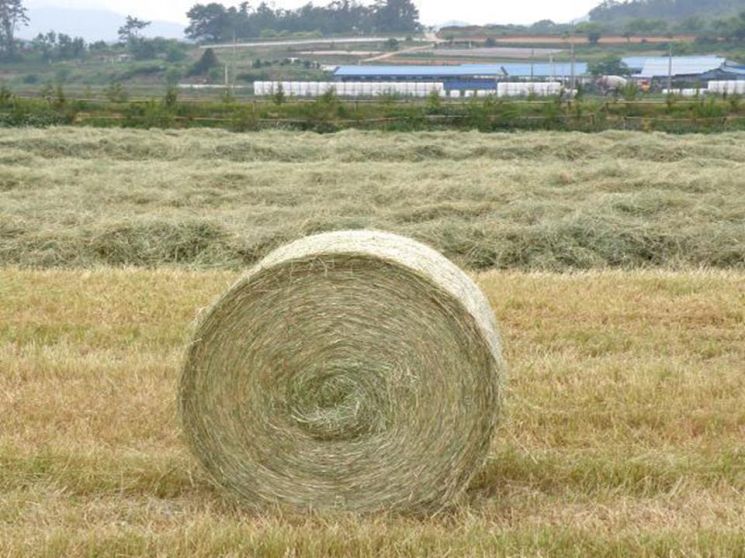
[Asia Economy Yeongnam Reporting Headquarters Reporter Dongguk Lee] The Ulsan Agricultural Technology Center has urged the expansion of self-sufficiency production through timely sowing of winter forage crops to reduce feed costs, which account for more than 60% of the management expenses of Hanwoo farms.
The main forage crops cultivated include Italian Ryegrass (IRG), green barley, rye, and triticale.
Italian Ryegrass (IRG), whose cultivation area is increasing in the Ulsan region, grows well in well-drained paddy soil and has excellent productivity due to frequent tillering (branching).
It is also a variety suitable for producing high-quality fermented feed (silage) and hay due to its high sugar content.
Winter forage crops are usually sown from late September to mid-October and harvested in May to June of the following year.
The optimal sowing times in the Ulsan region are early October for Italian Ryegrass (IRG), mid to late October for green barley, and late October for rye.
In particular, for Italian Ryegrass (IRG), even a five-day delay in sowing time can significantly affect growth and yield, making timely sowing very important.
If timely sowing is difficult due to delayed rice harvesting caused by weather, it is recommended to apply the in-situ sowing technique by using mist blowers or drones to sow seeds while the rice is still standing before harvest.
An official from the Technology Center said, “Due to Typhoon Hinnamnor (Typhoon No. 11), it is expected that there will be many difficulties in self-sufficiency of forage for livestock farms due to reduced harvests of summer forage crops such as forage corn. We urge farmers to strictly adhere to the sowing schedule of winter forage crops to reduce management costs and ensure stable forage production.”
© The Asia Business Daily(www.asiae.co.kr). All rights reserved.

















