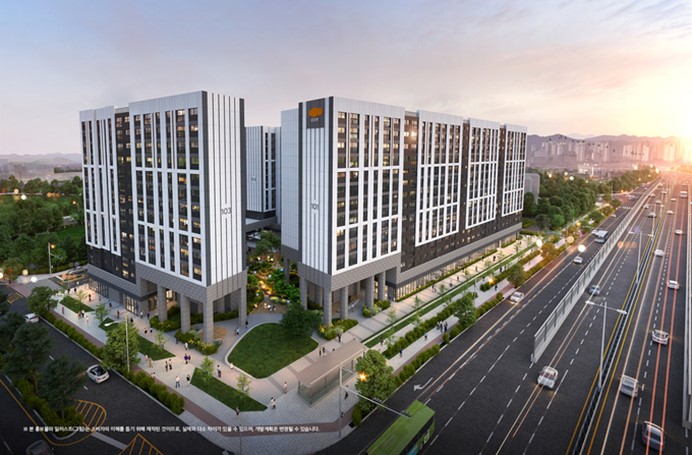
As South Korea's aging population rate has been revealed to be the steepest in the world, the popularity of residential complexes located near hospitals, known as ‘byeongsegwon (病勢圈)’, is soaring. These areas offer convenient access to medical services due to the proximity of hospitals, while also securing demand from hospital and pharmacy workers. In particular, large general hospitals are supplied only in regional hubs, highlighting their rarity and consequently increasing the value of nearby residential facilities.
South Korea, which has already entered an aging society, is seeing a growing proportion of elderly people, with the entry into a super-aged society (where those aged 65 and above make up more than 20% of the population) imminent. According to Statistics Korea, the proportion of those aged 65 and older was 17.5% in 2022, and it is expected to exceed 20% by 2025, marking the transition to a super-aged society. With the birth rate declining, a continuous increase in the elderly population proportion is almost certain.
This demographic shift is also reflected in real estate market trends. Accessibility to medical institutions is becoming an important factor in housing choices. For example, middle-aged and older adults, who are the main market customers, can receive faster medical treatment if healthcare facilities are nearby, and younger generations can more easily manage their children's health.
Preference is especially strong for locations where large-scale general hospitals are accessible nearby. These hospitals offer a wide range of medical departments and equipment, along with systematic management systems, allowing convenient use of high-quality medical services. Moreover, they serve as temporary accommodations for medical staff who need to respond quickly in emergencies, as well as for long-term outpatients and their caregivers, creating abundant rental demand.
Due to these advantages, the value of small residential facilities near large general hospitals has also risen significantly. For instance, a 40㎡ officetel unit at ‘Gwangmyeong Station U Planet Desiang Lube’, located near the newly opened Chung-Ang University Gwangmyeong Hospital in March, recorded a transaction price of 400 million KRW in January this year, setting a new high.
A local real estate agent in the area said, “Since the opening of Chung-Ang University Hospital, inquiries from medical-related workers such as hospital and pharmacy staff have been steady,” adding, “Besides medical personnel, many people working in telecommunications, IT, and security are required to be on-site regularly, greatly increasing demand.”
Proximity to medical institutions also draws attention for its positive impact on life expectancy. According to the Health Equity Profile by the Korean Society for Health Equity (2018), Gangnam-gu in Seoul ranked first with a life expectancy of 84.8 years. The concentration of renowned general hospitals such as Samsung Medical Center and Severance Hospital is cited as a reason for longevity.
As the value of areas adjacent to hospitals rises, demand for residential products near hospitals continues unabated. A representative example is ‘e-Pyeonhansesang City Gosaek’, a residential officetel supplied by DL E&C in Gosaek-dong, Gwonseon-gu, Suwon. It consists of 430 units with a net area of 84㎡.
Right next to the complex is Suwon Deoksan Hospital, a general hospital with 706 beds, scheduled to open its first phase (457 beds) in the second half of 2024. Since most general hospitals, including Ajou University Hospital, are concentrated in East Suwon, this is expected to greatly improve the quality of life for residents in West Suwon.
Additionally, the nearby Gwonseon Administrative Town is expected to absorb housing demand from hospital and administrative workers. Furthermore, the construction of an R&D research center within Samsung Digital City’s Suwon campus is under consideration, which is anticipated to attract demand from Samsung Electronics employees in the future.
This ‘prime’ product in the West Suwon area, which has solid future value, is also notable. Nearby developments include the ‘Shinbundang Line extension’, ‘Suwon R&D Science Park’, ‘Tapdong District (advanced industry and R&D center)’, and ‘Starfield Suwon (scheduled for 2023)’, along with residential area developments in Gosaek 1 and 2 districts, Dangsujigu, and Hyohangjigu.
Most importantly, e-Pyeonhansesang City Gosaek offers a 60% interest-free benefit on intermediate payments, significantly reducing interest burdens, and provides a fixed first deposit of 10 million KRW. Contract holders also receive a medical expense voucher worth 3 million KRW for use at Suwon Deoksan Hospital, attracting attention.
For more detailed information about e-Pyeonhansesang City Gosaek, please visit the official website.
© The Asia Business Daily(www.asiae.co.kr). All rights reserved.
![Clutching a Stolen Dior Bag, Saying "I Hate Being Poor but Real"... The Grotesque Con of a "Human Knockoff" [Slate]](https://cwcontent.asiae.co.kr/asiaresize/183/2026021902243444107_1771435474.jpg)
















