[Asia Economy Sejong=Reporter Kim Hyewon] Kim Chang-gi, Commissioner of the National Tax Service, emphasized that "to ensure the smooth implementation of the digital tax, it is essential to cultivate specialized personnel, develop standardized reporting forms related to information reporting, and reach international consensus on submission methods for tax returns."
Commissioner Kim made these remarks while attending the 15th OECD Heads of Tax Administration Meeting held face-to-face for the first time in three years from the 28th to the 30th in Sydney, Australia.
This year marks the 20th anniversary of the establishment of the OECD Heads of Tax Administration Meeting, with heads of tax administrations from 52 countries and representatives from international organizations including the International Monetary Fund (IMF) and the World Bank in attendance.
The meeting discussed key international tax issues such as the direction of national tax administration in the post-COVID-19 era, strategies for international cooperation to successfully implement the digital tax, and strategies for the digital transformation of national tax administration.
The heads of tax administrations agreed that special efforts must be made to ensure that the digital tax coexists harmoniously with existing domestic tax laws and can be stably implemented starting in 2024.
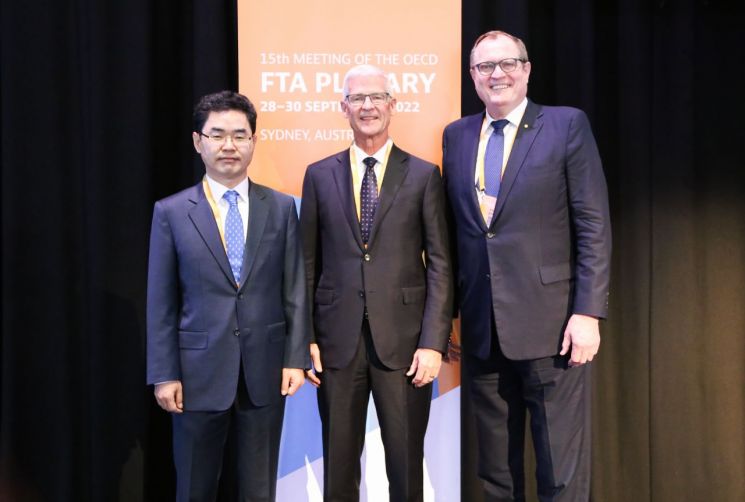 Kim Chang-ki, Commissioner of the National Tax Service (left), is taking a commemorative photo with Bob Hamilton, Chair of the OECD FTA and Commissioner of the Canada Revenue Agency, and Chris Jordan, Commissioner of the Australian Taxation Office. Photo by the National Tax Service
They also reached a consensus that securing business continuity in global crisis situations like COVID-19 is based on flexible and resilient organizational operations rather than rigid ones. Commissioner Kim stated, "We must minimize unnecessary meetings and document creation, establish an efficient work system through paper-less, discussion-based reporting, and build a field-centered work support system." He also mentioned, "Going forward, tax administration systems should be improved to be organically connected with whole-of-government and private sector systems to enhance taxpayer convenience."
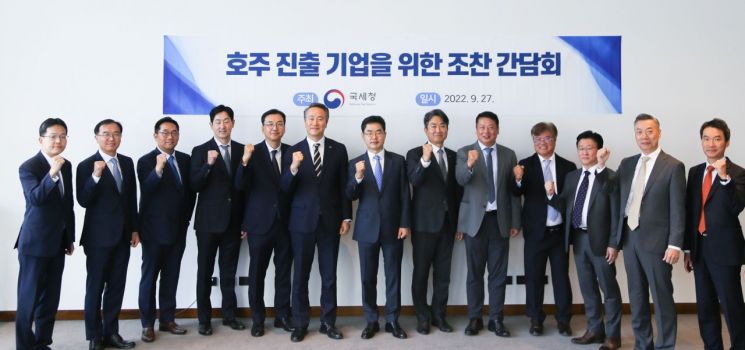
Earlier, Commissioner Kim listened to the tax difficulties faced by companies at a tax consultation meeting for Korean companies operating in Australia and conveyed these concerns to the Australian Taxation Office, requesting attention and support for our companies. He also held separate bilateral talks with representatives from major countries such as the United States and Singapore.
© The Asia Business Daily(www.asiae.co.kr). All rights reserved.


















