September Orders, November Start... Completion Within 2024
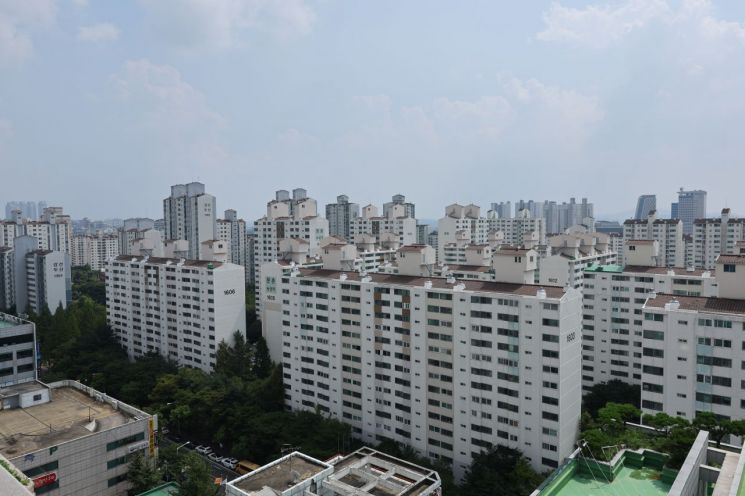
Work to establish a master plan for the redevelopment of the 1st generation new towns has entered its main phase.
On the 29th, the Ministry of Land, Infrastructure and Transport announced that it had commissioned the "Study on Establishing a Master Plan and Institutionalization Measures for the Redevelopment of 1st Generation New Towns." The Ministry plans to hold the 4th plenary meeting of the Public-Private Joint Task Force on the 30th to review the follow-up schedule following the commissioning of the study, as well as the key implementation plans for establishing the master plan and drafting a special law.
The main tasks of this study are broadly divided into "establishing basic redevelopment policies" and "preparing institutionalization measures."
Regarding the establishment of basic redevelopment policies, first, a chief planner will be appointed for each 1st generation new town to serve as a communication channel for gathering opinions from residents and local governments. The chief planner will act as a bridge between the Ministry, local governments, and residents to ensure that their opinions are reflected in the basic redevelopment policies established by the Ministry.
Second, based on a comprehensive analysis of conditions in aging cities such as the 1st generation new towns, the characteristics of these aging cities will be reviewed, and the applicability and constraints of the current redevelopment system will be analyzed.
Additionally, the direction for reorganizing urban spatial structures to strengthen urban functions will be derived, and the basic redevelopment policies will be prepared, including goals, fundamental directions, redevelopment targets, implementation procedures, plans for securing metropolitan transportation and infrastructure, regulatory relaxation exceptions, designation plans for pilot districts, and relocation measures.
Furthermore, scenarios for establishing a housing supply base of over 100,000 units and the redevelopment promotion system will also be reviewed.
In the "preparing institutionalization measures" section, limitations of the current systems such as urban development and urban redevelopment will be examined, and the need for new systems will be reviewed. Through comparative analysis of previously proposed bills, an optimal special law will be prepared that enables rapid redevelopment while realistically allowing redevelopment projects to proceed.
This study is scheduled to commence in November and is expected to be completed within 2024.
Efforts will be made to promptly produce results from the study to ensure that redevelopment projects can be swiftly promoted to improve residents' living environments. At the same time, the Ministry and local governments will conduct their studies in parallel with mutual feedback in a two-track approach.
Kim Sang-seok, head of the Urban Regeneration Project Planning Division at the Ministry of Land, Infrastructure and Transport, who oversees practical work related to the redevelopment of the 1st generation new towns, said, "With the commissioning of this study, the redevelopment of the 1st generation new towns has officially entered its main phase." He added, "The basic redevelopment policies will be reviewed and prepared through this study to be applicable not only to the 1st generation new towns but also to regional hub new towns as much as possible."
He continued, "The Ministry and the local governments of the 1st generation new towns will ensure connectivity through mutual feedback and make every effort to establish a high-quality master plan."
© The Asia Business Daily(www.asiae.co.kr). All rights reserved.

















