Surpassing Cousin, Ascends as Crown Prince
Breaking Royal Power Balance and Pushing Reforms
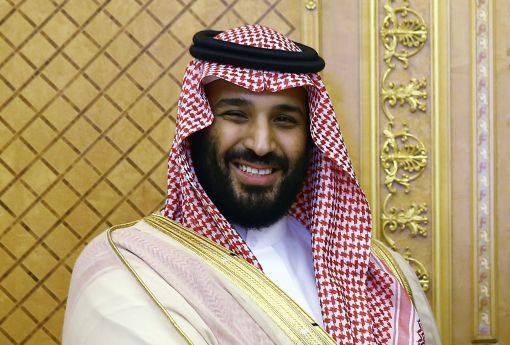 Muhammad bin Salman Al Saud, Crown Prince of Saudi Arabia
 [Image source=EPA Yonhap News]
[Asia Economy Reporter Lee Ji-eun] Saudi Arabia's King Salman bin Abdulaziz Al Saud has handed over his position as Prime Minister to Crown Prince Mohammed bin Salman Al Saud, major foreign media reported on the 27th (local time).
The Washington Post and others reported on the same day, citing Saudi state-run SPA news agency, that King Salman issued a royal decree appointing his son, Crown Prince Mohammed, as the head of state and Prime Minister. However, King Salman plans to continue serving as the chairman of the Council of Ministers. Major foreign media mentioned health issues as the reason for King Salman relinquishing real power, stating, "King Salman, aged 86, has been hospitalized for various chronic illnesses over the past two years."
King Salman's second son, Khalid bin Salman, was appointed Minister of Defense, and another son, Prince Abdulaziz bin Salman, took the position of Minister of Energy.
Crown Prince Mohammed, born in 1985, replaced his cousin Mohammed bin Nayef to become Crown Prince in 2017. He has positioned himself as the de facto ruler of Saudi Arabia by promoting the national new growth policy "Vision 2030," aimed at moving away from an oil-dependent economic system, and pursuing radical reforms such as reducing the powers of the religious police. Bloomberg described Crown Prince Mohammed as a figure who overturned the Saudi royal family's tradition of maintaining factional balance by detaining opposing political rivals to expand his power.
However, Crown Prince Mohammed has faced friction with Western countries since being implicated as the mastermind behind the 2018 assassination of journalist Jamal Khashoggi.
International political experts analyzed that even with Crown Prince Mohammed's appointment as Prime Minister, there will be no significant change in Saudi Arabia's policy direction. John Alterman, senior vice president at the Center for Strategic and International Studies in Washington, told Bloomberg, "This royal decree concretizes the current regime centered on Crown Prince Mohammed maintaining the status quo," adding, "It largely serves to solidify him as the official head of government to the international community."
© The Asia Business Daily(www.asiae.co.kr). All rights reserved.
















