Jung Daebon, "Adjustment of Quarantine Measures Prepared for Large-Scale Epidemic"
Designated Bed Utilization Rate in the 20% Range... Transition to General Medical System
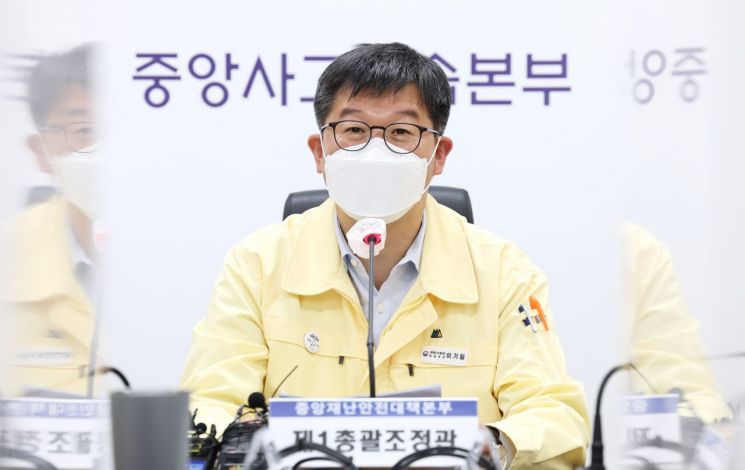
[Asia Economy Reporter Jo In-kyung] As the COVID-19 resurgence continues to decline steadily and hospital bed occupancy rates remain stable, the government has decided to gradually release designated COVID-19 hospital beds.
Lee Ki-il, the 1st General Coordinator of the Central Disaster and Safety Countermeasures Headquarters (and Vice Minister of Health and Welfare), stated during the Central Disaster and Safety Countermeasures Headquarters (CDSCH) meeting held at the Government Seoul Office on the 28th, "As the COVID-19 resurgence is subsiding, we will also adjust the designated beds step by step."
According to the CDSCH, the number of new confirmed cases announced on that day was in the 36,000 range, about 3,000 fewer than the previous day. The infection reproduction number (Rt), which gauges the future trend of the outbreak, was 0.80 in the third week of September (18?24), marking five consecutive weeks below 1.
Lee, the 1st General Coordinator, explained, "Since the 3rd, it has become possible to enter the country without undergoing PCR testing overseas, and from Monday (the 26th), the outdoor mask mandate was fully lifted. This wave has shown that we can overcome it without stopping daily life."
He added, "The best quarantine is a flexible response according to the virus characteristics and the extent of the outbreak. As the resurgence is subsiding, we will gradually adjust designated beds and also revise quarantine measures that were implemented to prepare for large-scale outbreaks, considering our quarantine and medical capacities."
Accordingly, the CDSCH meeting on this day focused on the plan to sequentially release 1,477 beds out of approximately 7,400 designated COVID-19 beds by October 7. Previously, during the peak of the 6th wave in August, the government managed bed occupancy rates steadily in the 50% range, and now, in the current stabilization phase, bed capacity has increased, with 1,486 beds in use and an occupancy rate of 20%.
Lee stated, "Going forward, designated beds will be operated focusing on severe and semi-severe patients, and general beds will also be operated so that anyone who is sick can be admitted and treated within the general medical system at any time." He urged local governments to actively cooperate in bed adjustments considering hospitalization demand and other characteristics.
However, since there are predictions of another COVID-19 resurgence this winter, the government decided to extend the temporary health insurance support period in preparation. For cases confirmed on the day of testing and receiving treatment, integrated consultation fees for 10,000 one-stop medical institutions nationwide, telephone consultation management fees through medical counseling centers, and integrated isolation management fees for voluntary admission to general beds will be extended for two months until November 30.
Additionally, policy fees aimed at proactively protecting high-risk groups and infection-vulnerable facilities will also be extended. Infection prevention management fees for nursing hospitals where many elderly reside will be extended until November 30, and mobile dedicated team home visits for elderly nursing facilities will be extended until the end of the year. The government will review the outbreak situation before the extension period ends and consider additional support if necessary.
The quarantine authorities further urged high-risk groups, such as the elderly vulnerable to infection, to be sure to get vaccinated.
Lee emphasized, "Receiving the 4th dose reduces the risk of death by 83.7% compared to the unvaccinated group, 64.8% compared to those who completed the 2nd dose, and 14.0% compared to those who completed the 3rd dose. High-risk groups, especially the elderly vulnerable to infection, must get vaccinated and strictly follow quarantine rules."
© The Asia Business Daily(www.asiae.co.kr). All rights reserved.

















