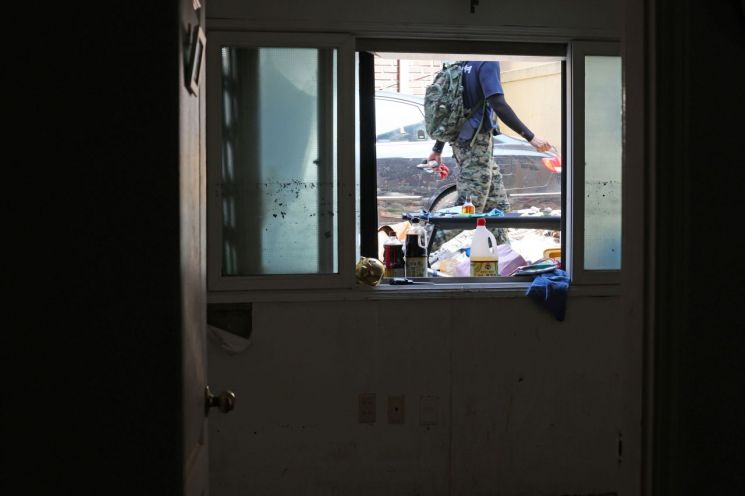
 On the afternoon of August 12, in front of a semi-basement window in the Sillim-dong area of Gwanak-gu, Seoul, items flooded by heavy rain are scattered around.
 The Ministry of Land, Infrastructure and Transport announced on the 27th that it will hold additional briefing sessions on purchased rental housing in the Seoul, Incheon, and Gyeonggi areas, which are held annually.
In the Seoul area, the sessions will be held in Gwanak-gu on September 29 and Dongjak-gu on October 6; in Incheon, Bupyeong-gu on October 18; and in Gyeonggi, Siheung-si on September 29, Suwon and Seongnam on October 11, and Goyang-si on October 17.
This purchased rental housing briefing will include matters related to the purchase of disaster-vulnerable housing such as semi-basement units.
Homeowners can apply to sell houses they own through existing purchase or new construction purchase agreements. Houses purchased by housing purchase operators such as LH will be used as public rental housing; houses under new construction purchase agreements will be demolished and rebuilt as public rental housing such as pilotis-style housing.
Semi-basement residential units in existing disaster-vulnerable housing will not be used as public rental housing but will be utilized as shared storage or community facilities for residents and the local community.
The briefing will explain various support measures to activate purchases, including parking lot and floor area ratio exceptions, capital gains tax and acquisition tax reductions, and low-interest construction loan guarantees. It will also cover housing stabilization plans for residents living in disaster-vulnerable housing, such as support for relocating semi-basement tenants to nearby purchased rental housing.
Safety measures for semi-basement residents living in public rental housing operated by LH will also be promoted.
Currently held disaster-vulnerable public rental housing located in frequently flooded areas will have flood prevention facilities such as drainage pumps, flood barriers, and flood warning devices reinforced.
Semi-basement residents of public rental housing will be offered relocation to nearby above-ground public rental housing, and initial settlement funds such as moving expenses will also be supported.
Kim Hongmok, Director of Housing Welfare Policy at the Ministry of Land, Infrastructure and Transport, said, "This briefing aims to provide priority support to areas affected by concentrated heavy rainfall in the metropolitan area before announcing the 'Comprehensive Housing Support Plan for Residents of Disaster-Vulnerable Housing.' We plan to more closely identify the status of disaster-vulnerable housing such as semi-basements and, based on this, promote concentrated purchase of disaster-vulnerable housing and various supports to enable residents to relocate to normal housing."
Meanwhile, the Ministry of Land, Infrastructure and Transport plans to prepare the 'Comprehensive Housing Support Plan for Residents of Disaster-Vulnerable Housing' by the end of the year with active cooperation from the Ministry of the Interior and Safety and other government-wide task forces (T/F).
© The Asia Business Daily(www.asiae.co.kr). All rights reserved.

















