[Seoul District News] Jungnang-gu to Host '2022 Jungnang Book Festival' at Jungnang Camping Forest on October 1 & Residents and Local Libraries Directly Participate in Program & Various Reading Culture Events Including Author Lecture by Kim So-young, Book Exchange, Family Musical... Gwangjin-gu Creates Diverse Cultural Contents Using 'Achasanseong' Cultural Heritage Including Theater, Experience, and Exploration... Gwangjin-gu Opens Registration for 'Saturday Historical Tour with Family'... Nowon-gu's '2022 for Achieving 2050 Carbon Neutrality'...
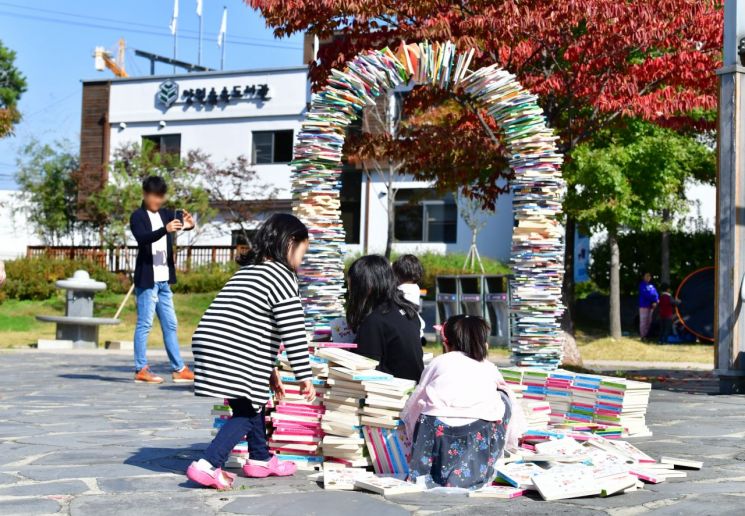
[Asia Economy Reporter Park Jong-il] Jungnang-gu (Mayor Ryu Gyeong-gi) will hold the 2022 Jungnang Book Festival on October 1st to welcome the autumn season, the season of reading.
Since 2016, the Book Festival has been a representative October festival of the district, aimed at spreading reading culture and creating a ‘Reading Jungnang.’ Every year, residents and local libraries participate to enjoy and get closer to reading.
This year, it will be held outdoors for the first time in two years. The theme is ‘Reading Camping in Jungnang Forest,’ and residents, Jungnang-gu public libraries, small libraries, and school libraries in the area have participated to directly organize the festival content.
The festival will operate about 20 different booths where visitors can experience reading culture from 10:30 a.m., starting with an awards ceremony for outstanding participants in the ‘Pre-school Thousand Book Reading’ project, which fosters reading habits in preschool children, until 5 p.m.
Among them, at the 2113 Book Exchange Exhibition operated by the Saemaeul Library Jungnang Branch, used books can be exchanged for new books. The number 2113 means that two used books can be exchanged for one new book, up to three books per person.
In addition, visitors can enjoy various booths such as treasure hunts, board games, reading camping, crafts, and barista experiences.
Along with this, cultural events such as an author lecture by writer Kim So-young, magic shows that awaken the joy of reading, quiz shows, and the family musical ‘Bremen Musician’ are also prepared. Also, throughout Jungnang Camping Forest where the festival is held, there is a photo zone with the Jungnang-gu SNS character ‘Rangrang,’ allowing visitors to enjoy taking commemorative photos.
Ryu Gyeong-gi, Mayor of Jungnang-gu, said, “We have worked hard to prepare various reading culture events so that residents can enjoy themselves with books at the Book Festival, which returns as an outdoor event after two years. We will continue to do our best to create a reading-friendly environment and promote various reading programs to build a ‘Reading Jungnang.’”
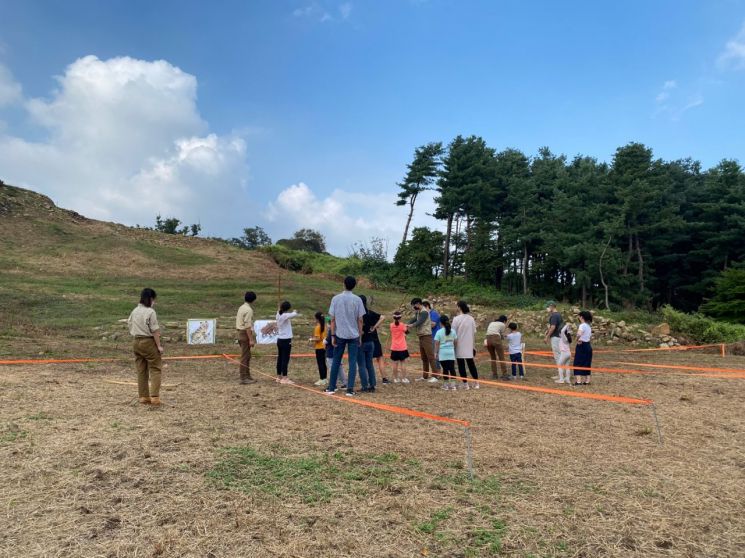
‘Achasan Fortress,’ National Historic Site No. 234, is located in Gwangjang-dong, Gwangjin-gu. It is a historical site where fierce conflicts among the Three Kingdoms took place around the Han River basin during the Three Kingdoms period, rich in history, education, culture, and tourism resources.
Utilizing this distinctive cultural heritage, Gwangjin-gu (Mayor Kim Gyeong-ho) has created a cultural content program called ‘Achasan Moeari’ and is operating it until October 8th.
Selected as a 2022 Cultural Heritage Administration public project, ‘Achasan Moeari’ consists of various programs such as plays, experiential activities, and field trips, divided into ▲Achasan Moeari Performance ▲Achasan Fortress ON AIR ▲Achasan Fortress Learning Center.
First, the ‘Achasan Moeari’ performance, themed on cultural heritage protection and preservation activities, is an audience participation play featuring ‘Moeari,’ the spirit of Achasan Fortress. It is held three times around Achasan Fortress, with up to 100 participants per session. After the play, visitors can experience archery using artifacts excavated from Achasan Fortress and try out reproduced relics.
‘Achasan Fortress ON AIR’ is a performance about cultural heritage preservation targeted at local elementary schools and special classes, held on the 20th at Naru Art Center. It was prepared to raise students’ awareness of protecting cultural heritage and nature.
Lastly, ‘Achasan Fortress Learning Center’ is a cultural heritage human resource development program held four times around Achasan Fortress for about 20 residents per session. It offers basic lessons on local cultural relics, field trips, and discussion classes.
The district planned these programs to strengthen local identity and help residents and students discover the meaning of cultural heritage and foster interest and affection for it.
The ‘Achasan Moeari’ project is receiving explosive responses, with all available spots for the scheduled sessions already filled.
Kim Gyeong-ho, Mayor of Gwangjin-gu, said, “I am pleased to provide vivid history and cultural education through our district’s cultural heritage ‘Achasan Fortress’ to residents and students. We will continue to develop diverse historical and cultural content to lower the threshold for cultural enjoyment while raising its quality.”
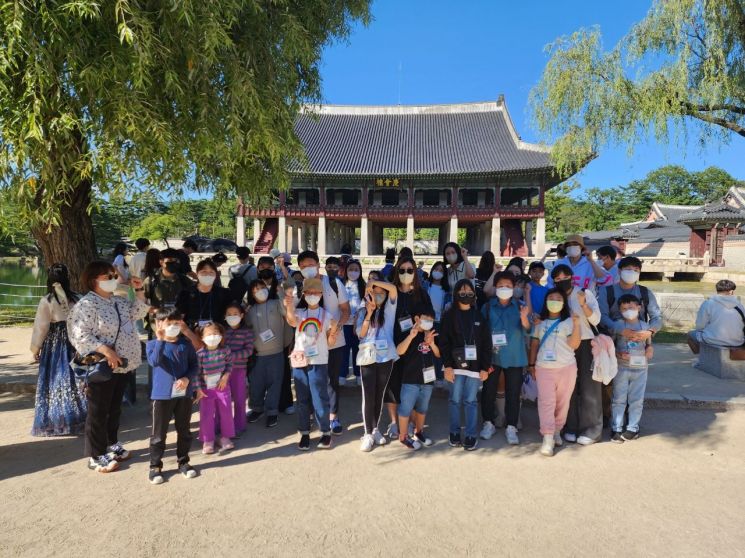
Gwangjin-gu (Mayor Kim Gyeong-ho) is operating and recruiting participants for the ‘Saturday History Tour with Family,’ a program where the whole family can learn history together on Saturdays until November.
The ‘Saturday History Tour with Family’ was created to provide an opportunity for families to experience and learn history vividly at historical sites, making history less rigid and creating enjoyable memories.
The program is conducted eight times until November for local elementary students and their parents, with 40 participants per session, totaling 320 people.
Participants are selected by random computerized drawing from applicants on the district website, with 10% of each session’s participants prioritized for vulnerable students.
The tour locations were selected for their historical representativeness and educational value.
The first session, held on the 24th, focused on modern and contemporary history, visiting Donuimun Museum Village, Gyeongbokgung Palace, and the War Memorial of Korea in Seoul. It featured in-depth explanations by professional guides, history quizzes, and hands-on experiences such as making worry dolls at the Donuimun Museum Village Knot Workshop, receiving enthusiastic responses from participants.
In October, the schedule includes ▲2nd session on October 1st with a security history theme visiting Paju Majang Suspension Bridge and Imjingak Peace Nuri Park ▲3rd session on October 8th with Joseon Dynasty history visiting Yeoju Empress Myeongseong’s Birthplace Museum, Sinheungsa Temple, and Hyojong Royal Tomb ▲4th session on October 15th with modern literature tour visiting Gapyeong and Chuncheon Kim You-jeong Literature Museum and Nami Island ▲5th session on October 22nd with natural history exploration visiting Cheorwon Hantan River Columnar Jointing Trail and Goseokjeong ▲6th session on October 29th with prehistoric history visiting Ganghwa Goryeo Palace Site and Ganghwa History Museum (Natural History Museum).
In November, ▲7th session on November 5th with modern history visiting Incheon Chinatown and Modern History Street ▲8th session on November 12th with Joseon Dynasty history visiting Yangpyeong Yongmunsa Ginkgo Tree and Dumulmeori.
The participation fee is 8,000 KRW per person, and applications can be made on the Gwangjin-gu website under Education → Gwangjin Lifelong Education. For more details, contact the Education Support Division of Gwangjin-gu Office.
An elementary student who participated in the first session said, “I only knew Gyeongbokgung Palace as the place where BTS performed, but today I learned interesting stories about Gyeongbokgung that I want to share with my friends.”
Kim Gyeong-ho, Mayor of Gwangjin-gu, said, “I hope this history experience program will be an opportunity to cherish our history and create happy memories with loved ones. We will continue to discover and support policies so that children and youth can grow up receiving good education.”
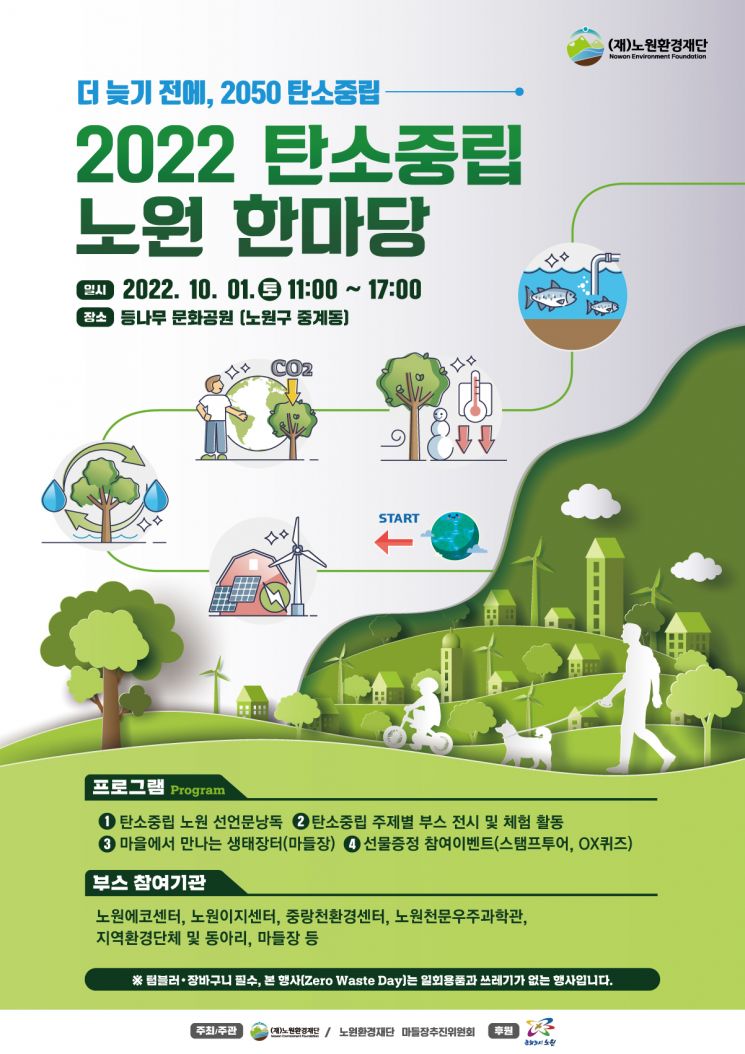
Nowon-gu (Mayor Oh Seung-rok) announced that it will hold the ‘2022 Carbon Neutral Nowon Festival’ on October 1st.
‘Carbon neutrality’ refers to the concept of reducing greenhouse gas emissions or offsetting emissions to effectively make net emissions zero. According to the goals set by the Intergovernmental Panel on Climate Change (IPCC), South Korea must achieve carbon neutrality by around 2050 to limit global temperature rise to within 1.5℃.
The Carbon Neutral Nowon Festival, introduced for the first time this year, aims to raise awareness of the climate crisis and the importance of achieving carbon neutrality, encouraging residents to practice it in daily life. Hosted by the Nowon Environmental Foundation, the only environmental foundation established by a Seoul district, the event involves local environmental organizations such as Nowon Eco Center, Nowon EZ Center (Nowon Energy Zero Center), Jungnangcheon Environment Center, environmental groups, and clubs.
The event will be held at Junggye Deungnamu Cultural Park from 11 a.m. to 5 p.m., with the opening ceremony at 1 p.m. on the outdoor stage. The opening includes a reading of the ‘Carbon Neutral Declaration,’ where 11 representatives from various sectors of Nowon-gu will relay to pledge thorough reduction of greenhouse gas emissions by all residents.
Side events include 52 booths across five themes: ▲Climate Energy ▲Ecological Environment ▲Resource Circulation ▲Healthy Food ▲Green Consumption. Play booths such as the ‘Carbon Footprint Playground’ operated by Nowon Eco Center and the ‘Environmental Love EZ Bingo Game’ by Nowon EZ Center help children naturally learn about environmental protection and carbon neutrality with interest.
The Jungnangcheon Environment Center, Seoul’s only water environment center, will also participate, allowing visitors to experience various aspects of the endangered otter species. Under the resource circulation theme, visitors can make recycled flowerpots, and the healthy food theme booth ‘Vegetarianism Saving Me and the Earth’ will introduce carbon-neutral practices through diet.
The ‘Ma.Deul.Jang (Ecological Market in the Village),’ held 4 to 6 times annually, will join the festival, offering eco-friendly agricultural products grown by ecological farmers. Participants who collect all five theme stamps will receive an energy-saving multi-tap as a gift.
Since 2017, the district has established the Nowon Environmental Foundation, the first among Seoul districts, to efficiently operate environmental facilities and conduct research and policy development for sustainable development.
Notably, the ‘Nowon Energy Zero Housing’ operated by the foundation is Korea’s first zero-energy collective housing, consisting of 121 households in various housing types such as apartments, row houses, detached houses, and semi-detached houses. Recently, Myongji University research team announced monitoring results over four years of solar and geothermal heat supply and usage, showing that Nowon Energy Zero Housing’s energy self-sufficiency rate approaches 100%, indicating the feasibility of carbon neutrality.
Oh Seung-rok, Mayor of Nowon-gu, said, “I ask everyone to pay attention to the urgent climate crisis and join efforts to reduce greenhouse gas emissions through this event. As a leading environmental district, we will strive to achieve the 2050 carbon neutrality goal.”
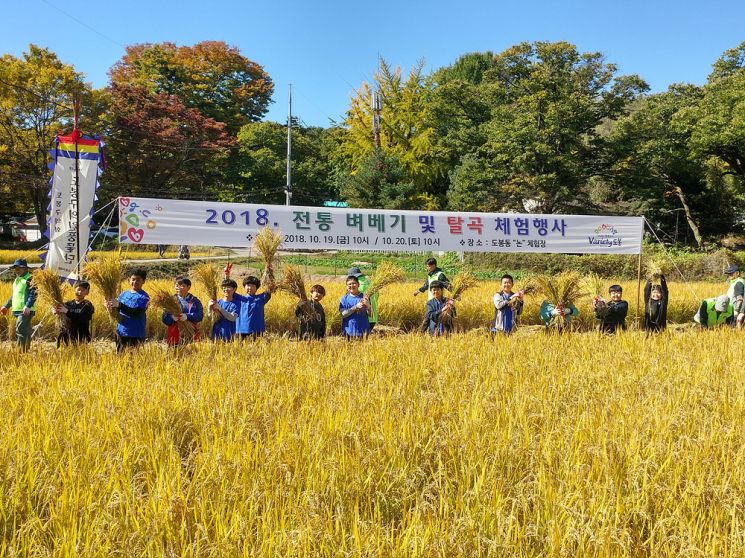
Dobong-gu (Mayor Oh Eon-seok) will hold the ‘Musugol Harvest Festival’ on October 20th and 21st at 10 a.m. at the eco-friendly rice paddy in Musugol (527 Dobong-dong), where participants can experience traditional rice harvesting, threshing, and making injeolmi rice cakes, promoting the value of Korean rice.
On October 20th, local elementary students will participate, and on the 21st, families of residents will join. Activities include ▲traditional rice harvesting using sickles and scissors ▲threshing using threshers and wooden flails ▲injeolmi rice cake making ▲samulnori (traditional Korean percussion) performances.
Families wishing to participate on the 21st can apply from 10 a.m. on October 5th via the district website. Applications are accepted on a first-come, first-served basis for 30 families, with results announced separately later. Details are available on the district website.
The October 20th harvest for 80 fifth-grade students from Nuwon Elementary School has already completed pre-registration in September.
Dobong-gu annually operates the Musugol rice paddy where students and parents participate in planting rice seedlings and releasing snails and loaches, experiencing traditional eco-friendly farming methods. In autumn, they experience the entire rice production process through harvesting and threshing.
The harvested rice will be milled and packaged, then donated to local welfare facilities, adding the meaning of urban agriculture shared among neighbors.
Oh Eon-seok, Mayor of Dobong-gu, said, “The district operates the Musugol rice paddy nestled in the natural surroundings of Dobongsan Mountain to educate children about traditional agriculture they rarely experience. We ask many families to participate in this opportunity to teach our children the value of food ingredients and agriculture.”
© The Asia Business Daily(www.asiae.co.kr). All rights reserved.



















