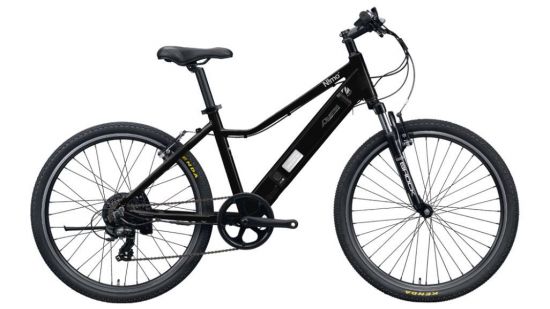
[Asia Economy Reporter Jang Hyowon] Alton Sports, the leading electric bicycle manufacturer in Korea, has entered the secondary battery anode material and used battery business.
According to related industries on the 26th, Alton Sports started the waste sludge business, a raw material for silicon anode materials, through its subsidiary Tianjin Alton in China since August. This business involves importing raw materials from China and supplying them to TRS, a producer of raw materials for secondary battery anode materials.
TRS is a subsidiary of Inox, the largest shareholder of Alton Sports, and is an affiliate company of Alton Sports. The company operates a business that recycles waste silicon contained in sludge generated during the processing of solar panels and semiconductor wafers to extract anode materials.
Silicon anode materials are gaining attention as next-generation battery materials that are more advanced than conventional graphite anode materials. Although the related technology is still in the early stages of commercialization, industry consensus holds that developing silicon anode material technology is essential to improve the charging speed and capacity of electric vehicle batteries.
Accordingly, a sharp growth in the silicon anode material market is expected, centered on global battery manufacturers. According to market research firms and the industry, the silicon anode material market size is projected to grow rapidly from $2.9 billion in 2025 to $14.6 billion in 2030.
TRS judged that it is more cost-effective for the local Chinese corporation to handle transactions of waste sludge directly with Chinese companies, so it started the business with Alton Sports’ subsidiary Tianjin Alton.
Alton Sports expects TRS to record sales of 5 billion KRW by the end of this year. The target sales are 20 billion KRW in 2023 and 60 billion KRW in 2024, with plans to go public (IPO) in the second half of 2024.
According to the company, as TRS’s sales increase, Tianjin Alton’s sales are also expected to reach about 10 billion KRW next year. The profit margin is around 10%, meaning that with 10 billion KRW in sales, 1 billion KRW will be recorded as operating profit.
Additionally, Alton Sports is entering the electric bicycle used battery recycling business based on its number one market share in the domestic electric bicycle market. Until now, used batteries were sold to the scrap market, but the company is preparing a business to improve efficiency for reuse or to disassemble and resell them.
The domestic electric bicycle market has entered a structural growth phase, with annual sales around 200,000 units. Alton Sports supplied electric bicycles worth 9.3 billion KRW to Kakao Mobility until August. In particular, electric bicycle batteries are rechargeable and replaceable, requiring 1.5 batteries per bicycle. Accordingly, it is estimated that more than 300,000 used electric bicycle batteries will be generated from next year onward.
An Alton Sports official said, “We will utilize the domestic distribution network to secure used electric bicycle batteries,” adding, “If the scale of the used electric bicycle battery business grows, we plan to secure pre- and post-processing and extraction technologies to also pursue the used battery business for electric vehicles in the future.”
© The Asia Business Daily(www.asiae.co.kr). All rights reserved.
![Clutching a Stolen Dior Bag, Saying "I Hate Being Poor but Real"... The Grotesque Con of a "Human Knockoff" [Slate]](https://cwcontent.asiae.co.kr/asiaresize/183/2026021902243444107_1771435474.jpg)










