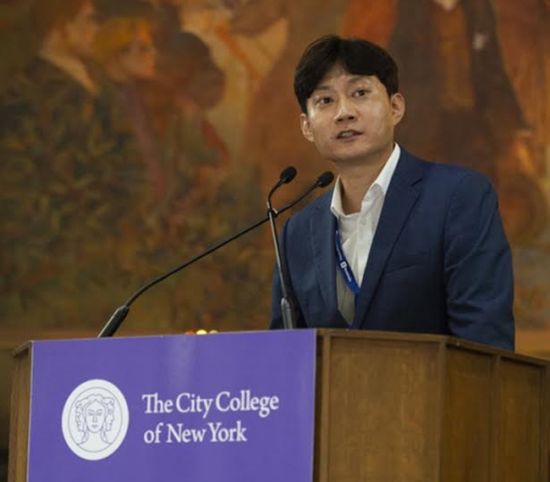
[Asia Economy Reporter Chunhee Lee] Brain engineering solution company Ybrain announced on the 26th that CEO Giwon Lee has been selected as one of South Korea's representatives to the Brain-Computer Interface (BCI) subcommittee of JTC1, the joint technical committee of the International Organization for Standardization (ISO) and the International Electrotechnical Commission (IEC).
JTC1 is a joint technical committee of ISO and IEC for global information technology and a consensus-based voluntary international standards group. The ISO/IEC JTC1 specialized centers provide governance, management, and strategy for the development of international standards through subcommittees in specific specialized fields. The first plenary meeting of the BCI subcommittee chaired by JTC1 will be held online from the 26th to the 29th. CEO Giwon Lee will participate in the plenary meeting as a subcommittee member representing South Korea.
At this plenary meeting, Ybrain plans to address aspects of information collection and application between brain and computer based on its commercialization experience with the electronic drug for depression 'Mindsteem' and the brainwave analysis device 'Mindscan.'
Ybrain developed Mindsteem, an electronic drug for depression that enables home treatment using transcranial direct current stimulation (tDCS), a technology that safely modulates nerves with microcurrents on the human body. It obtained approval from the Korea Food and Drug Administration and notification for non-reimbursed in-hospital prescription. Mindsteem is the world's first electronic drug for depression approved for home treatment. Additionally, Mindscan, which utilizes biosignals for diagnostic assistance, is also commercialized and its related technology has been used in joint BCI research with Hyundai Motor Company.
BCI is a direct communication pathway between the brain's electrical activity and external devices such as computers. It is mainly used to study, map, support, augment, or restore human cognitive or sensorimotor functions, and varies from non-invasive (EEG, MEG, EOG, MRI) and semi-invasive (ECoG and intravascular) to invasive (microelectrodes) depending on how close the electrodes are to brain tissue.
ISO and IEC are currently working on international standardization of BCI. In addition to standards for basic concepts and classification of BCI, hardware, experimental setups and protocols used in BCI, and BCI-related coding and decoding, they also cover linkage methods with external systems such as feedback and stimulation, and electronic drugs.
CEO Giwon Lee of Ybrain said, "Based on Ybrain's experience in developing and commercializing electronic drugs for depression, biosignals, and BCI systems, we hope to contribute to the establishment of international standards for BCI." He added, "By participating as a subcommittee member, we plan to actively utilize the standardized outcomes in domestic and international collaborations in the automotive, defense, and biosignal measurement fields."
© The Asia Business Daily(www.asiae.co.kr). All rights reserved.
![Clutching a Stolen Dior Bag, Saying "I Hate Being Poor but Real"... The Grotesque Con of a "Human Knockoff" [Slate]](https://cwcontent.asiae.co.kr/asiaresize/183/2026021902243444107_1771435474.jpg)
















