Immune Cells Bind Cancer-Identifying Receptors
6 out of 10 Patients with Refractory Lymphoma Show Improvement
Excellent Effect of Heavy Ion Therapy on Solid Tumors
Yonsei Medical Center and Seoul National University Hospital Plan Adoption
[Asia Economy Reporter Lee Gwan-joo] Cancer has been a disease accompanying human history, but it has been less than 100 years since a practical breakthrough in overcoming it was found. With the advancement of modern medicine, humanity has secured the ‘three major weapons’ of surgery, chemotherapy, and radiation therapy, and combined with diagnostic technology, is gradually winning the fight against cancer.
Even now, the development of new weapons against cancer continues. In chemotherapy, Chimeric Antigen Receptor T-cell (CAR-T), called the ‘miracle drug,’ and in radiation therapy, the heavy ion therapy device, known as the ‘dream treatment machine,’ are expected to open new horizons in cancer treatment.
Eliminating Cancer Cells with CAR-T, the ‘Top-tier Radar’
Everyone has immune cells (T cells). However, cancer cells have the ability to evade these and attack the body. While immune cells fail to recognize cancer cells, cancer spreads through the body like a poisonous mushroom. CAR-T therapy is a revolutionary treatment method that combines a receptor (CAR) capable of better detecting cancer cells with the patient’s own T cells and then reinfuses them into the patient’s body. To put it metaphorically, it equips T cells with a ‘stealth’ function, adding top-tier radar so they can better detect and attack cancer cells that attack the body, and also increases their combat power.
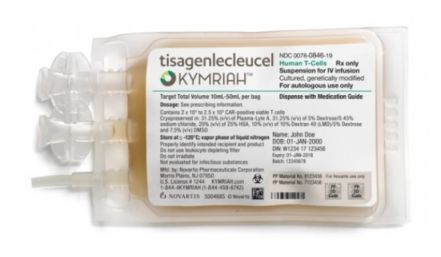
The greatest advantage of CAR-T therapy is its effectiveness. The world’s first CAR-T therapy, Novartis’s ‘Kymriah,’ is nicknamed the ‘one-shot anticancer drug.’ With just one treatment, it improves 6 out of 10 patients with refractory lymphoma who did not respond to conventional treatments, and among them, 4 achieve long-term survival close to a cure. However, since the therapy is made based on the patient’s immune cells, it is strictly a personalized treatment, making mass production impossible.
There is also a limitation in that it is effective only for blood cancers, not solid tumors. Accordingly, efforts to develop next-generation cell therapies continue, such as CAR-NK, which combines CAR with natural killer (NK) cells, and CAR-M, which combines CAR with macrophages. CAR-NK can have universal applicability beyond personalized therapy through an allogeneic cell-derived method, and CAR-M is actively researched as its applicability to solid tumors has been confirmed.
Heavy Ions: Stronger and More Precise Attack on Cancer Cells
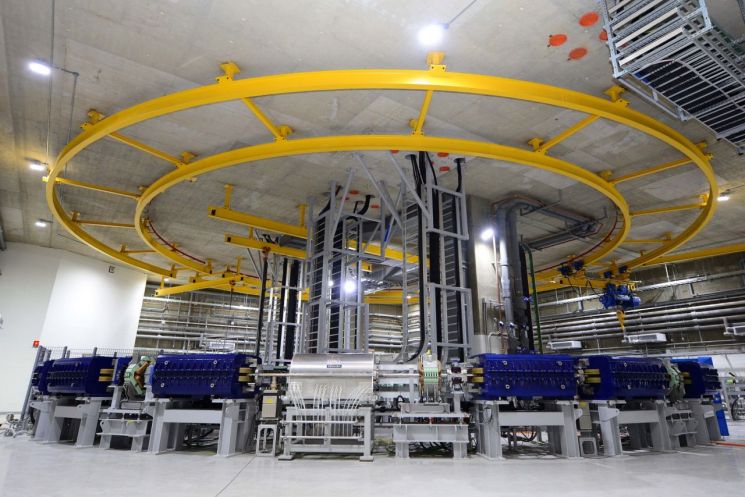
If CAR-T therapy is prominent in the chemotherapy field for blood cancers, heavy ion therapy is gaining attention in radiation therapy for solid tumors. The heavy ion therapy device works by irradiating cancer cells with heavy ions, releasing powerful radiation energy to destroy cancer cells. In particular, compared to conventional X-rays, heavy ions have about 20,000 times the particle mass, and about 12 times heavier than protons, enabling a stronger attack on cancer cells.
Due to these characteristics, heavy ion therapy shows strong effects on solid tumors that exist as a solid mass in one location. It is known to be particularly effective for prostate cancer, as well as head and neck cancer, liver cancer, pancreatic cancer, and melanoma.
In Korea, Yonsei Medical Center and Seoul National University Hospital are promoting the introduction of this therapy. Yonsei Medical Center plans to open the first heavy ion therapy center in Korea in March next year, and Seoul National University Hospital plans to install a heavy ion therapy device at the ‘Gijang Cancer Center’ currently being developed in Busan and operate it by 2027. Kim Yong-bae, Deputy Director of Yonsei Cancer Hospital (Professor of Radiation Oncology), explained, "Heavy ion therapy can be clinically applied to most cancer types and shows superior treatment outcomes compared to conventional radiation therapy. It has fewer side effects because it causes less damage to surrounding normal tissues, and the reduced number of treatment sessions improves patient convenience."
© The Asia Business Daily(www.asiae.co.kr). All rights reserved.


















