Korean Society of Cardiovascular Interventions Launches 'Jeojeoikseon 365' Campaign
Active Management Needed for LDL Cholesterol Levels Below 55 mg/dL
[Asia Economy Reporter Lee Gwan-joo] To prevent recurrence in patients who have experienced myocardial infarction, it is essential to lower the level of LDL cholesterol, commonly known as "bad cholesterol." Since the first year after discharge is the most critical period, active management is necessary.
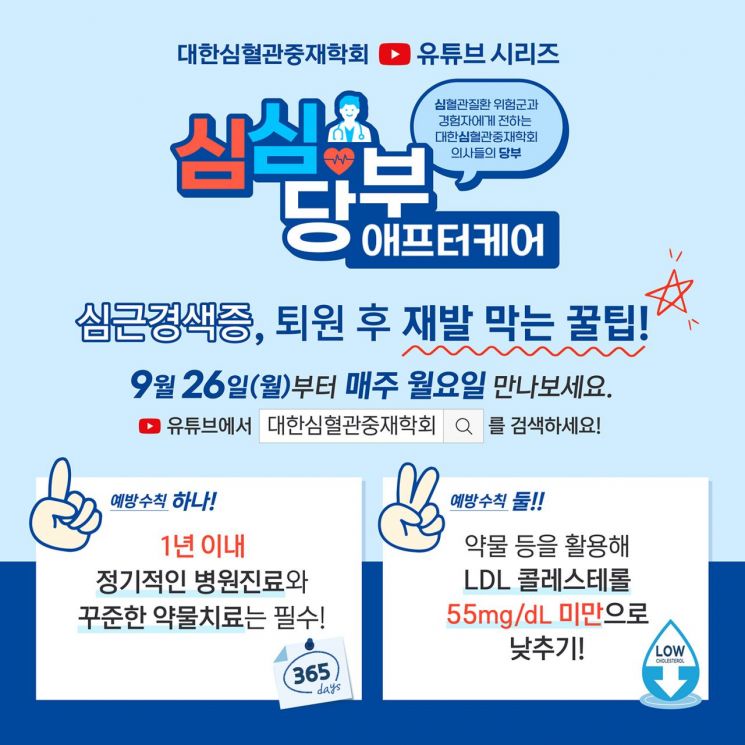
The Korean Society of Cardiovascular Interventions announced on the 26th that it will run the "The Lower, The Better LDL Cholesterol 365" campaign until next month to emphasize the importance of managing LDL cholesterol levels.
This campaign aims to present target management levels for LDL cholesterol to prevent cardiovascular disease recurrence and to stress the importance of managing it actively 365 days a year. In particular, it focuses on informing that the first year after treatment and discharge for myocardial infarction is the most crucial period to prevent recurrence and introduces specific key preventive guidelines.
As part of the campaign, a YouTube video series titled "Simsim Dangbu (Korean Society of Cardiovascular Interventions Doctors’ Advice to Cardiovascular Disease Risk Groups and Survivors) Aftercare," featuring cardiovascular disease specialists from the society, will be released sequentially every Monday from today until the 17th of next month on the society’s official YouTube channel "Korean Society of Cardiovascular Interventions KSIC."
Above all, patients who have experienced myocardial infarction must lower their LDL cholesterol level to below 55 mg/dL within one year after discharge. Between 30% and 50% of myocardial infarction patients experience recurrence, and if recurrence occurs, the mortality rate can reach up to 85%. The risk of recurrence is known to be highest from six months to one year after discharge. Even after discharge, patients should visit the hospital regularly and continuously manage their LDL cholesterol levels during the first year.
Choi Dong-hoon, director of the Korean Society of Cardiovascular Interventions, said, "As interventional procedures in cardiovascular treatment have significantly advanced, leading to great progress in acute patient care, effective post-procedure recurrence prevention treatment is also essential to substantially reduce the health burden of cardiovascular disease on our society." He added, "The society plans to continue its activities to ensure that patients maintain regular hospital visits and manage their LDL cholesterol target levels so they can lead healthy lives without change after the procedure."
© The Asia Business Daily(www.asiae.co.kr). All rights reserved.

















