[Asia Economy (Suwon) = Reporter Lee Young-gyu] A study revealed that about 52% of the fine particulate matter (PM-2.5) components in Gyeonggi-do last year were ions mainly generated through atmospheric chemical reactions with pollutants emitted from sources such as automobile exhaust, industrial activities, and agricultural and livestock activities.
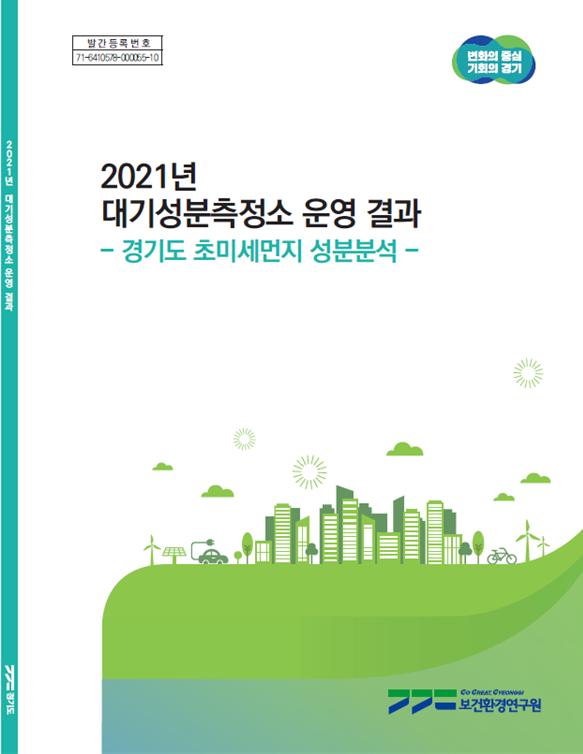
The Gyeonggi-do Institute of Health and Environment announced on the 26th that it published the "2021 Air Component Monitoring Station Operation Results" report containing these findings.
The institute collected air samples throughout 2021 from four air component monitoring stations located in Pyeongtaek, Gimpo, Pocheon, and Icheon, and analyzed the fine particulate matter components.
Analysis results showed that ion components accounted for an average of 52% at all four monitoring stations, the highest proportion. This was followed by carbon at 25% and heavy metals at 2%.
Ion components in fine particulate matter mainly result from gaseous pollutants undergoing secondary reactions in the atmosphere, converting into nitrate, sulfate, ammonium ions, and others.
Nitrate is primarily generated through atmospheric chemical reactions of nitrogen oxides (NOX), whose emissions increase due to human activities such as automobile use.
Sulfate is produced by the oxidation reaction of sulfur dioxide (SO2), with major sources being industrial activities and emissions from thermal power plants.
Ammonium is influenced by ammonia (NH3) emissions, which are mainly released in areas with significant agricultural and livestock activities.
Analysis conducted at the Pyeongtaek and Gimpo monitoring stations showed seasonal characteristics where concentrations of fine particulate matter, black carbon, carbon monoxide, and nitrogen dioxide were higher from late autumn to spring (November to March) and lower in summer.
The institute explained that in winter, seasonal factors increase emissions of air pollutants from heating in commercial and public facilities and homes, and the stagnation of the atmosphere along with the expansion of continental high-pressure systems leads to the influx of high-concentration foreign air pollutants.
Park Yong-bae, director of the Gyeonggi-do Institute of Health and Environment, stated, "To reduce fine particulate matter concentrations by region, we will identify the characteristics of local emission sources and conduct accurate fine particulate matter component analyses to contribute to fine dust reduction policies."
Meanwhile, the report also includes ▲ the status of fine particulate matter and particulate matter in Gyeonggi-do ▲ distribution of fine particulate matter concentrations and characteristics of major components ▲ particle size distribution of fine particulate matter ▲ analysis results of gaseous substances (NH3, CH4, CO2, CO) and volatile organic compounds (VOCs) ▲ and case studies on the utilization of 2021 air component monitoring station measurement results.
© The Asia Business Daily(www.asiae.co.kr). All rights reserved.

















