Conflict Expected to Intensify with October Leadership Change in China
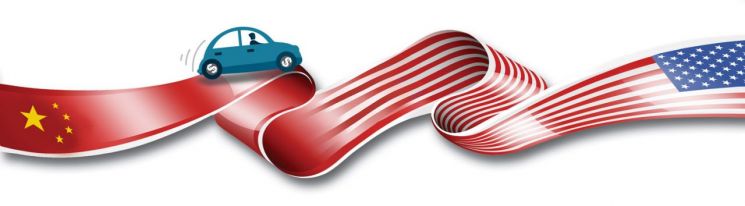
[Asia Economy Reporter Seo So-jung] As recent US-China conflicts deepen due to Taiwan-related confrontations, the Semiconductor Support Act, and fears surrounding the Inflation Reduction Act, there are considerable negative impacts on Korean industries. Therefore, it has been suggested that measures such as supply chain diversification are necessary to fundamentally strengthen industrial competitiveness.
On the 25th, the Bank of Korea stated in its publication Overseas Economic Focus in the report titled "Recent Major Issues and Implications of the US-China Economic Dispute" that "Since the nationwide representative meeting in October this year, there is a high possibility that the existing Chinese leadership will be replaced by hardline conservatives, which could further intensify US-China confrontations."
According to the report, the US is increasing pressure on China through the Semiconductor Support Act and the CHIPS 4 alliance, and by strengthening non-tariff barriers against China via the Inflation Reduction Act, the conflict between the two countries is expected to expand in the medium to long term.
In particular, the US-China conflict is expected to affect Korea's key industries such as semiconductors and automobiles, with the extent varying depending on specific implementation measures.
In the case of semiconductors, companies like Samsung Electronics and SK Hynix operate large-scale production plants in China. If US regulations make it difficult to bring advanced US-made equipment into Chinese factories, there are concerns about setbacks in transitioning to finer processes and expanding production capacity.
Similarly, for automobiles, domestic electric vehicles are excluded from the new car purchase tax credit under the Inflation Reduction Act (IRA), which is expected to have a short-term negative impact on Korean companies' exports to the US.
Currently, Korean companies produce all electric vehicles domestically and rely heavily on China for battery materials and components, making it difficult to meet the requirements in the short term. Additionally, high tariffs imposed due to the US-China trade dispute are expected to continue for the time being. If trade disputes reignite depending on the development of conflict factors between the two countries, it is anticipated to pose additional downside risks to the Korean economy.
Lee Jun-young, head of the China Economy Team at the Bank of Korea, emphasized, "As the US-China economic dispute deepens in the medium to long term, and major countries continue to strengthen their domestic-centered supply chains, efforts such as supply chain diversification to enhance industrial competitiveness, targeting higher stages of the value chain, and pursuing balanced trade policies must be implemented."
He added, "In response to structural changes in the US-led global supply chain and value chain, we must strengthen innovation capabilities to target higher stages of the value chain (design, R&D, marketing). Since China is expected to continue promoting consumption activation and fostering advanced technology industries, active entry into China's markets for final consumer goods and advanced material components is also necessary."
© The Asia Business Daily(www.asiae.co.kr). All rights reserved.
![Clutching a Stolen Dior Bag, Saying "I Hate Being Poor but Real"... The Grotesque Con of a "Human Knockoff" [Slate]](https://cwcontent.asiae.co.kr/asiaresize/183/2026021902243444107_1771435474.jpg)










