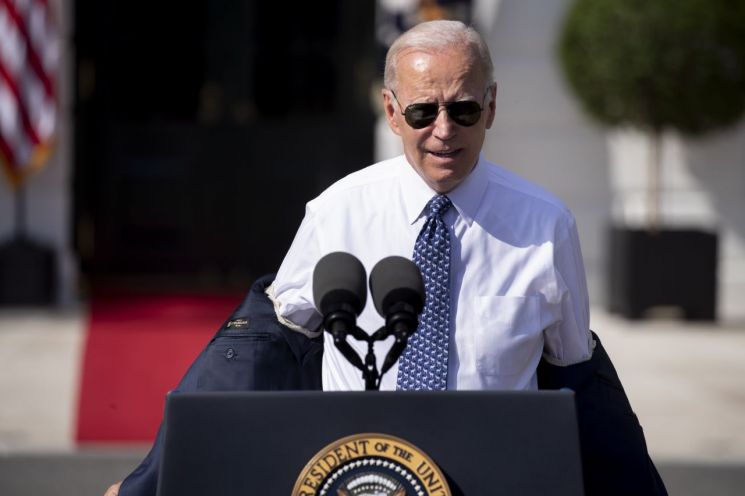
[Asia Economy Reporter Oh Hyung-gil] As the planned Korea-US summit during President Yoon Seok-yeol's visits to the UK, the US, and Canada fell through, the battery industry has been facing increased concerns.
It was expected that key issues such as the Inflation Reduction Act (IRA) would be discussed during the summit with the US government, but the meeting ended with a '48-second encounter,' effectively resulting in its cancellation.
With the midterm elections in November approaching, the revision of the IRA law seems unlikely, leading to a situation where companies are considering 'each to their own survival.'
According to industry sources on the 25th, the IRA law provides tax credit benefits only for electric vehicles produced in North America and includes provisions that subsidies will be granted only if battery minerals used in electric vehicle battery manufacturing are mined and processed in North America or countries that have free trade agreements (FTA) with the US to a certain extent. This means the dependence on China, which has accounted for a significant portion of the battery supply chain, must be reduced.
In response, battery companies are securing new supply chains to move away from China. LG Energy Solution signed memorandums of understanding on the 22nd (local time) with Canadian mineral companies Electra (7,000 tons of cobalt sulfate over three years starting 2023), Avalon (55,000 tons of lithium hydroxide starting 2025), and Snow Lake (100,000 tons of lithium hydroxide over ten years starting 2025) to receive supplies of cobalt sulfate and lithium hydroxide.
Cobalt sulfate is a cobalt precursor compound and an important raw material for cathode materials. Lithium hydroxide is a key raw material for high-performance, high-capacity electric vehicle batteries.
Earlier in March, LG Energy Solution established NextStar Energy in Windsor, Ontario, Canada, with Stellantis to build a factory. They plan to invest a total of $4 billion to produce batteries with an annual capacity of 45 gigawatt-hours (GWh). The factory is scheduled to produce battery modules in the first quarter of 2024 and battery electrodes and cells in the first quarter of 2025.
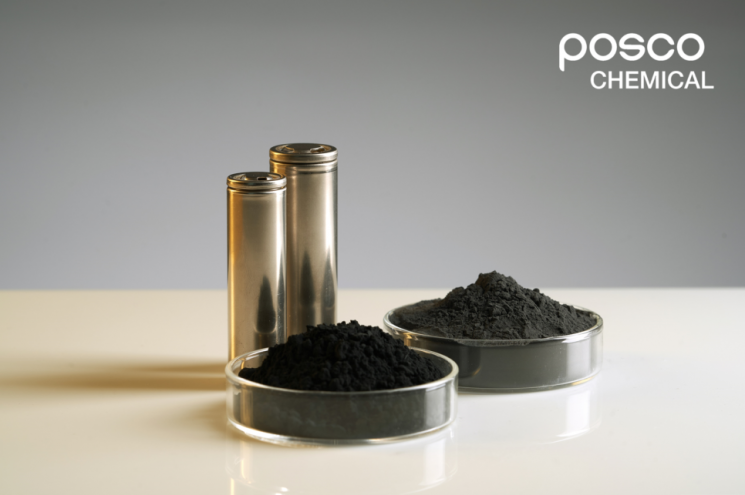
POSCO Chemical established the North American cathode material joint venture Ultium CAM with General Motors (GM) in March and plans to invest $327 million to build a high-nickel cathode material joint factory with an annual capacity of 30,000 tons in Becancour, Quebec, Canada.
Active expansion is also underway into Australia, which has an FTA with the US, and Africa, considered the last remaining resource-rich continent. In May last year, POSCO acquired a 30% stake in Ravensthorpe, an Australian nickel mining and refining specialist, and signed large-scale purchase agreements for key metals such as lithium, nickel, and copper with Hancock and Pilbara Minerals.
SK Group Chairman Chey Tae-won met with Hakainde Hichilema, President of Zambia, on the 20th (local time) during his US business trip to discuss cooperation on supplying copper foil used in battery anode materials. Chairman Chey said, “Zambia's copper mines present an interesting opportunity for SK Group, which owns SK Nexilis, the world's number one copper foil manufacturer.” Located in Central Africa, Zambia ranks seventh in the world in copper mining volume.
© The Asia Business Daily(www.asiae.co.kr). All rights reserved.


















