Democratic Party Pushes for Basic Pension Expansion in Regular National Assembly
Concerns from Civil Society over Basic Pension Expansion Amid Lack of Pension Reform Discussions
Fundamental Doubts about Basic Pension's Role in Retirement Security as a Political Decision
Possibility of Low-Income Groups Leaving National Pension
Concerns over National Pension Reducing Income Replacement Rate
[Asia Economy Reporter Naju-seok] Concerns are being raised over the Democratic Party of Korea's plan to provide a basic pension of 400,000 won to all elderly people aged 65 and over. Experts acknowledge that expanding the basic pension has positive aspects considering elderly poverty issues, but they warn that it could lead to the abandonment of the National Pension, especially among low-income groups.
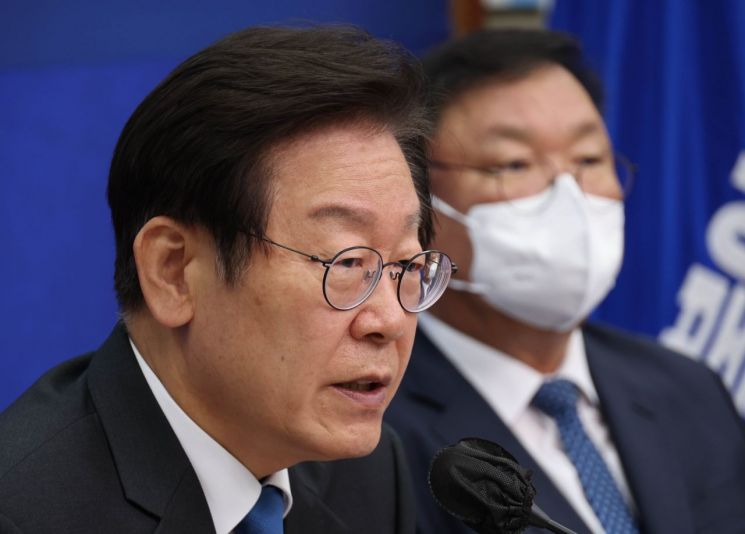
According to political circles on the 25th, the Democratic Party has proposed expanding the basic pension as a key task for this year's regular National Assembly session. The plan is to extend the basic pension, currently paid to the bottom 70% of elderly people aged 65 and over, to all elderly people aged 65 and above, and to raise the payment amount from the current 300,000 won range to 400,000 won. Kim Seong-hwan, chairman of the Democratic Party's Policy Committee, said at a press briefing on the 20th, "During the last presidential election, there were separate legislative proposals to raise the basic pension from 300,000 to 400,000 won for the bottom 70% of elderly people and to expand the payment target to 100%," adding, "The Policy Committee is conducting a separate simulation on how to integrate these."
The need to raise the basic pension has been proposed since the presidential election, considering South Korea's serious elderly poverty problem. President Yoon Seok-yeol also promised to raise it to 400,000 won as a campaign pledge, and Lee Jae-myung, leader of the Democratic Party, proposed raising the basic pension to 400,000 won during his presidential candidacy, reflecting a common goal in the political sphere.
However, concerns about the financial burden have already been raised regarding this plan. In this context, financial burden issues have been pointed out. Earlier, Kang Eun-mi, a Justice Party lawmaker, said at the Justice Party's caucus meeting on the 21st, "We welcome the Democratic Party's push to raise the basic pension to 400,000 won," but criticized, "Expanding welfare without a tax increase foundation is likely to hit the financial crisis obstacle and hardly see the light of day." Kang urged, "Discussions on raising the basic pension should be calmly handled together with the National Pension and other pension reforms in the Pension Reform Special Committee." On the same day, Joo Ho-young, floor leader of the People Power Party, said at the party's emergency committee meeting, "They are recklessly issuing irresponsible populist policies," and pointed out, "Pensions should be comprehensively integrated and structured as a whole; it is irresponsible to handle any one part carelessly."
Both Joo Ho-young and Kang Eun-mi, members of the National Assembly's Pension Reform Special Committee, pointed out financial issues related to the basic pension discussion, but also emphasized that it should be discussed in conjunction with National Pension reform at the committee level. The Democratic Party also holds the position that discussions on the basic pension and National Pension should be linked. However, they have announced plans to push for basic pension expansion as a key bill in the regular National Assembly session without discussing the National Pension, leaving open the possibility of raising the basic pension alone.
Academia and civil society have expressed concerns about the Democratic Party's approach. While raising the basic pension is positive for solving elderly poverty, it could lead to the abandonment of the National Pension, and relying solely on the basic pension for old-age security is worrisome. The greatest concern is that emphasizing only the basic pension increase could lead to the withdrawal of low-income groups from the National Pension.
As of this year, the basic pension is 307,500 won, and couples both aged 65 or older can receive 492,000 won. This amount is comparable to the average National Pension payment of 572,000 won. If the basic pension is raised to 400,000 won, the couple reduction rule could be abolished, and even if it remains, the amount could exceed the average National Pension payment.
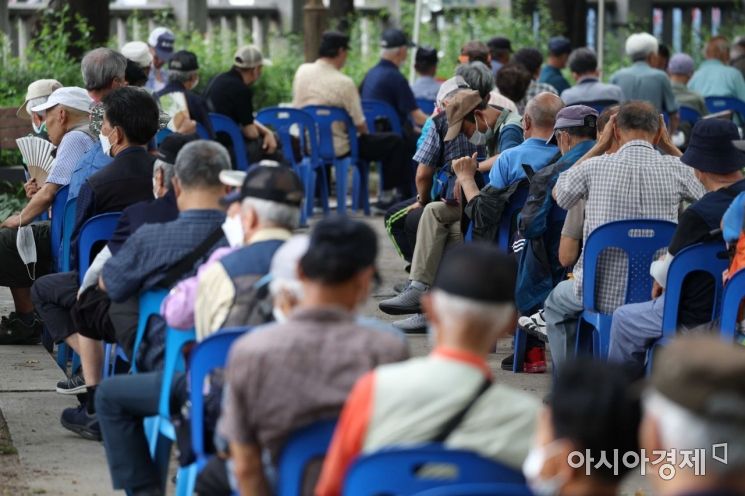 On the 5th, as the heatwave intensifies, elderly people are waiting to receive free meals at Tapgol Park in Jongno-gu, Seoul. Photo by Mun Ho-nam munonam@
Professor Joo Eun-seon of the Department of Social Welfare at Kyonggi University explained, "The basic pension is funded through taxes, and increases in benefits are politically decided through consensus, whereas the National Pension is funded by insurance premiums, and benefit levels are contractual, so the state cannot alter previously promised benefits," adding, "The quality of security differs between the basic pension and the National Pension." While the basic pension can be reduced or abolished anytime depending on financial conditions, the National Pension guarantees at least the portion one has paid. Professor Joo said, "In the context of aging, those who will discuss the basic pension in 2050 or 2060 will be the people living at that time." In other words, whether the basic pension will still exist or how much it will be in 2050 can only be known by living in that era.
Moreover, she expressed concern about the possibility of low-income groups abandoning the National Pension relying solely on the basic pension. Professor Joo said, "Currently, the National Pension pools low and high wage earners together for income redistribution. If low-income people leave (due to immediate livelihood reasons), the protective function for them disappears," and criticized, "Raising the basic pension without discussing the National Pension provides incentives for low-income people to abandon the system."
She further warned about the potential weakening of the National Pension's income security. Professor Joo said, "It could become possible to raise the basic pension while keeping the National Pension as is, cutting it, or reducing it in inconspicuous ways," adding, "If such logic is possible, it is essentially giving up the bone to take the flesh." There is concern that pension reform could proceed in a direction that partially reduces the National Pension's old-age income security function because the basic pension has been raised.
For now, the National Assembly decided in July this year to form a Pension Reform Special Committee to discuss the basic pension together with pensions. According to the resolution to form the committee, it is defined as "reform measures for the four major public pensions and the basic pension to stabilize pension finances and secure old-age income." A committee official said, "The inclusion of the basic pension in the pension special committee's discussion is due to the need for linkage between the two systems to secure old-age income."
© The Asia Business Daily(www.asiae.co.kr). All rights reserved.


















