Samsung Electronics Vice Chairman Lee Jae-yong Returns from Latin America and Europe Trip
Possible Negotiations Next Month with ARM Major Shareholder Chairman Masayoshi Son
Chairman Son Also Responds, "Visiting Korea to Discuss Cooperation with Samsung"
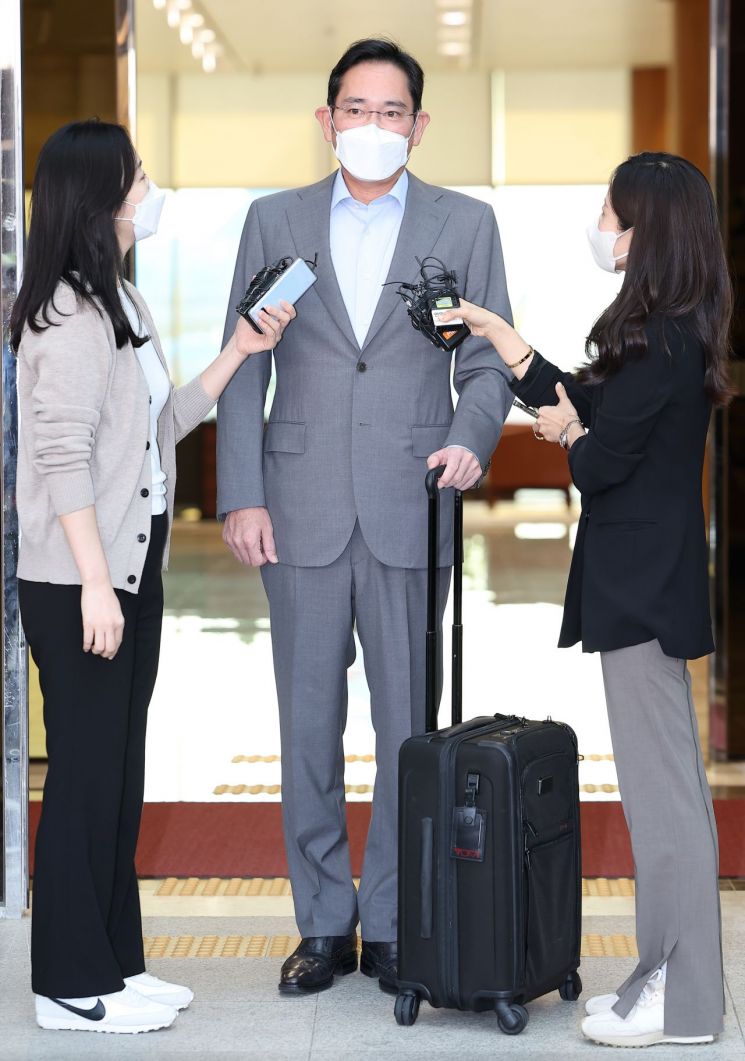 Samsung Electronics Vice Chairman Lee Jae-yong, returning from business trips to Latin America and Europe, arrived in Seoul at around 5:50 p.m. on the 21st through the Seoul Gimpo Business Aviation Center (SGBAC) in Gangseo-gu, Seoul, and is answering questions from the press. (Photo by Yonhap News)
[Asia Economy Reporter Moon Chaeseok] Samsung Electronics, the world's No.1 memory semiconductor company, is accelerating the realization of its vision to dominate the world in non-memory (system) semiconductors as well. Vice Chairman Lee Jae-yong personally revealed that he will meet next month with SoftBank Chairman Masayoshi Son, the largest shareholder of the world-renowned British fabless semiconductor design company 'ARM', to negotiate a merger and acquisition (M&A), drawing great attention. Considering that ARM holds a 95% market share in the application processor (AP) market, which acts as the brain of smartphones, it is expected that Samsung's system semiconductor business will gain momentum if the acquisition succeeds.
According to business circles on the 22nd, Vice Chairman Lee returned to Korea around 5:50 p.m. the previous day through the Seoul Gimpo Business Aviation Center (SGBAC) in Gangseo-gu, Seoul, after a business trip to Latin America and Europe. Among the 14-day trip schedule, the UK visit attracted the most attention. There is an expectation that the ARM M&A negotiations have made significant progress.
When asked by reporters, "Did you meet with ARM executives, and how are the new business results?" Vice Chairman Lee said, "I did not meet with ARM (executives)," but added, "Chairman Son will probably come to Seoul next month, and he might make an (M&A) proposal then, but I am not sure." Even interpreting Vice Chairman Lee's remarks conservatively, the industry consensus is that he has seized an opportunity to negotiate with ARM's largest shareholder regarding the M&A. ARM is a company in which Vice Chairman Son holds 75% and the Vision Fund holds 25% of the shares, respectively.
Chairman Son also responded that he will visit Korea and discuss the possibility of cooperation related to ARM under SoftBank with Samsung Electronics, Bloomberg reported on the same day. This will be his first visit to Korea in three years. A SoftBank spokesperson said that Chairman Son expressed, "There is great anticipation for this visit," and "We plan to discuss strategic cooperation between Samsung and ARM." Chairman Son has continuously stated that after his plan to sell ARM to the U.S. semiconductor company Nvidia for $40 billion (about 56.37 trillion KRW) was thwarted by opposition from U.S. and UK competition authorities, he is prioritizing ARM's listing on the U.S. Nasdaq.
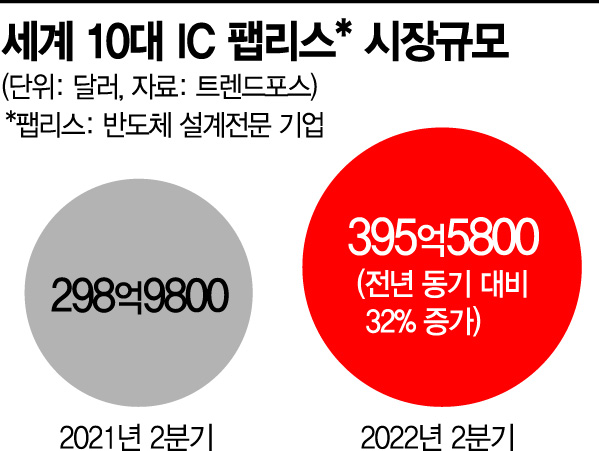
Although ARM's corporate value has surged to about 100 trillion KRW and competition authorities in various countries are expected to impose significant scrutiny, the prevailing opinion is that the ARM M&A is an opportunity worth pursuing for Samsung Electronics. It is also said to be a deal that perfectly matches the business direction Samsung has proposed. Earlier, in April 2019, Samsung Electronics announced 'System Semiconductor 2030,' aiming to become the world's No.1 in the system semiconductor field by 2030. This strategy is regarded as stemming from an urgent awareness that there is no future without improving the business structure centered on system semiconductors.
If the deal is successful, it is expected to enable a business structure improvement centered on system semiconductors. Samsung has made money by producing high-quality memory semiconductor components such as DRAM and NAND flash and supplying them to set (finished product) companies. There were limits to achieving high profitability if deals with set companies were cut off. Now, Samsung is attempting to transition to a 'memory-centric computing' system. This means that memory semiconductor components not only function to simply increase system processing speed but also serve as the 'central axis' responsible for computation, storage, and more in devices such as smartphones. It signifies a business approach that goes beyond merely 'tuning' finished products to becoming the finished products 'themselves.'
If Samsung, which has the capability for mass production in foundry (semiconductor contract manufacturing) factories, acquires the design capabilities of ARM, the world's largest semiconductor IP company, it will have the advantage of actively leading the system semiconductor business. Although Samsung is No.1 in memory semiconductors, it has lost major set companies like Apple to TSMC, the No.1 in the foundry field, so it is advised that Samsung needs to compete in the 'third market,' system semiconductors. Especially in the system semiconductor IP sector, there are 'Intel-based' and 'ARM-based' categories; ARM is relatively 'open source,' while Intel is known never to disclose confidential information. In summary, many experts believe that Samsung, even as a latecomer, must embrace ARM to gain a position as a player in the mobile or automotive (autonomous vehicle) system semiconductor market.
Professor Kim Jeong-ho of the Department of Electrical and Electronic Engineering at KAIST said, "Since Samsung's mobile AP, Exynos, is also made based on the 'ARM-based' architecture, acquiring ARM shares would enhance Samsung's system semiconductor competitiveness and secure long-term growth engines, making it a deal worth 'betting' on despite the approximately 100 trillion KRW corporate value." However, he also advised, "If possible, it would be worth considering forming a consortium with companies like Google and Microsoft (rather than ARM's competitor Intel) to make a limited investment of about 30 trillion KRW in shares."
© The Asia Business Daily(www.asiae.co.kr). All rights reserved.


















