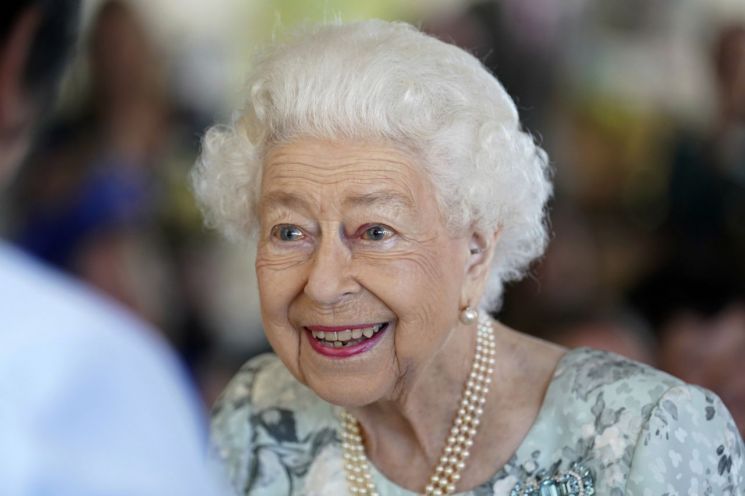
[Asia Economy Reporter Seomideum] "My little baby with white skin and pretty blonde hair."
This is what Queen Mary, the grandmother, wrote in her diary upon seeing Elizabeth II, who was born on April 21, 1926. The small child was identified as a likely heir to the throne around the age of 10. This was when Edward VIII abdicated in 1936 and her father, George VI, ascended the throne.
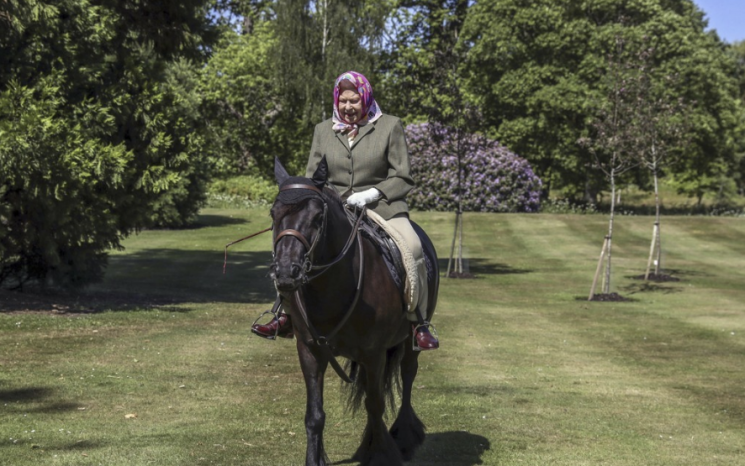
Professor Kim Hyun-soo of Dankook University's Department of History shares detailed stories about Britain and Elizabeth II in his book Story of British History (Cheonga Publishing). According to him, Elizabeth II lived under strict and meticulous education for royal succession from a young age. She was also separated from her father. She spent lonely days moving between Balmoral Castle in Scotland and Windsor Castle, and what comforted her was horseback riding. She enjoyed riding horses along country roads and later often said, "If I had not become king, I would have lived raising horses and dogs in the countryside."
Queen Elizabeth II was known for her strong patriotism. During World War II, she went to her father and said, "I want to serve my country too," requesting to enlist. Eventually, she was commissioned as an officer and assigned to the 'Relief Supplies Delivery' department, where she met her husband, Prince Philip.
Prince Philip was the son of Prince Andreas, known as the Greek-Danish prince who was exiled due to the 1922 military revolution, and he had lived in Britain since childhood. After studying at the Royal Naval College, he met Elizabeth during the war. The two developed a romantic relationship, got engaged in 1947, and held their wedding ceremony at Westminster Abbey on November 20. The following year, their son Charles III, the current king of the United Kingdom, was born.
Elizabeth II ascended the throne on June 2, 1953. After the death of her father, George VI, she was crowned at Westminster Abbey. Since then, she adhered to the principle of "reigning but not ruling," becoming a symbol of Britain.
However, that symbol faced several crises, mostly caused by conflicts within the royal family. The divorce of her daughter, Princess Anne, and the broken engagement of her sister, Margaret Rose, brought negative attention to the royal family's private affairs. Especially, the relationship between Prince Charles, who was involved in numerous scandals, and Princess Diana attracted worldwide interest. The couple married in a grand ceremony in 1981 but led a troubled life.
The struggles of Diana and the secrets of the royal family are detailed in Andrew Morton's 1992 book Diana: Her True Story (Seonghun Publishing, translated by Jeong Jeongsuk).
Diana's revelations about the difficulties in her marriage went beyond personal issues. More Britons empathized with her life, leading to widespread public sympathy. Particularly, after Diana's divorce in 1996 and her mysterious death in a car accident in 1997, public sympathy turned into criticism of the royal family, targeting Charles and the monarchy.
So, do the British people want to abolish the monarchy? To answer this question, it is helpful to read Professor Ahn Byeong-eok's book British History in One Night. Professor Ahn said, "During Diana's funeral, the British criticized the monarchy for its lack of empathy, but they still saw the monarchy as necessary as an institution." The monarchy is a special entity to the British. It is regarded as part of British identity, making them feel superior to other countries.
In fact, according to a YouGov survey earlier this year, 62% of Britons agreed that "the monarchy should be maintained." As of 2018, the monarchy receives a substantial annual support of ?82 million (about 124.4 billion KRW). Yet, Britons feel that abolishing the monarchy would be "the end of proud British history." Of course, it is undeniable that calls for abolition are gaining strength. The monarchy's approval rating, which was 75% in 2012, dropped to 62% this year.
Elizabeth II, who reigned as Britain's longest-serving monarch, passed away on the 8th, and the final ceremony (state funeral) was held at Westminster Abbey, where she had her wedding (1947) and coronation (1953). Following her, Charles III was appointed monarch, bringing many changes. First, Elizabeth II's face on stamps and banknotes is being replaced with Charles III's, and the phrase "Her Majesty the Queen" on passports will be changed to "His Majesty."
The national anthem's lyrics will also be revised to "God Save the King." But the most important change is the role Charles III will play amid rising calls for the abolition of the monarchy. The world’s attention is focused on Britain at this crossroads, wondering how he will handle the concept of monarchy in the 21st century.
© The Asia Business Daily(www.asiae.co.kr). All rights reserved.


















