The 45th Logistics Committee Meeting Held
Attended by Kang Shin-ho, CEO of CJ Logistics, and Over 30 Others
Proposals for Expanding Foreign Employment and Increasing Urban Logistics Facilities
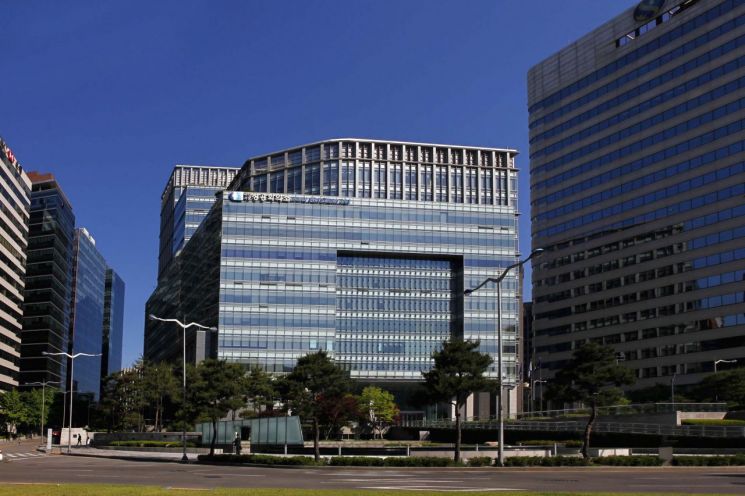 Exterior view of the Korea Chamber of Commerce and Industry, Jung-gu, Seoul. Photo by Korea Chamber of Commerce and Industry
[Asia Economy Reporter Choi Seoyoon] The Korea Chamber of Commerce and Industry (KCCI) announced on the 22nd that it held the 45th KCCI Logistics Committee meeting at Lotte Hotel in Jung-gu, Seoul, under the theme of "Recent Trends in the Logistics Industry and Mobility Innovation."
Kang Shin-ho, Chairman of the KCCI Logistics Committee and CEO of CJ Logistics, said in his opening remarks, "The recent business environment surrounding companies is very challenging, with stagflation occurring as economic recession and inflation happen simultaneously," adding, "Since logistics competitiveness is directly linked to the overall industrial competitiveness, it is urgent to resolve the difficulties faced by the logistics industry and continuously pursue technological innovation efforts to enhance logistics competitiveness."
Representatives from the logistics industry attending the meeting pointed out, "With the establishment of contactless consumption culture due to the COVID-19 impact, the volume of various deliveries, including parcel delivery, has greatly increased, but the trucks, manpower, and logistics facilities required to service this are severely insufficient."
In fact, the domestic parcel delivery market has seen an average annual increase of 14% in volume over the past three years alongside the growth of the e-commerce market. Except for parcel vehicles under 1.5 tons, there is a shortage of 2.5-ton parcel vehicles, refrigerated and frozen vehicles for fresh food delivery, and trucks over 11 tons for trunk transportation, but the number of freight vehicles cannot be increased due to vehicle increase regulations under the Motor Vehicle Transport Business Act.
Along with this, they proposed expanding foreign employment in parcel delivery, freight transport, and import-export logistics sites; applying industrial electricity rates to logistics warehouses; supporting smart logistics industry; allowing installation of fulfillment logistics facilities in urban areas for last-mile delivery efficiency; supporting joint logistics for small and medium enterprises; strengthening benefits of the Authorized Economic Operator (AEO) certification system for import-export safety management; and expanding the application of the excellent shipper certification system for general cargo ships.
Professor Ha Heon-gu of Inha University, who gave the keynote presentation, said, "Recent technological innovations and commercialization in mobility such as autonomous driving and urban air mobility are expected to bring many changes to the logistics industry," adding, "Since logistics processes, workforce management, and business methods will fundamentally change, new policies and systems that can accommodate these changes must be prepared."
As policy tasks for this, he proposed establishing commercialization systems for unmanned delivery (robots, drones, etc.) and autonomous freight transport; complex development of urban advanced logistics complexes, smart joint logistics centers, and urban order delivery facilities; fostering logistics startups to create a smart logistics industry ecosystem; and developing core logistics technologies utilizing robots and AI.
The meeting was attended by about 30 members of the KCCI Logistics Committee, including Chairman Kang Shin-ho, CEO Shim Choongsik of Seonkwang, CEO Kim Junghoon of Hyundai Glovis, CEO Park Young-an of Taeyang Shipping, CEO Shim Jaeseon of Gongsung Transport, and CEO Lee Sang-geun of Samyoung Logistics.
The KCCI Logistics Committee is composed of representatives from the logistics industry and has been gathering industry opinions on logistics issues, conducting government recommendation activities, and providing information on domestic and international logistics industry trends since its establishment in 2008.
© The Asia Business Daily(www.asiae.co.kr). All rights reserved.

















