 On the 21st, the Korea Forest Service signed a memorandum of understanding for mutual cooperation in the creation of the "Dongseo Trail" with Daejeon City, Sejong City, Chungnam Province, Chungbuk Province, and Gyeongsangbuk Province at the KW Convention Center in Daejeon. (From left) Jeon Hyung-sik, Deputy Governor for Political Affairs of Chungnam Province; Go Gi-dong, Deputy Mayor of Sejong City; Lee Taek-gu, Deputy Mayor of Daejeon City; Nam Sung-hyun, Administrator of the Korea Forest Service; Kim Myung-kyu, Deputy Governor for Economic Affairs of Chungbuk Province; and Kang Seong-jo, Deputy Mayor of Gyeongsangbuk Province, are posing for a commemorative photo after signing the agreement. Photo by Korea Forest Service
[Asia Economy (Daejeon) Reporter Jeong Il-woong] The Korea Forest Service has joined hands with five cities and provinces nationwide to successfully establish the long-distance trail ‘Dongseo Trail’.
On the 21st, the Korea Forest Service announced that it signed a memorandum of understanding for mutual cooperation in the creation of the ‘Dongseo Trail’ with Daejeon City, Sejong City, Chungnam Province, Chungbuk Province, and Gyeongsangbuk Province.
The Dongseo Trail is an 849 km forest path connecting Taean-gun in Chungnam to Uljin-gun in Gyeongbuk. This section is significant as it traverses the Korean Peninsula from east to west, linking the pine forests of Anmyeon in Taean and the Geumgang pine forests in Uljin.
The Dongseo Trail consists of 123 km (15%) of national forests and 726 km (85%) of public and private forests. Among these, the Korea Forest Service will manage the national forests, while local governments will be responsible for the public and private forests, each promoting related projects. Collaboration between the Korea Forest Service and local governments is essential.
The Dongseo Trail is planned to be developed reflecting the demand for backpacking hiking trips (backpacking).
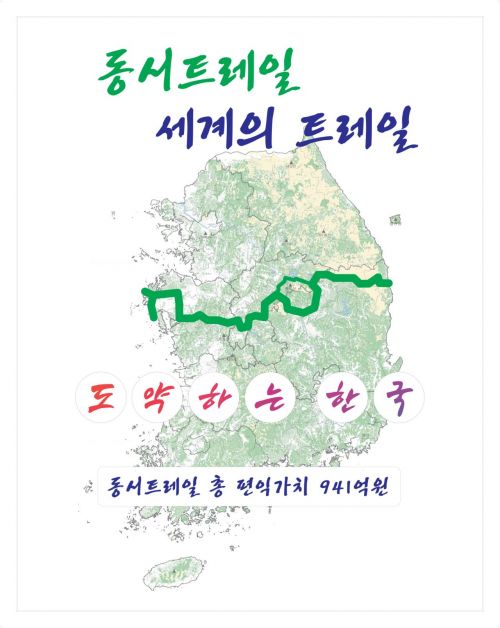
By region and section, major attractions include ▲ in Daejeon, the views of the city from Gyejoksanseong Fortress, the Three Kingdoms period Jilhyeonseong Fortress, Gobongsanseong Fortress, and the waterside scenery of Daecheong Lake ▲ in Sejong, the views of the Geum River and cityscape from Maebong hiking trail ▲ in Chungnam, Buddhist heritage such as the Ma-ae Samjon Buddha statues, Bowon Temple site, Sanggarim Mireuk Buddha, Namyeon-gun Tomb, Wonhyoam site, as well as Baekje relics like Boksingul Cave, Shindol Rock, King Muryeong’s Tomb, and Gongju Gongsanseong Fortress ▲ in Chungbuk, historical and cultural resources including the Three Kingdoms period Samnyeonsanseong Fortress, the village palace site where King Sejo stayed, Maltijae pass frequented by Goryeo’s King Taejo Wang Geon, and Yeonpung martyrdom site, along with the scenic views of Songnisan Mountain ▲ in Gyeongbuk, the Sibiryung Trail known as the merchants’ path, habitats of wild goats, and forest ecological resources such as Geumgang pine trees are highlighted.
The Korea Forest Service plans to encourage corporate social participation including environmental, social, and governance (ESG) aspects during the project’s progress. After completion, various forest programs will be operated in connection with surrounding forest resources to promote income generation in each region along the Dongseo Trail section, contributing to the revitalization of the local economy.
Nam Sung-hyun, Administrator of the Korea Forest Service, said, “We ask for the active cooperation of related local governments to ensure the successful promotion of the Dongseo Trail,” and added, “Through collaboration with local governments, the Korea Forest Service will help mountain village areas increase income and create new jobs based on the Dongseo Trail.”
© The Asia Business Daily(www.asiae.co.kr). All rights reserved.


















